Bobby Nichols - Part 3 (Lighting, the Majors and Ryder Cup)

 Apple Podcasts
 Spotify
 iHeartRadio
 PocketCasts
 Overcast
 Amazon Music
 RSS Feed
 Bobby Nichols, winner of the 1964 PGA Championship, looks back on his later Tour wins and that fateful day in 1975 when lightning struck at the Western Open. Bobby recounts his close calls in the majors and his regret at not playing the British Open. He recalls his 1967 Ryder Cup experience with Captain Ben Hogan when Arnold Palmer was benched on the first day, presumably because he "buzzed" the golf course with his private jet during a practice round. After a brief look at his Senior Tour Career Bobby reflects back on his charitable endeavors supporting disadvantaged youth in SW Florida. Bobby Nichols concludes his life story, "FORE the Good of the Game."
Give Bruce & Mike some feedback via Text.
Follow our show and/or leave a review/rating on:
Our Website https://www.forethegoodofthegame.com/reviews/new/
Apple Podcasts https://podcasts.apple.com/us/podcast/fore-the-good-of-the-game/id1562581853
Spotify Podcasts https://open.spotify.com/show/0XSuVGjwQg6bm78COkIhZO?si=b4c9d47ea8b24b2d
About
"FORE the Good of the Game” is a golf podcast featuring interviews with World Golf Hall of Fame members, winners of major championships and other people of influence in and around the game of golf. Highlighting the positive aspects of the game, we aim to create and provide an engaging and timeless repository of content that listeners can enjoy now and forever. Co-hosted by PGA Tour star Bruce Devlin, our podcast focuses on telling their life stories, in their voices. Join Bruce and Mike Gonzalez “FORE the Good of the Game.”
Thanks so much for listening!
Straight down the middle. It went straight down the middle.
Bruce DevlinThen it started to You won a couple of times in 1974, starting uh in January at the Andy Williams San Diego Open.
Bobby NicholsAndy Williams San Diego Open, yeah. Yep, I remember that San Diego seemed to be doing pretty good for me.
Bruce DevlinYou were missed to consistency that week, shooting rounds of 69, 69, 68, 69. Uh-huh. And you beat a pretty you also beat a pretty good player that year, too. Uh probably one of the greatest swingers of a golf club that ever lived. Gene Little.
Bobby NicholsYeah, I know you guys say Gene Lennon. Gene, Gene the machine. Yeah, there's no doubt. He was, you're right, Bruce. He was uh he was one of the best.
Mike GonzalezNo doubt. Yeah, what a beautiful golf swing. And uh the other guy that was one back too was Rod Curl, as I remember. Rod Curl, yeah. He was the first full-blooded Native American on tours I remember.
Bobby NicholsI uh oh that's right. He was. He probably was. But uh one thing I remember about Gene, about his not only about his golf swing, but I looked at his hands. He had the best looking pair of hands you've ever. I don't say best looking. Well, I guess for me it was best looking. They were just they looked like they were elbow, bold, just perfect, big, thick, and and when he put them on the golf club, I mean it looked like they were bold. They're just so perfect. And that's uh what even in his pudding, it was like I never will forget. Every time I watched Gene play, I always looked at his hands because he met them uh meserized me or something. It's amazing.
Mike GonzalezWell, you guys always do talk about going back to basics, don't you, in terms of fundamentals? Mm-hmm.
Bobby NicholsI I think because you know, really when you stop and think about it, uh what what else have you got come to contact with the golf club other than your hands? So if your hands don't have any feel, you're not gonna do too well. You gotta you gotta have feel feel in those feeling of those hands and feel the golf swing. I mean, you it it just works hand works hand in hand. And if you got a good pair of hands like Gene Lindler had, I mean, not not too many people have.
Bruce DevlinSo Bobby, to finish finish, finish off the victories on uh on the regular tour for you, you won the uh Canadian Open again with a you know what a consistency that that week was 67, 67, 68, 68, and you beat John Schley and Larry Ziegler by four shots.
Bobby NicholsLarry Ziegler, yeah. Yeah, that was funny. It was uh that was a Mississauga, it was uh they're they're in turn. Great old club. Yeah, that's right, it was. It had a lot of uh tournaments, but it it rained all that week uh before it was really saturated. And uh luckily we got it quit raining and we got we got the tournament off and got it finished.
Mike GonzalezBobby, back then, that back then that tournament was like a major, wasn't it?
Bobby NicholsWell, it was uh considered if you if like for example Bruce wins two majors. Canadian up and when it would go in. Was was the first alternate.
Mike GonzalezWell, let's talk about let's talk about 1975 because that was uh an important important year in your career, not in a good way, but uh having lived just a few miles away from Butler National uh in Oakbrook, Illinois, I remember this one like it was yesterday as well. This is the 1975 Western Open, and it came uh just a week after the U.S. Open was contested at Medina. That's when Lou Graham won. But uh tell us about that week.
Bobby NicholsOh boy, that I don't remember a whole lot about it, but it it was uh I remember I was playing with Bob Dixon and Tony Jacklin, and we were going up the fourth fairway of Butler National, and it was going up the hill, and to the right uh left of the green was a big huge lake, and on the other side of the lake was the 13th, uh 13th uh uh T Ba uh Green.
Mike GonzalezYeah, that's a that's a good downhill par three, and then 14 you're talking about goes around the lake right to left. Yeah.
Bobby NicholsOh, you're familiar with it, right?
Mike GonzalezOh, sure. Yeah.
Bobby NicholsSo uh anyway, uh as in Chicago, it there's a lot of times it would be overcast, you wouldn't pay a whole lot of attention. But this particular day it was overcast, and still we weren't paying a whole lot of attention to nothing that happened, and all of a sudden, crack went across the skies. I mean, it it sounded like the end of the world. It was so loud and cracked. What I think happened, it I don't know what I I say I think, I have no idea what really happened. It must have hit the s hit hit the leak because uh as I was when it when that happened, I was on the ground, and when I looked up, my guy had uh was carrying the side, the side was fly uh looked like it was fluttering through the air. His name was Pete uh I forgot Pete's last name, but God has been so long ago. Anyway, he uh we both I got up, I started running. Because I was hysterical. I didn't know what had happened, it was really weird. And uh I was I don't know if I was in my right mind or what, but uh anyways, I started running and I was running and finally I ran we when uh there was a there was a tent at the end of the of the uh fourth fairway, fourth green, and we went in there and that's where I went in and I sat down and I I got my breath and I was and I s and I tasted like like something that being like a charcoal of my mouth was I thought what that's kind of weird to taste in my mouth. Was kind of I guess you know I was going like this. Anyways, I was sitting there and uh doctor came over and he looked at me and he says, uh Bobby, are you all right? And I said, Well, I I guess so. He looked up, he said, look up, look up at me. So I looked up at him and he looked right, he said, Come on, we're going to the hospital. So he took me to Hensdale Hospital there and they put me under a 48 hour uh with all these gadgets and my head and body and everything. You you all familiar with that. Anyway, I did there for two days, and I didn't realize that Jerry Heard and uh Lee Trevino were were also the same way in another part of the hospital. And uh, but uh it's it's it's it it it was weird how it happened.
Bruce DevlinBut if we look if we look back, Bobby, uh that was the one incident that happened on the PGA tour that forced the tour to start monitoring uh storms that were coming towards the golf course. Because I remember I was actually standing on a T and saw Jerry Heard and Lee Travina get knocked over by the lightning. Didn't you? Yeah, it was it was scary as hell. I thought, you know, the lady scorer and and the boy scorer with them too, they all got knocked down. Yeah, it was it was shocking.
Bobby NicholsThat's weird how that lightning what what it does. It's it's uh it's hard to explain when it does happen. You say, what was that? Or something you realize it's it just happens, and you wonder how it happens. Oh, it's like you say, God, it's it's scary.
Mike GonzalezSo Bobby, take us through the aftermath of that. Uh you you spent a couple days in the hospital observation, obviously had some effect to that. Uh was it just not the same after that?
Bobby NicholsOh, I don't I don't know if it really affected me long term. Uh it may have in some ways, uh uh maybe uh but I don't I don't know. I can't recall any particular uh incident may that may have been a uh because of the lighting itself. Uh no, I th I think I'm okay as far as uh the aftermath. I hope I hope so. My wife says, well, he's he's he's more electrifying. Whether that's good or bad. But anyways, we don't uh I don't think it really bothers uh affected me long term. But it could have, but I don't know, I don't think so.
Mike GonzalezWell, we had a chance to talk about your 12 triumphs on the PGA tour. Let's just touch on major championship experience. We talked obviously about the PGA, but uh as I look at your as I look at your major championship record, the thing that really impresses me, and again I mentioned this to Bruce before we came on. I don't know if you remember this, but you made 36 of your first 38 cuts in major championships.
Bruce DevlinPretty good, pretty good, Bobby.
Bobby NicholsThat is better than I didn't know it was that good. That's nice to hear good things like that.
Mike GonzalezThat that's I don't remember seeing a better record in the first 38 events. I'd have to go back through the guys we've talked to, but that's pretty impressive. That's nice. I never realized that. What's your what's your remembrances of the Masters?
Bobby NicholsUh well I um the bet of course the best I played was in 75 when I played finished second to uh gay in in 1976. Yeah, 1967.
Mike GonzalezBut yeah.
Bobby NicholsUh it seemed like I never was I never conquered those greens. They were always tough to put, and I just didn't seem like uh I could get anything going. Although a couple times the 75 of it had a 67 the first round and and a couple things like that. But uh one thing about uh the masters, and everybody when when the when the master's time came around, people uh people would really get excited in uh and the fact that the green you knew the golf course was gonna be in perfect shape and the greens were gonna be this. But we weren't used to greens like that until you got to the masters. Yeah. Because all our greens were a lot slower, and Bruce will verify this. For sure. A lot slower and and they were bumpier and they were of uh of different graces. But it seemed like the masters had this cut close enough to be slick and smooth and whatever else. Whereas we never played in Greens like that ever, ever. Uh throughout the year. So it was really a it was just special.
Mike GonzalezWell, 67, you mentioned that was uh uh second place by one to Gay Brewer. Uh Brewer the prior year had three-putted the last goal.
Bobby NicholsYeah, he sure did.
Mike GonzalezAnd then lost in a playoff to Jack Nicholas. Right. And then came back and won it the next year.
Bobby NicholsYep, sure did. He uh I said, why in the heck did you have to three-putt that oh, why did you just you might not have played so well the next year?
Mike GonzalezWell, and that 67 Masters was Ben Hogan's last masters as well.
Bobby NicholsYes, they were. Yes, they were.
Mike GonzalezYou mentioned uh 1975, that's when you tied fourth. Nicholas won that year. As you mentioned, first round leader, you were with a 67. Right. And then in 1974, uh you were two back after 54 uh what the year Gary Player won. Right. I remember that. So you you played you played Augusta National pretty well. Sometimes, yeah.
Bruce DevlinIt was but you're right, those greens were always difficult, Bobby, weren't they? They were always, always difficult, then.
Bobby NicholsYou really had to. Well, I used to I used to play practice rounds with Carrie Middlecoff. Carrie and I became fairly good friends. When I'd go to the masters, I'd always ask to uh I'd I'd get contact him and have have him, or what what won't be a practice round with him. And he would tell me where to place certain holes and stuff. He was really, really helpful. But I I'll never forget on the 12th, on the part on part three, number twelve, he said, you know, a lot of people, they always talked about people putting it in the water and costing the tournament and doing this and doing that, and and going for the pen, and when it was in that far right, it was a small area, and this and that. He says, whenever that or rather, any day you play this hole, you look at that trap, he says, you play it right over the middle of that trap and don't look left or right. No flag. And uh you're you're that's right, and you won't put it in the water. And sure enough, I never put it in the water on 12. And uh I never went for the flag, but uh I never put it in the water.
Mike GonzalezYep. Yep. Uh let's touch a little bit on the U.S. Open because you had some you had some good performances there as well. Four top tens, a couple of top fives. What was probably your best chance to win the U.S. Open? I think it's first 63.
Bobby NicholsI was uh tied with uh I forgot Oakland at Oakland Oakbott. Oakbond. Yeah, that's where it was, Oakbond. And uh I was tied with Gary and I had played a third round together. And after the third round, we were both tied at 211. And so we're we're playing off the final group in those days. No those days we played 36 holes on Sunday. So after the first after the two after the morning round, we broke and had uh like 30 minutes or 45 minutes for for lunch and that was it. And then you head right back out. So we did that. Now I'm getting ready to go. Well we're getting ready to go, but I can't find my caddy. Don't know where the heck he is. He was a young kid, just local kid. Anyways, one thing and I never I never told him anything after I got through the morning round, but I assumed he knew that we had played. Anyway, we finally found him under a tree, or a friend of mine found him under a tree eating a sandwich, and he was just and he was he had his box of the first tea. And I thought, well, anyways. He thought he was done for the day. Yeah, he thought he was done for the day. Anyways, luckily, Gary Plair had hit the tea shot, and Joe Dye was the uh head of the US, I'll be a head of the PG PGA then, or USGA.
Mike GonzalezYeah, USGA then, yeah.
Bobby NicholsAnd uh the uh he told me he said, Bobby, he says, I'm gonna have to find you unless you can go. So Gary hit his T shot and he walked very slowly off the T. And he didn't get to his, and luckily the kid showed up before he got to his his T shot or something. I don't know what the rule was. Uh if if he'd hit a second shot, then I think I'd be DQ'd.
Bruce DevlinOr add two, I think. You might have got two shot penalty. Yeah, two shot penalty, right. Right.
Bobby NicholsThat might be more out of it.
Mike GonzalezBut you were able to you were able to get off in time.
Bobby NicholsI was able to get off in time, but then I double bogeyed the first hole, and uh then I lost my two. I lost my two when I bogeyed the sixth, I bogeyed the 15th, and the eighteenth. But uh uh finished two shots back.
Mike GonzalezYeah, yeah, and that was the year uh 1962 that the Jack beat Arnie uh in a playoff.
Bobby NicholsRight, correct.
Bruce DevlinMm-hmm.
Mike GonzalezYep. Sure it was. Oh, yeah. You had some other good finishes at Olympic, uh good finish at Oak Hill, good finish at Marion, the year Trevino won.
Bobby NicholsOh yeah. I played with him uh f uh uh let's see uh played with the third round, I think it was. Yeah. Vividly remember that.
Mike GonzalezYeah. And uh and then in the PGA championship, uh uh, I guess Aranamink maybe was your other opportunity there uh in 1962, where you were sixth when Gary Player won there.
Bobby NicholsYeah, I remember Gary won that.
Mike GonzalezSure did. And that's the year that uh that's the year actually that they moved that tournament. It was scheduled to be played in Brentwood uh Country Club in California. Uh-huh. And uh they moved it to Pennsylvania because California said, look, if you PGA are going to continue with your Caucasian-only policy, which had just been eliminated, I think, the previous November. And so uh they actually said you you guys aren't playing here until you get that fixed. Well, they didn't get it fixed in time, and they ended up moving the tournament to a runamink.
Bruce DevlinI didn't know that. No, I'd I'd forgotten that too.
unknownOh.
Mike GonzalezUh Ryder Cup, you had a chance to compete in the 1967 victory at Champions Golf Club with the captain. Once again, Ben Hogan comes into your life. Mr. Hard now.
Bobby NicholsWhen we were all together there in a locker room, he was he was holding court and uh kind of asking us questions. Who who would we get it? Who would we he was asking us, uh the entire team was sitting in front of him, well, who would we like to play with as a team? As we in particular, people that we'd like to play with. Well, Johnny's but Johnny Pod spoke up and said, Well, Bobby and I like to play together because we don't care if we get it in the woods, we'll we'll go find it and hit it out. And Mr. Hogan looked at him and said, Okay, you can you two be compatible or whatever? And we said, Well, yes, sir. And so he said, Okay, you two play together. And we we didn't, we won all matches. We were four, I think four, four, four, four wins and one tie.
Mike GonzalezPretty good. Yeah, you and Billy you and Billy Casper led the U.S. team with four and a half points. Uh that's right. Uh we talked to Al Geiberger last week. Al was on that team with you, wasn't he? Yeah, he sure was. And he said Mr. Hogan was pretty efficient with his words in the team speeches.
Bobby NicholsYes, he was. Like I said, back he he just never were he never wasted words, it didn't seem like. He just always right to the point. That was it.
Mike GonzalezWhat what do you remember about Arnold Palmer and his airplane that tell you.
Bobby NicholsAnyway, we're all out there playing, and he Mr. Hogan's out there in a golf cart, walking, I mean, driving riding around, watching this and everything. And sir uh he was I don't remember where he was setting exactly, what ho or whatever. Here comes Arnold. Here comes Arnold flying. He's got his jet flying over like this. And he and he waves his wings like that. And Hogan looks up, looks up and doesn't say anything. Goes back to whatever he was doing, whatever. But I don't recall him saying anything. So the first round of the tournament No, this is this is a practice round. But anyways, the first round of the tournament, uh the first round of the tournament, the newspaper there, they got the pairings, and they would go down the list and the pairings, and then the other side put their pairings up. So anyways, they were looking at the pairings and they noticed Mr. Pauber's name is not on there. And they thought, well, how could that be? He's he's the king and he's the captain, more or less. And they said they didn't say a word, and so uh one of the uh sports writers asked him, Mr. Mr. Hogut, what what's the pro what what happened to Mr. Palmer? How come he's not in the lineup? And you know what he said? Just because I said so.
Bruce DevlinThat was it.
Bobby NicholsBecause I said so. Yeah, he said.
Mike GonzalezYep. That was it. Now that was it. The captain, the captain got a chance to pick which ball you guys played.
Bobby NicholsOh, yeah, by the way, that's right. Uh what had happened, we were also asking the locker room. When we had the option, you could play the big ball or the little ball, I think I call it a 65 or something. Anyway, uh Doug spoke up and said, Mr. Palmer, or rather, Mr. Hogan, what what what ball should we play? And it took him by surprise. He said, Well, I I don't think that's much of a decision. You can't hit that little ball out of the fairway. And Mr. Doug said, Well, I think we can. Well, he said, but uh, yes, he said a small ball would be the thing to do. Yeah.
Mike GonzalezYeah.
Bobby NicholsSo we used the small ball.
Mike GonzalezHe made the call on that one.
Bobby NicholsYeah, he made the call on that one. Yeah. I think we would have. You can't hit the little one out of the fairway. I love that. I love it. He he was something.
Mike GonzalezWell, you you came out of your regular tour play and uh joined the senior tour when you turned age 50. Uh played the senior tour for 10 years, right, and uh had a victory at the 1989 Southwestern Bell Classic in a playoff with the Sarge. That's right. You lasted 10 years. Uh uh How did you hold up physically over those 10 years from age 50 to age 60?
Bobby NicholsWell, uh, some people's bodies uh I think we all agree well they hold up better because you can see it in a few of the players today that play up until 60, and even in their la early 70s. I mean, it's Bernhard Langer is a great example. Yeah, yeah, that's a good example. Exactly. Bernhard is a perfect example. And uh if your body holds up, like as you could play, I guess, to those uh those golden years are more or less, but uh I was my body after a few things happened up when I was growing up with the wreck and a few things, and a few knocks here and there, my body just didn't just it it h it would hurt. And uh like like I'm saying I'm talking like uh lot a lot of like a lot of guys uh that by my age feel that hurt. But I'm not I'm not complaining at all. I'm just I just don't swing a golf club is just no fun.
Bruce DevlinYeah.
Bobby NicholsIt just hurt. My hands hurt, my b body hurts, my fingers hurt, and I mean uh it just they just don't uh arthritis sets in and just things it's no fun playing. So if it's no fun playing, there's no sense in playing. Luckily, I didn't have to play after uh after I had my job at Firestone. It'd be it was uh just phenomenal. And uh playing a senior tour was uh something that wasn't uh wasn't really something that I uh look forward to playing doing, but uh I played a few years and I'm glad I did. But uh it's it's a it's it's been a great thing for a lot of a lot of good play a lot of players of the 15 over group.
Bruce DevlinSure has been really nice. So, Bobby, for the last 20 years you've been involved with uh the Bobby Nichols Fiddlesticks Charity Foundation, and you've had a pretty good MC that's uh helped you guys make 20 15 million dollars in those 20 years. Pretty fancy, boy.
Bobby NicholsIt is, it is pretty fancy. I mean, just beyond all expectations. I when we first, I remember Earl Holland, uh John Gentleman, and Jack Rogers, and uh when we first started in 1980, they said uh we'll try to help the kids be uh uh be used. The Glass Kids is here in Southwest Florida and see if we can't uh uh uh uh have a tournament that's uh a charity that would uh benefit the local people here, the local charities, right, and so forth. And so we decided to do that. And uh Earl looked at, and now Earl's pretty wealthy guy, and he said, Well, we don't have any money, where do we start? And we all looked at him and said, Well, well, we're looking at someone that might get us started. Anyways, yeah, anyways, he got us started. And it went from one hundred and thirty-four thousand the first year I remember, but I don't remember exactly the figures on down through the years. But up until this year it was 13 and a half. This year it raised 1.7.
Bruce DevlinNice, isn't that great?
Bobby NicholsThat is great. Now we're gonna give away a million and a half, so it'll be 15 million that we've given away to the abused kids, neglected kids in Southwest Florida. Good to do. And we we're lucky, Bruce, we don't have anyone on the payroll. Isn't that great? No one, no one, no one gets paid. Yeah.
Mike GonzalezAnd no one complains. And that MC that the Bruce alluded to was none other than Johnny Bence. Johnny Bence, all time.
Bruce DevlinOh, catch you for the Cincinnati, right?
Bobby NicholsYeah, yeah, big red machine. Yeah. And uh he's been with us. I I bet him I bet him in 68, and uh he was in PP, and I said, uh, Johnny, but uh would you be in, would you uh do something like that? He said, well, right on the right situation. He said, I told him, I said, well, we're gonna start this and that. Would you be the would you be the MC? He said, well, let's start it, let's start it and see what happens. And uh sure enough, still there. After he says, So that he's still there after 20 years. Isn't that great? He's come every year. He really does.
Mike GonzalezWhat a great legacy that you're leaving with that tournament and that fundraising event. Um as we wind down with you here, uh Bobby, there's always a couple of questions that Bruce and I like to ask our guests. Bruce, you want to go first?
Bruce DevlinYeah, so Bobby. If you knew what you know now when you first started on the tour, what would you have done differently?
Bobby NicholsDifferently? I I know for one thing I would have made a schedule out to where I'd went and played in the open a few times. I I really am sorry that I didn't I didn't fit that in the schedule, but at the time I just didn't feel like I had it had the time to go there and have the job at Firestone and and uh be playing for tournaments and so forth. Uh I was I was trying to uh Scotty Brubaker, who I answered to, he never, never, ever said anything about how many tournaments I should play in. He just said, whenever you feel like playing, go play. But he's he he knew or he's hoping I wouldn't take advantage of him.
Bruce DevlinRight.
Bobby NicholsAnd sure enough, uh it worked out well. So that would be the one number one thing I wish I'd have done, because I missed that. I would like to I'd like to have seen what it would have been like to I watched it on television, but uh it would be it's not like playing, that's for sure.
Mike GonzalezYeah. So our other question that Bruce and I would have of you, Bobby, is we're gonna give you one career mulligan. Where would where would you take it?
Bobby NicholsUh that would be a good one. I'd say probably the open probably the uh the masters when I was slammed with key. The sixteenth hole there, it's a part of five, I put it on in two uh with a four-iron, and uh but I I I didn't I didn't get up and down. I well I didn't put it on, I put it just over the green uh chip and didn't didn't get it up and down and I believe if I got that one up and down by the uh yeah, by uh 14 if I could have buried that one, which I should have, after hitting a second shot on the green, that would be the one mulligan that I can think of. Uh oh gosh, off my head, that's be about to that would that would be it. Yeah.
Mike GonzalezYeah, yeah, yeah, yeah. Uh Bobby, in closing, how would you like to be remembered?
Bobby NicholsWell, just just to be remembered is all I can ask for. I'm like I'm like Bruce. We're just all both of us are well, we're from the old school, and we've been to I might say differ different things in the RC. It's hard to explain to the day today's generation when they don't experience you've got to experience what we've been through. Yeah. Not in not in a physical way, but in a mental way and so forth, whatever you.
Bruce DevlinSo, Bobby, Mr. Nichols, I want to personally, personally thank you for joining us today. We uh we've we've looked forward to chatting with you. I know uh I know you've gone through the COVID issue, and uh Nancy and the two boys have been great, and we thank you for joining us. I know Mike uh I know I know Mike's appreciated as well, Mike.
Mike GonzalezYep, yeah. Bobby, thanks a million for for us.
Bobby NicholsUh thank you. And uh it's it's been my honor to be on your show. And uh Bruce and I have always admired Bruce throughout the years and what he's done and what he's been through. So you guys keep up the good work and wish you the best, Mike and Bruce. Thank you, buddy.
Mike GonzalezThank you, Bobby.
Bobby NicholsTake care.
Mike GonzalezThank you for listening to another episode of For the Good of the Game. And please, wherever you listen to your podcast on Apple and Spotify, if you like what you hear, please subscribe, spread the word, and tell your friends until we tee it up again for the good of the game. So long, everybody.
Kathy CorneliusIt went smack down the fairway.

Golf Professional
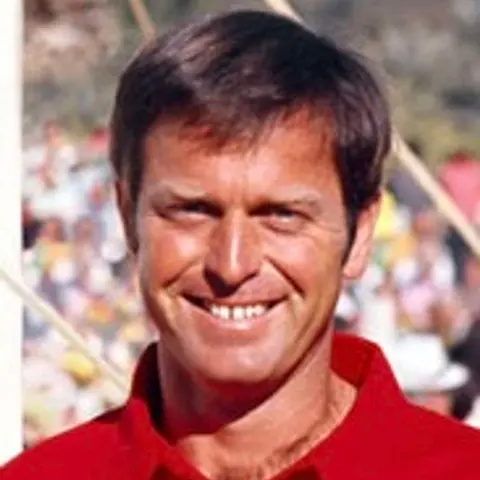
Bobby Nichols was born in Louisville, Kentucky. He was seriously injured in an auto accident as a teenager and spent 96 days in the hospital recovering. He persevered to play competitive golf at the highest levels, first as a high school champion, then as a college player at Texas A&M where the legendary Bear Bryant offers bobby a football scholarship. He started on the Tour in 1960 and had 15 professional wins including 12 PGA Tour victories and 1 win on the Senior Tour. Bobby won the 1964 PGA Championship at Columbus CC, leading wire-to-wire and playing with Ben Hogan in the final round. In 1975, Bobby, along with Lee Trevino, Jerry Heard and others were struck by lightning while playing in the Western Open at Butler National GC near Chicago. Bobby made 36 of his first 38 cuts in majors but never traveled to the UK for the British Open. He participated in the 1967 Ryder Cup at Champions GC playing for Captain Ben Hogan. His Bobby Nichols Fiddlesticks Charity Foundation has raised millions for local children's charities in SW Florida.