Nancy Lopez - Part 3 (The 1978 and 1989 LPGA Championships and The Solheim Cup)


 Apple Podcasts
 Spotify
 iHeartRadio
 PocketCasts
 Overcast
 Amazon Music
 RSS Feed
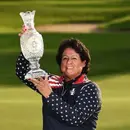
 3-time major championship winner, Nancy Lopez remembers the challenges of traveling on the tour in those first few years as a professional. Nancy recounts how she relished competing against the likes of JoAnne Carner, Judy Rankin and others. Listen in as she recalls two of her wins in the LPGA Championship, her first in 1978 and her last in 1989. Nancy was proud to play on the first Solheim Cup team in 1990 with Kathy Whitworth as Captain and feels her favorite golfing memory was being a Captain herself for the U.S. side in 2005. Nancy Lopez continues her fascinating life story, “FORE the Good of the Game.”
Give Bruce & Mike some feedback via Text.
Follow our show and/or leave a review/rating on:
Our Website https://www.forethegoodofthegame.com/reviews/new/
Apple Podcasts https://podcasts.apple.com/us/podcast/fore-the-good-of-the-game/id1562581853
Spotify Podcasts https://open.spotify.com/show/0XSuVGjwQg6bm78COkIhZO?si=b4c9d47ea8b24b2d
About
"FORE the Good of the Game” is a golf podcast featuring interviews with World Golf Hall of Fame members, winners of major championships and other people of influence in and around the game of golf. Highlighting the positive aspects of the game, we aim to create and provide an engaging and timeless repository of content that listeners can enjoy now and forever. Co-hosted by PGA Tour star Bruce Devlin, our podcast focuses on telling their life stories, in their voices. Join Bruce and Mike Gonzalez “FORE the Good of the Game.”
Thanks so much for listening!
Straight down the middle. It went straight down the middle. Then it started to do it.
Nancy LopezAnd of course, like I said, when you're young, you just don't know what to do. And you tr you learn how to travel. I remember traveling with my caddy once in a while in the car. He would drive and I would sleep. And that was when we had a long, long event or long uh uh drive to the next another. It was too far to uh and and sometimes it was hard to to um connect with airlines, it was so expensive. So I ended up driving with Roscoe a few times and um we did that, and of course we had um um we had the um uh what do you call those? Oh gosh, I went totally blank. Uh C B radios. Oh yeah, yeah. What was your what was your handle? What was your handle was Jive Cookie and Jive Cookie? I don't know why, I just thought of that.
Mike Gonzalez10-4 good buddy.
Nancy LopezYeah, yeah. Keep it on the double nickel back then. It was 55.
Bruce DevlinYeah.
Nancy LopezUm, so I got to travel. Um, I remember uh representing Ford and they gave me a Thunderbird to drive, and uh Roscoe burnt holes in it from smoking cigarettes when he was driving my car. I mean, I was like, really?
Bruce DevlinYou know, that was one of the times you find him.
Nancy LopezIt probably was. But you know, traveling on tour and really learning your way. Um, learning that the players really didn't like you if you beat them a lot. Um, you know, I didn't have I didn't feel like I had uh any really close friends that first few years. And you know what was a shame though to me, um I was judged by winning um those first couple years. Um because what happens, and I don't think people think about this, when I was winning, I never was in the locker room when the players were there. I would play, tee off. Um, and I was winning a lot. And so I was in the press room a lot. Um and even finishing second, you know, you're in the press room. So I'm in the press room after I finished playing, right to the press room. When I was done in the press room, I had to go practice. So I'd go practice. And then by the time I got to the locker room, there's hardly any players in there.
Bruce DevlinNo, really.
Nancy LopezSo there was a there was kind of the, you know, the players thought, I think a few thought I was stuck up, that I wasn't involved with the LPGA tour. And that really kind of hurt my feelings because it it just really wasn't my fault. I felt like um, you know, I just didn't get to know them the first few years because I was always busy doing something else, either promoting the LPGA or doing something for the LPGA or in the press room or trying to practice. Um, and then I got to know the players when I wasn't winning as much. I was in the locker room more and I got to meet the players and really sit down and talk to them um because it really was tough those first couple of years. I didn't get to know my fellow professionals because I was always doing something. Um, and you know, I'm glad I did a lot of that stuff for the LPGA and and for whatever reason I had to, but um, it was it was really kind of sad, I think, because I I know that the press tried to create um something that wasn't there. Um, they would say things like some players would say, Oh, we hope she breaks her leg and things like that. And then we print it. And I think they just wanted there to be some competition that that went on. Um, but you know, I I did, I it did hurt my feelings, but I just kept thinking that maybe it wasn't really true. Um, and then there was a big rival that they they tried to start with Joanne Carner and I because Joanne Carner and I were against each played against each other many times. And like I said, she was my idol, and and when I played her, I wanted to beat her because I wanted her to see how good I was and I wanted to impress her. Um, but I always tell this story about Joanne Carner because um she was such a great champion and really a great role model for me. Um, but we were at Waika Gill right outside of New York, and she and she we played with each other, you know, we'd kind of tease each other, and on Saturday, um I did not uh play well enough to get into the last group. That was kind of my goal because I knew she was gonna probably be in that last group. And on Saturday, I was gonna knowing I was gonna play in the group in front of her on Sunday. On Saturday, she said, Oh, I'm just gonna leave Nancy in the dust. And I knew she was joking. It was just what kind of a, you know, she's just ribbing me on. And so on Sunday, when I woke up, I said, you know, I'm gonna use that to really motivate me that yeah, she's not gonna leave me in the dust. So we tee off on Sunday. I'm in front of her, and and the people at Waka Gill, great crowds, they were rooting for both Joanne and I, because they love Joanne and they loved me, and so we were they were really wanted to see a good fight to the finish. So I remember the first hole is a par five, and I could reach that one in two, and I ended up birdieing it, and um the crowd went crazy. And so I I kind of turned around to see if if Joanne saw it. And so it was like that all day. Then I could hear a roar, and I knew it was Joanne made the birdie, and so we'd go on, I'd make a birdie, and I'd kind of turn around again, see if see if she saw it. And so it went on all day long like that. I'd make a birdie, they'd roar. She'd make a birdie, they'd roar. Well, I ended up shooting 65 on a golf course that was just, I thought, really tough, and I never thought about shooting 65. But as you're playing, you know for me, I never kept my score, so I really didn't know I was shooting 65. But I made so many birdies that day, and she made so many birdies that day, but I ended up beating Joanne. And when we were finished, she came up to me and she was she was great. She goes, Well, I guess I'm never gonna t say that I'm gonna leave you in the dust again.
Bruce DevlinLeave you in the dust again. Nothing like a little motivation.
Nancy LopezYeah, it was.
Bruce DevlinSo, Nancy, that that same year there was a particular lady that was on the LPGA tour that that was quoted as saying something about you. Do you remember who it was and what she said?
Nancy LopezI don't.
Bruce DevlinOkay. Judy Rankin said that year they've got the wrong person playing Wonder Woman on TV.
Nancy LopezI remember that name. Yeah, Judy Rankin was one of my competitors. She was uh she was she was pretty much phasing out though a little bit. Uh, she played a few years while I was on tour. Um, great competitor. Um, I remember playing with her. She was a little bit hard on her hard on herself because she wanted to be great. I mean, that's okay. And um, I remember her husband, um, Yippy, who would follow her around. And um i you look back on those times and it was just I mean, I was really lucky to play with people like Ju Judy Rankin and Donica Pony. And uh, you know, there's another story. I ended up um I won the Coca-Cola Classic and I beat Mickey Wright, which you know, she was we don't know why she came back out to play because last year or this year, they had that tournament, the Coca-Cola Classic at Upper Montclair when I won it, but they went back to Upper Montclair this year, the LPGA did, and so I went back and the press asked me about that win, um, beating Mickey Wright. We couldn't figure out why she had gone there, why she was playing. And we were in a six-person playoff with Mickey Wright, and the first holes of par three that we were playing off on. We everybody drew straws, and Mickey was the first person to hit the shot into this par three, and she hits it up there about three feet from the pin. And I kind of looked at everybody, so well, good luck, everybody. Getting closer than that, because it was a tough green, it had a big undulation right to left, um, front to back. And everybody hit their shots. I hit my shot about 25 feet right of the pin. So there's a huge right to left break. Um, everybody ended up parring, and I was the last one that could tie Mickey uh to go on to the next hole. So I make this long 25 right to left foot putt. And now it being a tournament, she hadn't won for a while, she stood over that three-footer, and I know she felt like it was a six-footer. I could see the nerves. Um she ended up making it. And so Mickey and I go to the next hole, number 17, um, by ourselves, and she could hit the ball. I mean, I hit it long, but she could out hit me, and she wore tennis shoes uh when she did it. She could hit it, and she had a beautiful golf swing. So we go to the 17th hole where earlier that day, um, I had missed a birdie putt. I hit my second shot earlier that day, probably about eight feet above the hole, and I misread it. So I'm playing with Mickey. I hit my drive in the fairway. She had her drive in the fairway, she outdrove me. I hit my second shot in the same place that I did in regulation that morning. Same spot. I had a seven, eight footer from the same spot. So I knew what it was gonna do. I knew the break. I misread it earlier that day, but I knew what it was gonna do, and I ended up birding that hole and beating Mickey Wright in that tournament. And for me to beat her was, I mean, just an honor, first of all. But I remember when we were on the on the green when they were presenting me with a trophy, and I really remember feeling sorry for her that I beat her, or feeling bad, not really feeling sorry for her, but just feeling bad that I beat Mickey Wright in probably the last tournament she would have ever won. And then I kind of joke and say, well, that only took a few seconds because then I was happy that I beat her because she was great. She was such a great player, and I just, I mean, I just admired her, and and like I said, she was just um such a great competitor, uh, a great spirit, and just a great golfer. So that was a feather in my cap in my career to be able to beat one of the best.
Mike GonzalezSpeaking of Mickey Wright, and this has to be for me one of the greatest quotes I've ever heard. Of course, it pertains to you. Mickey's involved, you've probably heard it, but as we were talking to Kathy Whitworth, I remember her talking about this in terms of the history of the LPGA tour. She said, you know, she said Mickey Wright was our Ben Hogan, but Nancy Lopez was our Arnold Palmer. Yeah.
Nancy LopezThat was nice of Kathy to say that. Um love Kathy Whitworth. Um she was, I think we were talking about this the other day. She was um uh, you know, she was a great champion. Uh I played with her quite a few times. Great short game. Um I grew up playing golf with her mom and her aunt in the state of New Mexico, which we figured out she's not from New Mexico, but she was raised in Jow, New Mexico, which we were always trying to fight to to claim Kathy because she was such a great champion. But um, but I played in the Women's State amateur with her mom and her aunt, and they were good players. Um, and and I I said the other day, too, that really Kathy looked more like her aunt than she did her mother. That's how much she favored her aunt. Um, but yeah, Kathy Wentworth, and then she was the captain, she was my captain in the first Solheim Cup at Lake Nona outside of Orlando. Uh, first Solheim Cup in 1990, um, and she was our captain, and she was she was just great. And of course, when you play in your first Solheim Cup in 1990, nobody really knows what's going on because the fans hadn't connected with it yet. I always kind of joke it was just family and friends that were there. And when you're playing for your country, the nerves you feel I feel more nervous playing for my country than I did playing just for an LPGA trophy. Um so we're we're we're at that tournament and uh at the Solheim Cup, and uh Kathy puts me and Pat Bradley together in the first match, which was against Laura Davies and Allison Nicholas. And we're on the first T and we're both nervous. And Pat had already won probably 14 tournaments. I probably won about 12. And so we're on that first T and um I look over at Pat and I said, How are you feeling? She goes, I I feel nervous. She said, How are you feeling? I said, I feel nervous. I said, Do you want to hit? No, you hit. No, you go ahead and hit. And and as you play the Solheim Cup, now you know their strategy. Well, that was our strategy. We didn't know what to do. So um we ended up winning that first match in the first Solheim Cup. And I wish I would have hit the first shot because then I could say that was you know the first shot, the first Solheim Cup, and and being in the first match. So there was a lot of pressure there to win. Uh and the uh the US team was way better at that time than the European team. I think we won like 14 to 3.5. I don't know I can't remember the scores, but we killed them. Now it's really, really tough. Solheim Cup is is really tough. Then I ended up captaining in 2005, and then I was junior Solheim Cup captain in 2009. So the pressure of being captain was just as bad. I mean, you know, you're a captain of a U.S. team, and your team's gotta win. I mean, I I didn't want our team to lose. Um, and so I worked really hard those two years to be captain in 2005, and I had an awesome team. Um we ended up winning, but I wrote down the names because I didn't want to forget if I if it came up, but I had Christy Kerr, Beth Daniel, Meg Mallon, Julie Ingster, Rosie Jones, Natalie Gulbus, Paula Creamer, Laura Diaz, Christina Kim, Michelle Redman, Wendy Ward, and Pat Hurst. So I had a great team. And, you know, the thing about Solheim Cup, you've got to bring 12 women together as team members. And because we were such individual players on the LPG tour, and it was to me, the question has always been asked to me, what was my favorite win? And it was being captain of the Solheim Cup. That was my favorite win on the LPG tour. Um, to be the captain of these great champions and great players and to be able to win was just a feather in my cap for sure, um, to be able to bring a U.S. team to to victory against the Europeans, which they are tough. And, you know, you don't mess around with them too much anymore because they're beating us right now, and we got to get that cut back. They're going to Spain this year, so or next year. So I'm looking forward to getting that cut back from them.
Mike GonzalezYeah, that was at the Crooked Stick in 2005. Laura Davies was still on the team. She actually had 12 consecutive appearances, uh, with the final one being in 2011. She was just a constant presence there, wasn't she?
Nancy LopezYeah, Laura Davies is one of my favorites. I I love her. She is a great competitor. And, you know, even now, I think she is playing better even now than she did back then. Her short game, um, her confidence level is better than it used to be, and um just one of my favorites. I, you know, always I always rooted for the American coming down the 18th on the 18th uh fairway coming in to finish. But when they're playing against Laura, I don't know who to root for because she's really one of my favorites.
Mike GonzalezYeah. Yeah. So to put that uh that quote that I mentioned of Kathy Whitworth's in context, uh, and you can help us with this, you know, if you take our listeners back to the 1970s, that decade started with purses for the LPGA of about uh 435,000 for that year, 1970. And then the fellow that uh that you mentioned, uh David Foster comes on the scene, Colgate, Palm Olive, and and the sponsorships begin to emerge, uh, television begins to emerge, some great players come on the scene, and and uh really that decade uh probably purses were a little bit more than 10 times that of 1980. Well, you've just come on the scene one nine times your first year. And so, in terms of the presence that Nancy Lopez was, most of our listeners probably couldn't begin to imagine what your life turned into.
Nancy LopezUm I became a celebrity that that first year. Um, you know, winning and I was doing all kinds of interviews, I was on uh all kinds of talk shows, um and just um it was a whirlwind, and I had to grow up pretty, pretty quickly. Here was a 19, 20-year-old that had to become a 30-year-old in in a time when that just didn't happen. Um, I had to learn how to handle the press, um, how to answer questions. And you know, you still had to be politically correct. Um, you didn't want to, you know, if if the golf course, because back, I'm telling you, that rookie year, we played on some golf course that were in terrible shape. And I remember saying, gosh, is this the LPJ tour? Because we played better courses when we were in the U playing in the USGA, the Western Junior. You know, it was just amazing. The the quality of the golf courses weren't even really good that my rookie year. So you have the LPJ playing on courses that just weren't great golf courses, but when you're in that press room, you never said that. You just said, I know they've had a tough year, you know, I know they want they wanted the golf course to be in a little bit better shape, but it's okay, it's fine. Um, and and so you you know, I had to really figure out how to do it on my own. I mean, I had my dad, but you know, and I'd call him when he wasn't at golf tournaments, but I was pretty much I stayed by myself, and um, you know, I had to learn a lot of stuff on my own. Um, I had friends like Donna Caponi was a good friend of mine, and uh uh Joanne Washam was a good friend of mine, played played golf and practice with them. Um, and you know, when I signed up to play practice rounds, I always kept in mind what my dad told me, like I said earlier, you have to play with the better players to be a better player. So I would, you know, I would go to the sign-up sheet and I'd put myself in there with uh Pat Bradley or, you know, all these great players that were really playing great during that time. And Karner, um, you know, Whitworth, any of them. I just signed myself up with them because I knew I was gonna learn a lot from them. Um, and and and I was gonna get better by playing with them. So, you know, to just I had to pretty much grow up on my own out there and learn things on my own. Um, Roscoe was a great cat, even though I fired him nine times. He kind of helped me through that that procedure of learning the ropes on the tour, you know, who who he thought I should hang out with, who I shouldn't hang out with, that they were negative or whatever. He just kind of guided me along um on the tour and what I needed to do and what I needed to to think about. Um, so Roscoe was really my probably my best friend, even though I fired him nine times. Um like he was like a brother. I mean, he was just that caddy. And I have to give him credit. He's not alive anymore, but I have to get him give him credit that he was a caddy that let me be who I was gonna be. Um, he let me figure out what um my limits were on the golf course. If I was gonna go for a par five and two and there was water, I he let me figure it out. Um he did, he let me learn my limits. He was not a caddy that was worried about losing money if I made a double bogey on one hole because there are caddies that I think, you know, would talk you out of something because they didn't want to lose want you to mess up enough to lose some money. Um, but he didn't care about money. He he just wanted me to play the best I could, and he was definitely the caddy that that just let me go and helped me to to really play great golf and and um I I never feared anything. I went for I was a I like to go for the pin. Unless it was just a stupid thing to do, I didn't do it. But I I knew my I I knew the I knew the curve of my ball. I knew what it was gonna do. I I knew how the shot was gonna happen. Um and so I always went for the pin. That's why I made a lot of birdies, uh, because I was always going for the pin. I was not afraid to do that, and he was not afraid for me to do it. So I think Roscoe was really uh another reason I was successful my rookie year because he was you know that steadfast caddy that was with me and and supported me and encouraged me as much as my dad did.
Mike GonzalezSo, Nancy, let's talk about major championship win number one in that rookie season, which came at the LPG Championship. You must have liked the Nicholas uh course, the Grizzly course. Uh you won by six over our guest from last week, Amy Alcott.
Nancy LopezThat's right. I remember that. Um I the thing about King's Island, that course just suited my eye. And and I was long. And that course wasn't as long as it could have been. Um, and I putted great. Um I was I I went it there three times, and the one I remember the most, um, and I can't remember if that was the one that it happened at the first one that I won, but I got penalized two shots for slow play. And I shot my career score was 63, and I shot it that day, and they gave me a two-shalty for slow play. Now, can you figure that out?
Mike GonzalezUm so that second round 65 included a two-stroke slow play play penalty. Yeah, that's it. Say that three times real fast. Yeah.
Nancy LopezUm it happened on I think Friday, and um like I said, I play with two players that both shot 78-78, and they were shocked when I got the two-shot penalty. It was on the it was on the front side, could we start on the back side? So it was on the front side on the number eight holes, a par three. Uh tough hole. When was blowing hard that day. I just birdied the hole before. I just stuck it up there close. The two players were chipping and they made bogey. So I'm first player to hit on that my 17th hole, but was the eighth hole of the front side. And I my caddy gave me my yardage. I went and got my club out of the bag. They were timing us because we had gotten behind. And um got my club. I decided I didn't have the right club, so I went back and I changed clubs, and they said it took me, I don't know, 82 seconds or 62 seconds to hit that shot. And when I finished that hole, they gave me a two-shalty for slow play. And the two other two players were like shocked, and and I was they back then the LPJ didn't know for sure how to do the slow play rule. And we had fallen behind the group in front of us, so it was more of total time at that time, and I, you know, I just couldn't believe it. So after I shot my that was my my best score of my career, 63, they gave me that two shot penalty. 64 became ended up being the best score of my career, but 63 was my best score at that tournament and would have been my best score of my career without the two shot penalty. Well, I go into the press room, of course. I'm I I was really, I was really mad, and and and you know, I just didn't get mad. So I'm in the tent and I didn't want to sign my scorecard. And I remember the LPJ said, you have to sign your scorecard because if you walk out of the tent, you're disqualified. And I was like, well, we need to call PJ Boatwright. I don't know if you know, remember PJ Bruce. Sure. Yeah, do with the USGA. I said, we need to call him and talk about this rule because you you all have no clue about slow play, why you would penalize me for the one shot that I hit after the other players are hitting it 78 times, and you're telling me that I'm the one that made us finish behind the group in front of us? I don't think so. So that was a big deal. I mean, the press was they were mad. They couldn't believe they'd give me that two shot penalty. Um it was written up in the paper the next day, and it was it was just a real controversial thing that happened. Well, like it, like I usually do, I'm I I said to myself, you know, I'm gonna use this to motivate me. And I ended up winning the golf tournament by five or six shots, whatever that was. But um, I was just devastated by that at that time in my career. And and I felt like they were trying to uh use me as um an example for the slow play rule. And it was just so I felt very unfair considering you know what the other players are shooting and and and their reason that we finished 20 minutes behind the group in front of us, which did not make sense to me at all. So uh LPGA championship though at Kings Line, it was just one of my favorite golf courses. I played it well. The wind always blew it. It it wasn't the toughest golf course we played, but it was a hard golf course. And when the wind blew, which was pretty much consistently blowing, it was tough.
Mike GonzalezSo just for our listeners, uh talking about the 1978 LPG championship that Nancy won for her first major, uh, that was her sixth win that year alone in her rookie year. It was the fourth straight week she had won. There had only been a few others that had won four straight, uh, including Mickey Wright, Kathy Whitworth, Shirley Inglehorn, which is a pretty good list right there. Um and uh it was the first year of twelve straight that they contested this championship on that golf course.
Nancy LopezOh what was it?
Mike GonzalezYeah, they had the LPAJ championship on that golf course 12 straight years. This was the first year they had it there.
Nancy LopezWow, I didn't know that.
Mike GonzalezYeah. So you talked about liking the golf course.
Nancy LopezUh yeah. Well, you know, I I I do remember one of my other wins there. I beat Ayako Okamoto. And um Ayaka was a great friend of mine, I felt like um, great player. Um it was kind of tough beating her because I don't know if she ever won a major, but I know at that tournament, the year I beat her in the LPG Championship, um the pro you know, she was a rock star in Japan and and the Japanese uh people were really tough on her because it was like, okay, you can't win a major. Why why can't you win a major? So I almost felt bad beating her because we were head-to-head um most of that tournament, and I ended up beating her. But um she uh was a great player. Um she's back in Japan. I saw her uh a few years ago, she can't speak English anymore, which was really sad. Um, but I remember the story I remember about Ayako um when I when Ashley, my oldest, was young. Um, you know, kids always pick up names that they like, and and I remember coming home after playing golf and in or coming back to the hotel, and Ashley uh asked me, how did Ayaka Okomoto play? And I'm like, And you said, Well, what what she says, Ayaka Okomoto. She likes saying Ayako's name.
Bruce DevlinYeah, yeah.
Nancy LopezAnd I said, Well, I I'm not sure how she played, but shouldn't you ask your mom how she played? And I told Ayako that story that Ashley at a very young age asked how she played. I told her, right, like as soon as it happened, that same week of the tournament. And um Ayako sent Ashley these head covers, Japanese head covers, and when you push, push, there's a little uh button inside of it, when you push it, it goes, nice shawl.
Mike GonzalezNice shawl and it's listening to another episode of For the Good of the Game. And please, wherever you listen to your podcast on Apple and Spotify, if you like what you hear, please subscribe, spread the word, and tell your friends until we tee it up again for the good of the game. So long, everybody.
Intro MusicIt went smack down the fairway. It's time, just like it's just make it offline.
Golf Professional
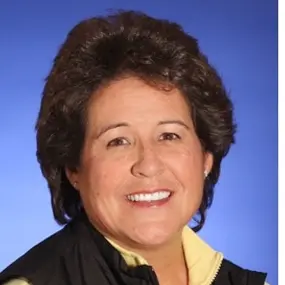
The year was 1978, and the Ladies Professional Golf Association was suffering an identity crisis. Growing up in Roswell, New Mexico, came an unidentified flying star, a Mexican-American girl whose father owned an auto-body shop. She won the state amateur when she was 12, two U.S. Girls’ Junior titles, an NCAA title, and, in 1975, she finished second in the U.S. Women’s Open. If this wasn’t the savior, then only God knows who was.
Her name was Nancy Lopez, and it wasn’t long before everybody just called her Nancy. She won five consecutive tournaments in 1978, and everybody sort of hitched a ride on her skirt tails: the press, the fans, the sponsors, even the rest of the women playing the sport. These were magical times for women’s golf, and nobody seemed to want to get in her way.
She won nine times that year, including the LPGA Championship, eight times in 1979 and she was the nicest person in the world. “After my first year I thought, ‘I could be a flash in the pan,’ and I was also determined to prove I was not,” Lopez has said. “I was determined not to fall on my face, though it is easy enough to choke yourself to death trying to win.”
Looking back on these years Jaime Diaz wrote in Sports Illustrated that Lopez had burst on the scene with as much charisma as anyone since Babe Didrikson Zaharias.
“I was determined not to fall on my face, though it is easy enough to choke yourself to death trying to win.”
Not even Zaharias had become a legend so fast. She was all of 21 years old, and the veterans marveled not only at her golfing abili… Read More