Bruce Devlin - Part 3 (The Majors)
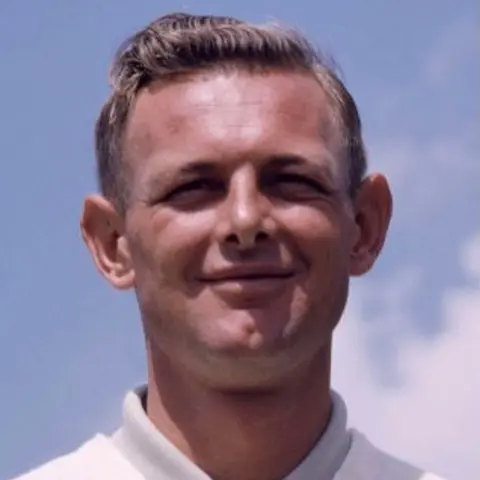
Bruce Devlin takes us back in time to review his record in golf's major championships which included 16 top-ten and 30 top-25 finishes and 61 consecutive cuts made from 1964 - 1972. He would take his one career mulligan at Augusta where he holds the distinction of having one of only four albatrosses in the history of the Masters Tournament. He recalls having the early lead on Sunday at the 1982 U.S. Open and shares his fondness for the Open Championship. Bruce Devlin ends this segment by talk...

 Apple Podcasts
 Spotify
 iHeartRadio
 PocketCasts
 Overcast
 Amazon Music
 RSS Feed
 Bruce Devlin takes us back in time to review his record in golf's major championships which included 16 top-ten and 30 top-25 finishes and 61 consecutive cuts made from 1964 - 1972. He would take his one career mulligan at Augusta where he holds the distinction of having one of only four albatrosses in the history of the Masters Tournament. He recalls having the early lead on Sunday at the 1982 U.S. Open and shares his fondness for the Open Championship. Bruce Devlin ends this segment by talking about his desire to "swim with the dolphins" when his time is up, "FORE the Good of the Game."
Give Bruce & Mike some feedback via Text.
Follow our show and/or leave a review/rating on:
Our Website https://www.forethegoodofthegame.com/reviews/new/
Apple Podcasts https://podcasts.apple.com/us/podcast/fore-the-good-of-the-game/id1562581853
Spotify Podcasts https://open.spotify.com/show/0XSuVGjwQg6bm78COkIhZO?si=b4c9d47ea8b24b2d
About
"FORE the Good of the Game” is a golf podcast featuring interviews with World Golf Hall of Fame members, winners of major championships and other people of influence in and around the game of golf. Highlighting the positive aspects of the game, we aim to create and provide an engaging and timeless repository of content that listeners can enjoy now and forever. Co-hosted by PGA Tour star Bruce Devlin, our podcast focuses on telling their life stories, in their voices. Join Bruce and Mike Gonzalez “FORE the Good of the Game.”
Thanks so much for listening!
15:55 - [Ad] Don't stress! Get him a Volleybird golf gift box.
16:41 - (Cont.) Bruce Devlin - Part 3 (The Majors)
Straight down the middle. It went straight down the middle. Then it started to hook just the wee wee bit.
Mike GonzalezAll right, Bruce, let's talk a little bit about your major championship record, which was uh pretty significant. I'll just uh uh give the the highlights here for our listeners. Uh your record major championships, 16 top tens, 30 top 25s, 51 of 61 cuts made, and that includes 31 straight from 1964 to 1972, where if you throw out your worst finish was which was 65th, the next worst finish was 39th in that stretch of 31 tournaments. Uh and twice you had uh three top ten finishes in a row. So, all in all, pretty good stretch of golf in the major championships.
Bruce DevlinYeah, except except for the one thing that one wouldn't always like to have, and that's the win. But you know, uh I had my chances, uh, just couldn't get it done. That's all. I was not gonna bring that up.
Mike GonzalezNo. But uh seriously, you had you had uh a great record across all of them, really. Uh let's start with the Masters. Uh that's generally was the first major of the year. It still is uh these days. 19 starts, 15 consecutive cuts made, which is tied for ninth on the all-time list. So that's a pretty significant record. Three top fives, five top tens, ten top twenties. Uh you had your chances.
Bruce DevlinYeah, I did. Again, yeah. Of course, uh the most vivid memory would be 1968, uh, the the year that uh Di Vincenzo and Galby had the mess up with the scorecard. Uh I had a I guess a three-shot lead going into eleven on Saturday, and they had that uh perilous short left pin. Uh, and I hit a perfect drive down the middle of the fairway, and I forget exactly what club, I think it was a six-line, uh, and I hit it just the way I thought I should hit it, and I was sort of in my mind thinking, well, I think I'm gonna get me another three, and it took a took a bit of a nasty bounce and it kicked left and went in the water, and then I went back to the drop zone and put it back in the water again, and when I looked at it, I thought, oh, you know, maybe I can maybe I can play that. And I went in there and hacked it a couple of times, and finally got it out and one putted for an eight. So that was that was pretty devastating. But you know, I played good to the clubhouse uh from there. I uh I birdied 12 and three-putted 13 for a par and part fourteen, put it on the green fifteen, three-putted it, and then I birdied seventeen and uh unfortunately bogeyed the last hole that day. But uh I think the after the quad it was uh it was okay, but you know, i eventually finished fourth.
Mike GonzalezLooking back, do you do you look upon that as sort of your best chance uh in the Masters?
Bruce DevlinYeah, I think so. Uh probably if you if you think about you know where it all ended, I think that was my best opportunity. But uh I I had a chance also in 64 when Arnie won. Um I started uh three shots behind God the last day, and then Bertie won two and three and sort of put myself right in the middle of it. And uh then I had a I had a long wait at the fourth hole. I hit a beautiful looking shot in there. You know, one one more foot, and I think I've got a relatively short putt for a birdie, and then I was playing with Gary and player, and he hit it in the back left and putted it down uh because he was further away from the hole than I was. He putted it down about eight foot past on my line and said, Oh no, uh let me finish, get out of your way. So he knocked that one past the hole and uh eventually uh got it in the hole and I hit a pretty good bunker shot, but a little too far and uh ended up missing the putt and making bogey and I sort of uh struggled from from there on the way and didn't never really sort of got hold of it again. I lost my momentum.
Mike GonzalezYeah, I think you you you're probably standing in the bunker watching him play four shots before you were able to play that bunker shot.
Bruce DevlinYeah, it was uh it was uh oh, you know, certainly not his fault, but I just uh I you know, for as good a bunker player as I was, I I knew I had to keep the ball short of the hole coming out of the bunker and didn't, so bad shot.
Mike GonzalezWhat one question I wanted to ask you, I think I know the answer, but I'm not sure. Uh if you had one do over, one shot you could ex you could execute again uh of any of the career starts that you had, where would it be?
Bruce DevlinOh, I well I think I'd have to say eleven at uh uh at at Augusta in sixty-eight. Although, like I said before, you know, I thought I hit a pretty good shot. But I guess rather than try to increase your lead, it might have been uh prudent for me to play a little further right, maybe, instead of hitting it at the flag. I had it going right at the flag, but I suppose with a three-shot lead, you you shouldn't be doing that at eleven when you know there's peril at the left-hand side of the flag, but you know. So that might be your one do over, huh? That'd be that'd be it, I think.
Mike GonzalezYeah, yeah. Well, you certainly uh have been in the record books and and perhaps will be in the record books for a long time at Augusta as one of only four players that have had an albatross uh course.
Bruce DevlinIn it interesting too that uh there are four par fives, there have been only four twos, and they've all been on different holes. Sarazen 35, Devlin in 67, um I always oh uh Jeff Maggot. Jeff Maggot, right? Jeff Maggot, I think, was 93. He was on uh on the 13th one, yeah, and then uh oost hasn't in uh 2000 and it was 2012 on 2012 on two.
Mike GonzalezOn number two, that's right. And and uh I've told you before, but my my dad, my brothers, we used to go to the masters every year back in the 90s just to watch the practice rounds, and and of course we always finished up at the par three. We love the Wednesday par three. Um but uh on Monday and Tuesday, you would find us behind the second green. So we we saw hundreds of shots over the years. Come in and break to the right, especially that backbee placement. Yeah, and you know how I mean I'm sure you went through this when when you would play your practice shots and chips and putts to all the you know the the known regular areas, yeah. Yeah, so we saw a lot of guys practice to that area, and uh and so to watch that shot come in on television, you kind of knew where it was going. Yeah, you had a pretty good eye it was gonna be close. It was gonna have a chance. So that was that was kind of cool. It's too bad that Louis wasn't able to to finish because uh he was he was in contentions that year, wasn't he? Yeah, he was. Um, but anyway, uh uh the other thing of note is you know, from a stretch from 1964 to 1973, you had the lowest scoring average at the Masters without winning. It's a pretty good stretch of golf for those 10 years.
Bruce DevlinYeah. Yeah, I I always loved to play there and I I liked the golf course. Uh it was a it was a golf course uh where you had to be a uh I wouldn't say uh necessarily a conservative putter, but you had to know when to take a run at it and when not to. Uh the Greens uh at Augusta of very demanding.
Mike GonzalezHow how did they putt back then uh in the 60s, 70s compared to how they're putting today speed-wise?
Bruce DevlinUh on a couple of occasions they putted quicker than what they put today. Um I think for prior primarily for a lack of grass, but oh a couple of years they were just icy, so quick. Uh but you know, to today, even though they're you know, I I think I heard uh the other day that they were they were running about twelve uh first thing of the morning, but you know, today's golf twelve. Yeah, twelve's fast, but it's not it's not dangerously quick. It's when you get up in the 13, 5, and 14s where it gets really, really difficult.
Mike GonzalezNot Oakmont fast. Yeah.
Bruce DevlinYeah, Oakmont is I actually I I went to Oakmont one year when they were running 16, if you can believe that. You couldn't you could hardly keep her on the green.
Mike GonzalezI can't imagine how you could in some of the spots just just ridiculous. Yeah, yeah. Um you you you told an earlier story about uh about being introduced to Mr. Hogan uh through Robert von Neida, uh your first masters. Uh but after that I'm sure you had uh many memorable practice rounds with uh uh quite a few quite a few girlfriends.
Bruce DevlinIt was uh it was a it was a great relationship I had with Mr. Hogan. Uh after that first practice round in 1962, I I had a chance at every golf tournament that we played together, which you know, I mean it wasn't half the golf tournaments, but when we were in the same tournament, we got to play practice rounds together, and uh I guess uh you know it's pretty nice to have been able to play that many practice rounds with him.
Mike GonzalezYeah, you had at least one one practice round match at Augusta, as I recall, where you uh it was you and and and Mr. Hogan uh against Arnie and Jack.
Bruce DevlinYeah, that was that's that's a good memory. Um I must check with Jack one day about that, but uh that it's always a nice day when you can uh when you can take some money out of Jack and Arnie's pocket.
Mike GonzalezSo they they were not on the receiving end that day, they were not on the receiving end, I can assure you. Yeah. Well let's uh let's uh let's move on to the U.S. Open then, which typically was the second uh major of the year. It still is. 17 starts, five top tens. Uh best finishes uh were in 65 and then and then in 82. We'll talk about both, but in 65, uh uh that was at Bel Reeve. And uh you you tied for sixth. Had a pretty good tournament that tournament.
Bruce DevlinYeah, I had a good tournament there. Uh I I remember the tournament more from uh from my my dear friend Kel Nagel. Looked like he had a really good chance to to win the golf tournament, and it came down to him and Gary player in the last few holes, and uh and Gary survived to win the open.
Mike GonzalezAnd that's a good golf course. Yeah, tough.
Bruce DevlinAnd and it's uh it was a it was pretty tough. They had it playing pretty tough that year, too.
Mike GonzalezUm and then the the one that uh uh certainly I remember, and I remember it because um uh a friend of mine uh who who you know from Secession that was getting married in 1982, and uh and the honeymoon uh was actually uh the whole wedding party together. And so you can imagine what the guys did on the Sunday of U.S. Open. Uh we were watching the U.S. Open from Pebble Beach, and that was of course the famous one that uh that everybody remembers Watson shipping on an 18 on 17 and then uh going on to beat Nicholas. But uh uh you were right in the hunt. Yeah.
Bruce DevlinThe one thing that I remember vividly uh was after leading after 36 holes, um I got up on Saturday morning and I picked up the San Francisco Chronicle. And in those days, maybe they still do it today, I don't know, but uh the sporting section was always done in green paper. And I opened up the the green section and it had the obviously had the open as the you know the opening story and it said old war horse leads the open. So I become an old war horse at 44. I did. I had a pretty good chance to win, though, after leading uh you know, leading after the second round, I didn't play so good the third round, but the fourth round I was four under through six, and I'd gotten back into the lead, and then part seven and eight, which was good. And then I hit a pretty good drive at nine, and it wiggled its way down on the right-hand side of the fairway into the rough into a horrible line. I made six. Uh so that that really uh that took my mem momentum away.
Mike GonzalezYeah, yeah. But uh good tournament nonetheless, and then certainly a big win for Watson over Nicholas. Nicholas had won the uh U.S. Open there, I think, in 1972, and was certainly right there again on Sunday. But uh Watson's miraculous chip on 17 kind of put him over the top. Let's talk a little bit about the open championship. Uh uh I think uh uh for Americans, we probably valued uh uh the U.S. Open or the Masters perhaps a little higher back in those days. But as an international player, the Open Championship was a big, big deal. I think bigger than than you know what what the Masters in the U.S. Open probably was back then.
Bruce DevlinYeah, I would I would say uh you know, coming from Australia and um more more sort of in the world outside of the U.S., it was probably a bigger tournament for us to win. Certainly from a financial standpoint it was. Uh it it would have been uh it would have been uh uh a lot better financially to have won there than I guess even to have won at Augusta, although with my fond memories of Augusta, I'd have I'd have liked that too. That probably is the one that that I would pick as the one I would really have liked to have won because uh as we saw this year, Charlie Cootie uh 50 years since he won, he's been back for 49 champions dinners.
Mike GonzalezYeah, and and and obviously very special to him and to the other winners that are able to assemble. That's a a pretty uh uh pretty uh elite group that gets together every year, and there's great stories come out of that room, I'm sure.
Bruce DevlinI bet there are. Yeah, yeah.
Mike GonzalezUm, but uh open championships, you had 13 starts. You had five top tens. Um and uh um in uh in in in 64 through 68 you played the old course, Burkefield uh Royal Burkdale, Muirfield, Hoyle, Carnustie. Um your best finishes. Uh one I take note of was 1964, uh, where I think that was the year Tony Lima won it.
Bruce DevlinAt the old course.
Mike GonzalezYeah, and uh and you finished uh fifth after sitting third after each of the first three rounds at the old course, yeah.
Bruce DevlinYeah, and I can uh I always I always said that uh you know you gotta be a little bit lucky. And uh I had a late and early first two rounds. And I can assure you that late and early the wind blew twenty five miles harder than it would than it did early and late. So I I keep I always tell my wife, you know, if I'd have had uh Lima's tea times, things might have been different.
Mike GonzalezBut and that happens probably at that tournament more so than others. Where it does make a difference, doesn't it?
Bruce DevlinIt stretches over a long period of time from you know from early morning till you know some of the guys don't finish till 8 30 at night.
Mike GonzalezYeah, and if you catch the draw right, maybe it's a mild morning, you get a score in, you post it, and and next thing you know, all hell breaks loose with the weather, and who knows, huh?
Bruce DevlinAnd that uh that happens when the tide changes. That's when the wind shifts. Uh many times, uh I think over the years, you could you could play uh the old course and fight the wind going out and tidal change and then you fight the wind coming back. Yeah, yeah.
Mike GonzalezYou you'd you you tied for eighth at Burkdale the next year, 1965. Peter Thompson won there. Uh you had the lead at 36 holes, you were one back after 54. Uh so that was a pretty good tournament. Did you like Royal Burkdale?
Bruce DevlinI love I love Royal Burkdale. I think it's a great golf course. Uh that's that's a golf course that one of my Aussie buddies, Ian Baker Finch, won the open at. And we're we're gonna get to chat with him uh in one of our podcasts. So uh and and I have uh great memory there for winning the uh Carling World Championship. Um what would be considered today the a world golf championship. Uh yeah, that that's a good golf course, Spokale.
Mike GonzalezYeah, I mean, it w was that the kind of thing with some of these open rotor courses where you'd get on that tee and you had a good feeling about particular courses over there?
Bruce DevlinYeah, no, I guess because uh probably played more there in the open and Muirfield than say Hoylake, for instance. Um I knew knew those three courses much better than I did Hoylake.
Mike GonzalezYeah, yeah. And Burkdale is a big course.
Bruce DevlinYes, it's a very good golf course.
Mike GonzalezIt's a meaty golf course. Yeah, yeah, yeah. Um you tied for fourth the next year. So I mean this you're on a pretty good run here, uh, you know, starting in 64. So you tied for fourth and 66. Uh Nicholas uh won his first uh at the time, British Open then, uh, and uh uh was the completion of his first career grand slam at Muirfield of that year.
Bruce DevlinUh that's that's a very difficult golf course. Uh you get the win around Muirfield. It's uh I mean, you know, it's I'll be honest with you, it's easy to shoot 80 around there if uh if the wind blows hard. But it's still a it's still a pretty, you know, it's a great Lynxy golf course.
Mike GonzalezSo Yeah, Muirfield always uh has just uh struck me as a uh a straightforward, relatively fair golf course. You're not gonna get the quirky bounces that you're gonna get at at let's say uh uh Sandwich, Royal St. George's.
Bruce DevlinRight.
Mike GonzalezUh kind of what you see is what you get. But I suppose if the wind's blowing or if they decide they want to narrow those fairways up and grow up that rough.
Bruce DevlinGrow that rough, yeah. Yeah, of course, you know, most most of the uh most of the sandbelt golf courses, they're they're all fairly close to the water. And you get that tide change, that wind sort of changes, you know, easily changes 180 degrees. So it's uh it makes it makes scoring much more difficult.
Mike GonzalezYeah, so so Jack and in uh winning his career grand slam, his first career grand slam at Muirfield, I guess one of the reasons why perhaps he elected to to name his new golf course up in the Columbus. Columbus, yeah. Muirfield village, yeah.
Bruce DevlinYeah, I I think so, for sure.
Mike GonzalezYeah, yeah. And it was just you know, it was just two weeks after that tournament, too, I think that Tony Lima um had his uh had his accident too.
Bruce DevlinYeah, that was that was terrible. As a matter of fact, uh it was the night of the I think it was the night of the PGA that we played in Akron. And Tony Lima and his wife Batty were coming to Australia with my wife and I. We I think we talked a little bit about you know the Australian side of golf being a little, you know, hard for hard to make it a real circuit, but every time we got an Australian player in uh an American player in Australia, uh, you know, created a lot of interest and uh and he was he was set to come down and uh unfortunately never made it.
Mike GonzalezDid you know him pretty well, have a chance to play a lot of golf with him over the years?
Bruce DevlinNo, you know, I didn't play a lot of golf with him. Uh I knew him fairly well. He was a very likable guy, you know, Champagne Tony Lima. Uh I know the press loved him. Because he'd all he'd always buy him champagne when he won. But uh now he was a good player. He deserved his victory at uh at the uh the all course.
Mike GonzalezOf course, you've talked about uh in our uh uh teaser episode about the story with uh with uh Lee Trevino uh at Royal Litham where you shared drivers, which people people have now a lot of people have heard that story. They don't they don't quite want to believe that one. Right. Uh let's talk about PGA championship. 14 starts. Uh one top ten, best finish was tied for sixth in 1965. I think that's the the year Dave Marr won at uh Laurel Valley. Yeah, Laurel Valley. Yeah, yeah. So what's your memories of playing in the PGA championship?
Bruce DevlinUh you know, I uh I guess that was probably my worst uh set of records uh in the PGA than anywhere else. But I I I you know I really don't know why, but I just never seemed to play very well at the PGA.
Mike GonzalezUh was it the venues at all? I mean the different set of golf courses.
Bruce DevlinUh uh you know, I'll tell you what it maybe it was it's sort of getting late in the year and you know, you want to sneak back to Australia for a while and play a couple of golf tournaments on the circuit there. Uh well uh pretty poor excuse, I suppose, but but I didn't play very well in the PGAs.
Mike GonzalezYeah, I mean uh how many people were logging the kind of miles that You and Bruce Crampton and at some point David Graham were logging to come all the way from Australia. Come for several weeks, play the tour, go back to family, come back.
Bruce DevlinYeah, that was hard. And it, you know, it's it's uh not like we were flying at eight hundred miles an hour getting over and back. Although, yeah, most of my most of my early trips were in the old 707. Uh uh w even though it was a JIT, it wasn't quite as quick as what they are today.
Mike GonzalezYeah, let's talk a little bit about golf courses. Uh let's go back to the open championship and and just think through the the open rota courses I I suppose uh really uh of the uh of the current rota, uh with the exception of Royal Port Rush, which was just added. You probably played them all, I would guess, yeah.
Bruce DevlinUm played mo I don't think I played them all, but I played most of them. Uh I I must admit of all of the courses that I have played over there, I always you know, my first introduction to golf over there was the old course back in 1958 when I went over there for the Eyes on Our Cup matches. But um you know, they got a lot of nice golf courses. Carnusty's a nice golf course, difficult, but but I think like I said before, all of them are around water and the tide and the wind uh has a huge bearing on how that golf course plays. It can play four or five shots, four or five clubs different from one day to the next.
Mike GonzalezYou probably would have played Troon, I would guess.
Bruce DevlinI did play Troon, yeah.
Mike GonzalezIn uh '73. Yeah. Uh Turnberry.
Bruce DevlinI played Turnberry. Yeah.
Mike GonzalezUh so that covers all the Scottish courses. In England, you you played uh uh you know, we talked about Burkdale, we talked about Litham, uh Royal St. George's. You must have had at least one open championship down there. I never played Royal St. George's. And Hoy Lake, you you would have played? I played one one at Hoy Lake. Royal Liverpool. Yeah, yeah. Uh and that's really it. I mean, other than Port Rush, and then you know, you've got uh the four old golf courses that hosted the open many, many years ago, but uh they've been out of the rotor for a long time.
Bruce DevlinYeah, they have.
Mike GonzalezSo what about American courses? Let's uh you know, I I guess either either PGA championship or the US Open. Um what were some of your favorite venues?
Bruce DevlinI always uh I always enjoyed Pebble. I thought uh I thought Pebble was uh again, you know, right next to the water. But uh W without the conditions at Pebble, it was uh you know, really fun golf course to play where you could, you know, you could make a pretty good score around there if you if you weren't fighting you know 20 mile an hour winds. Uh I must I must say though, my favorite course is uh I know a gentleman by the name of Mike Gonzalez who's uh at my favorite golf club, Secession Golf Club down in Buford.
Mike GonzalezUh we didn't host any tour events, but uh it's an awful lot of fun to play.
Bruce DevlinYeah. That's my uh that's obviously giving myself a pat on the back as an architect there, but I uh I really love Secession. I think it's a beautiful place and it's always fun to go play there.
Mike GonzalezWell, I'll I'll tell our listeners a a little story about about that, which I think uh would give everybody an impression of how important secession is to you. Uh Bruce and I were walking the golf course back in uh the summer of 2015, I think it was. We were getting ready to do some bunker work. We were going to put in eco-bunkers. We'll give a little shout out to our friends uh Richard Allen and and uh Cluelin Matthews at EcoBunker, who did a fabulous job putting these bunkers into secession. We were the first golf course in the country, maybe in the world, to commit to doing these uh the entire golf course with Eco Bunkers. Right. And obviously it was very important at the time to make sure that uh uh we we put them in precisely how that that you wanted them to go in because they were gonna be there for a while.
Intro MusicYeah.
Mike GonzalezAnd uh we were we were walking off the second T, a little short part three, and uh we were walking up from the T to the green, and I made some remark about Bruce. I think this is uh the loveliest spot on the golf course. And uh Bruce put his arm around me and uh as if to accent every syllable, he points, he pokes me in the chest. He says, Mike, he says, write this down. And then he points to a little palmetto tree uh right by the back tee, right on the back of two green, he says, put me right there. And he points that palmetto. And uh, of course, what he was saying was uh when I'm all said and done, that's where I want to be put with my ashes, is is right there. So he went on record. It's in our book. It's in the minutes, it's in the book. It's it's there's no backing away. He shared that with his family and with his friends, and and that's kind of where you want to be, isn't it?
Bruce DevlinYeah, uh go go swim with the dolphins that come in there occasionally.
Mike GonzalezThank you for listening to another episode of For the Good of the Game. And please, wherever you listen to your podcast on Apple and Spotify, if you like what you hear, please subscribe, spread the word, tell your friends until we tee it up again for the good of the game. So long, everybody.
Intro MusicSmack down the fairway. It went smack down the fairway. And it's time to slice just smitch off land. My caddis, as long as you're still in the stage, you're okay. It went straight down the middle file away.
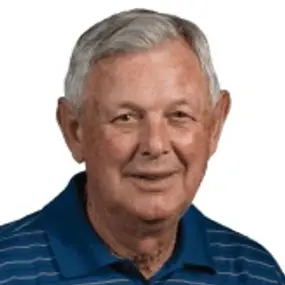
Golf Professional and Golf Course Architect
Professional golfer, broadcaster, course designer and philanthropist, Australian-born Bruce Devlin amassed 40 world-wide wins in his professional career. As a young man, he followed his father and began an apprenticeship in plumbing. It wasn’t until a tragic accident took his father’s arm that he began playing golf at age 13. As a fine amateur player, Bruce enjoyed a great deal of success with wins at the Australian Amateur and Australian Open before turning 23. In 1958, as a member of the Australian team, he won team and individual honors at the inaugural Eisenhower Trophy played at the Old Course in St. Andrews. He turned pro in 1961 and won his first international event in 1962. Over his career, he also achieved eight victories on the U.S. PGA Tour. In 1972, he earned $119,768 and finished eighth on the money list. Bruce was inducted into the Texas Golf Hall of Fame in 2014. Bruce is one of only four golfers to have scored a double eagle at the Masters Tournament. He achieved this in the first round of the 1967 Masters, holing a 4-wood from 248 yards on the par-5 8th hole. His last victory came on the Senior PGA Tour in 1995. At the end of the 1998 golf season, he retired from the Senior PGA Tour to concentrate on his Golf Course Architecture and Design business and his commitment to ESPN's Golf Telecasts. He worked for NBC from 1977 to 1982 and ESPN from 1983 to 1987. Bruce currently serves as Board Chairman for The Devlin Foundation and is an active volunteer with The Ben Hogan Foundation.