Bruce Devlin - Part 4 (Life After the Tour)

 Apple Podcasts
 Spotify
 iHeartRadio
 PocketCasts
 Overcast
 Amazon Music
 RSS Feed
 Bruce Devlin looks back on his work after the PGA Tour which included a brief stint on the Senior Tour. He caught the course design bug beginning in the late 1960's and that, along with his pioneering days as a golf broadcaster, took him away from competition well before his elite golfing skills waned. Bruce recalls his extensive body of work designing nearly 150 courses across the globe and tells of his family's philanthropic work through The Devlin Foundation. Bruce Devlin reflects on a life and a career in golf well played, "FORE the Good of the Game."
Give Bruce & Mike some feedback via Text.
Follow our show and/or leave a review/rating on:
Our Website https://www.forethegoodofthegame.com/reviews/new/
Apple Podcasts https://podcasts.apple.com/us/podcast/fore-the-good-of-the-game/id1562581853
Spotify Podcasts https://open.spotify.com/show/0XSuVGjwQg6bm78COkIhZO?si=b4c9d47ea8b24b2d
About
"FORE the Good of the Game” is a golf podcast featuring interviews with World Golf Hall of Fame members, winners of major championships and other people of influence in and around the game of golf. Highlighting the positive aspects of the game, we aim to create and provide an engaging and timeless repository of content that listeners can enjoy now and forever. Co-hosted by PGA Tour star Bruce Devlin, our podcast focuses on telling their life stories, in their voices. Join Bruce and Mike Gonzalez “FORE the Good of the Game.”
Thanks so much for listening!
19:43 - [Ad] Don't stress! Get him a Volleybird golf gift box.
20:29 - (Cont.) Bruce Devlin - Part 4 (Life After the Tour)
Straight down the middle. It went straight down the middle.
Mike GonzalezThen it started to Bruce, you had a 10 cup moment before anybody'd ever heard of 10 cup.
Bruce DevlinWell, that's right too. Memory back to uh I'm not quite sure of the year. I think it was 1975. Uh playing out at uh uh San Diego in the San Diego Open, and uh Tom Watson was leading the golf tournament uh going the last day, and I was I don't know, I was five or six shots back in an hour and a half in front of his tea time, and I I came to the last hole at Tory Pines, and I hit a pretty good drive on the last hole, just missed the fairway by about a foot on the right hand side in the first cut, so I had a beautiful cushy lie, and I was um I don't know, I guess 215, 220 in the front of the green, and I decided it was just a perfect high forward, and I hit the most gorgeous forward that I've hit in a long time, in my opinion, anyhow. And it it actually hit on the bank about 15 feet in front of the flag. Looked like it was gonna stay there, so I'm thinking, you know, I got a pretty good chance to, you know, shoot ten under around here. That'd be pretty nice. And I think I took one step towards the the green and the ball started trickling down the bank and it went back in the water. And that was the first time that they'd had a lake in front of the green at uh Tory Pines. So I went in there, looked at it, and thought, oh, I can get this out. So I waded my way into the into the lake and I whacked it once and moved about a foot to the right, and I hit it again and moved about a foot to the right. And uh on my seventh one, I was able to get it out of the water, and then I hold it from about 25 feet for a ten. So the the first time you attempted to get it out of the water, was there some ball visible above the No, it was uh it was a little bit under the it was a little bit under the water, but I still felt like I could, you know, get it to come up. The bank wasn't all that high, you know. It was probably only 18 inches, two feet at the most. And I kept making the same mistake. Uh, you know, it would come out and it'd hit the bank up there, you know, just short of getting undergreden and fall back down to the right of me. And I kept working my way to the right. And anyhow, they they they did something that I thought was pretty nice. They uh they named the lake Devlin's Billabong.
Mike GonzalezSo it's known to by that to this day.
Bruce DevlinTo this day, yeah. Uh now and there was a there was a plaque put out there uh uh on the stand in the middle of the lake, and of course they take that uh they take that off uh during the tournament each year, which is nice. I don't like them to see my name stuck out in the middle of the lake.
Mike GonzalezWell, you had your name on uh not just a plaque, you had your name on a golf ball back in the day. You had your name on a line of golf clubs, you were with uh Spaulding. Tell us a little bit about that.
Bruce DevlinYeah, in uh well, uh my third year, I come over in 62, obviously played the Masters first, and then I played uh oh, I think I played about six or seven tournaments in '63 and went broke again for the second time, then went back. And then '64 uh I came back and was able to win in uh St. Petersburg after a nice lesson from Jack Nicholas. And then I got a um I was with Mark McCormick uh as one of his clients, and uh he structured a contract with Spaulding. And at that time in 1964, I think I signed the largest contract that Spaulding had ever written for an endorsement. It was a three-year contract for$100,000. Uh a lot of money back then. Pretty significant, yeah. And then they uh, you know, they made a golf ball uh with my name on it, and they made two different sets of golf clubs. One was a silver and one was a gold uh with my uh name on it as well. So uh that was that was pretty neat to think that they were building golf clubs with your name on it back then.
Mike GonzalezAnd you played those clubs and that ball.
Bruce DevlinYeah, I uh I didn't play I didn't play the ball because it was a uh it was more of a a cheaper type ball. Okay. Uh it wasn't uh you know it wasn't at the high it wasn't the spaulding dot, for instance. So I played the spaulding dot, but uh I think the gold clubs uh were pretty good.
Mike GonzalezThey they built some nice clubs. Talk a little bit about your senior PA PGA uh tour career. I don't know what it was referred to then, if it was the senior tour at the beginning, uh when it turned to be the champions tour.
Bruce DevlinCorrect. It was the senior tour when when I played on it. I I had a I didn't have much success on it, to be quite honest with you. Um I I was able to win uh out in Ojai and California, beat Dave Ackelberger uh in a playoff, but uh that was my only victory on the senior tour. So it wasn't a very outstanding career on the senior tour.
Mike GonzalezYeah, but you had some uh uh some other things that uh I wouldn't say got in the way, but uh got your attention. I mean, you got into broadcasting, you've got into golf course architecture, and so uh uh it was hard to probably juggle all of those things and and and and be really successful at all three at the same time.
Bruce DevlinYeah, I think you know, if you look back, you probably say, well, you know, you can't really do all of those things. Um and I think I think probably my golf suffered for it, but uh you know, I was happy doing what I was doing. Um I I enjoyed my uh short, relatively short stint with uh NBC and then moved over to ESPN. And uh actually I was uh first color uh analyst for ESPN when when they uh had the first Legends of Golf golf tournament in um Onion Creek in Austin, Texas. And my uh my play-by-play guy was a guy that a lot of San Francisco 49ers will remember, John Brody. The great quarterback from uh from Stanford who uh who had quite a storied career and and actually he actually played on the senior tour as well. He won a golf tournament there in uh I think he won in LA if I remember correctly. But uh send out if he happened to listen to this. Uh it was a great time working with him, and uh unfortunately many years ago he had a stroke and uh you know he he couldn't play golf after that, but he's still around with us and I hope he's doing well.
Mike GonzalezOh good, yeah. You you you work with some great people uh uh at NBC. There were some some uh some names that our listeners would remember uh that uh were uh for the most part professional sports casters, weren't they? Yeah.
Bruce DevlinUm the guy that I work with the most was a guy by the name of Don Cricky. Uh Cricky and I worked together for oh, I guess a good two and a half years.
Mike GonzalezUh and then um was Jay Randolph uh doing NBC work as well?
Bruce DevlinJay Jay Randolph was on there. Um Bob Golby uh came along and and was doing some work out on the golf course, you know, walking around um talking to the players.
Mike GonzalezWhen that wasn't being done, uh I mean that was uh probably pioneering work back in those days.
Bruce DevlinInterestingly, NBC was the first uh network to do uh you know, people walking out and commentating on golf. Uh and that was my actual first job with NBC. I was a roving uh analyst, or not not analyst, but you know, talking about what what golfers were doing out on the golf course, and uh that was uh I think that was the Tucson tournament where they first started, and I think it was I think it was 1978.
Mike GonzalezYeah.
Bruce DevlinAnd then I worked with them through 1982 and uh yeah, and after after being with uh NBC um I I actually um lost my job to Lee Trevino, to be honest with you. He he ended up being the play-by-play guy with them, and uh and I continued then doing my uh you know golf course work and at and I think at about that time too I started to work for a company out of Boston called State Street Global Advisors doing a lot of uh corporate work for them, which was a lot of fun. Uh ES Penn followed uh followed on behind uh NBC and uh I worked with them, oh goodness, for maybe six or seven years, had a had a great time with them. Uh my uh play-by-play guy was Roger Twyble, who's um who's been in the uh television business for uh for a long time. He was a great buddy to work with and uh I enjoyed every minute I work with him.
Mike GonzalezSo 10, 11 year stretch or so in in in broadcasting golf events, was it all on a senior legends tour, or were there were there some uh regular PGA events that you covered as well?
Bruce DevlinYeah, we sometimes we did the uh we do the front we do the front part of uh a golf tournament. Uh I remember vividly uh CBS was doing uh the tournament in Denver. I'm losing the name of the club here, but Castle Pines. I had known I had known Frank Jacquinian for a long, long time and Roger and I were doing the first two days of the of the tournament. And uh I've always I've always given him a bad time, you know. Uh and uh we get we get to start on Thursday, he comes on about five minutes before the uh the telecast was due. He said, Okay, boys, what what are we gonna do today? And Roger said, Well, I'd like to start out to do this, and then I'll throw it over to Bruce, and he wants to start with such and such. He said, Okay, that's good. Well, Frank Jekinian got even with me that day. Roger started the telecast and then he turned it over to me. And I'm sure a lot of our listeners know that you can the producer can can individually IFB you so that he and you are the only two people that are hearing what's going on. And he started in on me uh using some rather uh what we would consider not very nice terms, colorful language, and said that uh you'd you've given me such a bad time for all the years that I've known you, and this is my chance to get even with you. And he's talking in my ear while I'm while I'm trying to you know do my opening part for the for the telecast. So uh I I tried to get rid of it as quick as I could and said, okay, well, let's go out to the fourth hole. And you know, Andy Norse there or someone who, you know, whoever it might have been. And uh no sooner did I throw it away and he single IFB'd me back again. He said, Ha, see, I told you I was gonna get even with you one day.
Mike GonzalezWhat an icon it's in golf golf broadcasting. Innovator, yeah, many years with CBS. Uh obviously uh had responsibility for many, many years with Jim Nance at the crew covering the masters. But uh uh yeah, what a what a lot of innovation.
Bruce DevlinHe did a lot of things for golf telecast, I think, that he improved it a great deal.
Mike GonzalezYeah, he sure did. So you got into architecture even well long before you got into broadcasting. I mean you were you were a very you were in your prime actually uh uh golfing yet and got into golf architecture. How'd you how'd you get into that?
Bruce DevlinYeah, it was sort of strange because uh during my amateur career, if we remember back, I I became a uh a member in uh a Lakes Golf Club in Sydney, and I used to travel 130 miles every Saturday morning to go play pennant golf. And after a couple of years in the States as a professional, I got a call from the uh captain of the club down there, and he said, Bruce, uh I'd like to chat with you about something I'd like you to do for me. So uh we had a long conversation. What actually happened was the state government decided that they were gonna build a freeway from a different freeway from the airport back into the city of Sydney. And the routing of that freeway was going right through the Lakes golf course. So my charge was to uh visit golf courses under construction in the United States and come back with a recommendation to the captain of the club of you know who they would who'd be the best person to uh to sign as a contract to handle this freeway intrusion. Well, I looked around, I made, I made a recommendation to uh to the captain of a guy by the name of Robert Von Hege, and uh I hadn't talked to him, I hadn't talked to any of the architects. I just sort of perused around and looked at what they were doing. Anyhow, when he got out to Australia, he said, you know, this was a shock to me to think that I'd get a call from the Lakes Golf Club to come over and do, you know, why did you pick me? And I said, Well, uh, I'm trying to visualize a freeway going through a golf course. And how do you block a freeway out, you know, from a golfer's perspective? And I said, I know that you were a protege of Dick Wilson, who was probably, you know, he'd built a couple of golf courses in Australia, and he was a master at moving dirt around, and and I thought that uh Robert would be a good guy to do it. So uh after that, uh that was in well, I guess that was in 66.
Mike GonzalezWell, let me let me stop you there because uh uh I I made a note to myself to ask you this. Uh 1966. I mean, you're still just getting your career going as a professional in the United States. You haven't even moved your family over yet. And so I kind of wrote down on my piece of paper here. Was that a little too early? Because it it it was a distraction. And uh I can remember something you told me that uh that that uh you got to talk a little bit about Ben Hogan because you you were taking a little bit of time away to do some of this stuff, and and and and you I think you asked him something about taking a day off or something. I don't remember the whole story. What's true, yeah.
Bruce DevlinYeah. We we were uh we were playing a practice round and uh I I don't quite know how the subject came up, but uh I said to him, uh, you know, I got to a point where I could playing golf with him, I'd call him Ben. N normally I would call him Mr. Hogan, but I said to him, So, Ben, tell me, how many days a year do you take off? And he looked at me like I'd handed him a snake or something, and he said, Take days off? He said, The only three days that I've taken off in my life was when we got when I got caught in a snowstorm in Tulsa, Oklahoma. He said, that in itself was unbelievable. You'd have a snowstorm in Tulsa, Oklahoma, he said, but he said you can't take time off. He said, You've got to hit balls every day. And if you don't for every day you don't hit a golf ball, it's gonna take you two days to get back to where you were three days ago. So not that I took heed from what he said, but he was uh that was that was uh that was an ironclad thing with him, even up until even up until he was in his seventies. Uh you could go to Shaggy Oaks Golf Club in in uh in Fort Worth. Uh Mr. Hogan might have been hitting balls up on the par three area, or he was walking the back nine. Uh, and that's what he'd do. He'd go out there and hit a few balls, walk the back nine, uh, sometimes play the back nine, but he was uh he's he stuck with that right up until through his seventies.
Mike GonzalezYeah, yeah. Well I I interrupted you, but uh uh that was an early start in golf architecture, but uh you went on to to be quite a prolific golf architect. Most people don't understand or realize uh the number, just the sheer quantity of golf courses that you and and and in a lot of cases Robert Van Van Hage were involved in, correct?
Bruce DevlinYeah, we uh well my my total involvement in all the courses is probably about a hundred and fifty. Uh the greatest majority were with von Hege, probably a hundred and hundred and thirty, hundred and thirty-two of them, but towards the end it was, you know, I just was doing it by myself. And uh I I guess what happens with partnerships is you know you you stay compatible for a certain period of time and then things things change with the way you look at things, and I got to a point where I just felt like uh I felt like we were building golf courses that were too difficult for the members to play. And I've always been a uh a supporter of a of doing designs on what the property is itself, try to change it as little as possible and uh and make it fair make it fair for the uh for the a for the average player, for the average member. Uh the difficulty can come in from a good player standpoint is you change the angles that the golf hole has played. Uh I can give you a typical example of that would be the the third hole at uh secession. Uh the members' tees, you look straight down the fairway, but you go back to the championship tee and you're on an oblique angle. So you then have to choose how f how much you want to cut off.
Mike GonzalezSo, seventh hole will be the same way. 18 plays a little bit like that. Same way. Exactly. Yeah. Yeah. Um well you you you uh you know, looking back at some of the courses you did, several of them have hosted uh uh some significant professional events. The Houston Open, the Hell Health South LPGA classic, the Key Biscayne Golf Classic, the Nike Cleveland Open. That covers just about every professional tour in America, doesn't it? It does, yeah.
Bruce DevlinYeah, that's uh you know, that's a sort of feather in your head, I think, that they uh they decide to to hold a a championship from one of the tours on your golf course. Uh the uh I guess the other the other golf course that I've really ha thought a great deal about over the years was the one that that I built at St Andrews. And there's a you know, there's a positive and a negative to that. Uh to think that you can build it in St. Andrews is you know, you think, whoa boy, isn't that great? And then you think, oh my God, the old course is three miles away. What do you what do you do? But not a lot of pressure. Yeah. But uh fortunately for me, you know, the old course is down in the, you know, basically in the sand dunes. And um I had the opportunity to build a golf course that was right on the cliff of the bay there.
Mike GonzalezSo uh on an old potato farm, isn't it recalled?
Bruce DevlinYeah, a hundred years they had we're growing potatoes there, and we we ended up turning it into a golf course.
Mike GonzalezAnd that was at the uh what's now the Fairmont St. Andrews Kittix course. It was originally called the Devlin course, but at the Fairmont Hotel, they've also got the Torrance course there, correct? Correct.
Bruce DevlinYeah. Yeah. Yeah. Sam Torrance and uh and a uh architect out of Atlanta did the uh what what I would call the North Course, which is the Torrance course, and then I got to do the one on the South course, which was a lot of fun. And you're right, they used to call it the Torrance and the Devlin, but uh the the the Australian lost uh lost his name off the golf course, but the Scotsman was able to keep it.
Mike GonzalezThey would have never done that to the Scotsman, I'm I'm sure. No. But you did a lot of your courses in the U.S., uh particularly in Florida and Texas. Um you did courses in Australia, your your home country, Japan. Uh you mentioned your work in Scotland, the Bahamas. So uh you were you you put a lot of miles on back then, didn't you? Yeah, uh while you were trying to play golf as well.
Bruce DevlinYeah, and one of the uh the other courses I got a chance to build was uh the golf course on the east slope of Mount Fuji. Uh about uh I guess about an hour and twenty-minute drive from the middle of downtown Tokyo. But uh that club uh when we built it, uh think about this now. When we when we built that golf course back in the seventies the initiation fee to join the club was three hundred thousand dollars.
Mike GonzalezOh my then. Oh my.
Bruce DevlinNow I don't I don't think those memberships are worth that today. But at that time, uh you know, th they used to they used to seed all their golf course membership with particularly strong individuals from from Japan, and that sort of promoted the membership thing for the you know, for the average not not well, average guy playing that sort of money. It's not an average guy.
Mike GonzalezSure, yeah. Yeah, but it sure speaks to the passion of the Japanese golfer, doesn't it?
Bruce DevlinYeah, boy, did they get a shot in the arm a couple of weeks ago too. Matsuyama winning the Masters. Uh uh I just gotta believe that Japan golf has got a real shot in the arm.
Mike GonzalezThat's gonna be large for that region. For golf in Japan, no question about it. A lot of kids uh nowadays they're uh uh that'll be their hero growing up. Uh what that kid did. Quite a quite exceptional. Yeah. Um so a lot of a lot of golf courses, and yet uh, you know, if you've if if if people were to travel the world and played some of these courses, I think one of the things maybe you pride yourself on in terms of uh your approach is that people wouldn't necessarily recognize anything as a devlin type of uh you know uh design.
Bruce DevlinI hope not.
Mike GonzalezBecause you're you know, you're gonna look you're gonna take everything with a blank sheet of paper and say, okay, what's what's the land gonna give us here, right?
Bruce DevlinThat's exactly that's always been my philosophy with it. Uh try to change it as little as possible. Uh you know, obviously the closer you get to water, like at Secession and the golf course in in Scotland, all of the Coastal Commission people are uh very, very difficult to deal with. However, uh I suppose in if you think about it on a on a longevity standpoint, they're probably right. Uh you know, try to keep as much of of what's there there instead of you know intruding on uh on nature. But yeah, I like to I like to just add to what's there if if is if it's needed.
Mike GonzalezYeah, yeah. Well, it's just uh you you must feel quite proud with your body of work, uh having it all over the world. And you know that every day thousands and thousands of golf uh golfers all over the globe are playing your golf courses every day. That's pretty good. That's gotta be pretty cool.
Bruce DevlinYeah, pretty neat. Yeah, yeah.
Mike GonzalezUh a lot of honors in your life. I won't recount them all here. I'm sure one of the most significant ones to you would be your honorary membership at Shady Oaks. Yeah, that's right.
Bruce DevlinI'm um I must say that I'm uh honorary member of five golf clubs. Uh one is Shady Oaks, uh one is Colonial, uh one is Star Hollow, one is Ridgeley in Fort Worth, and the other one is uh Lochenvar in uh down in Houston. Yeah, yeah. So yeah, it's a it's a it's an honor when when clubs do that to you, and uh uh you know. Like I've said before, my uh my heart is uh is in secession. That's where uh that's where I've uh had the most enjoyment, I think.
Mike GonzalezYeah, and I was sure uh honored to be present for the unveiling of your portrait as we uh bestowed upon you an honorary membership and had you and your wife and and close friends and family down for I think what it was at the time was probably your 81st birthday, wasn't it? It was. Yeah, on the occasion 81st birthday. 81st birthday. The stars just sort of aligned up the bigger.
Bruce DevlinYeah, yeah, didn't they?
Mike GonzalezUh but I go back to the Shady Oaks uh uh honorary because I think there are only two others there. Uh and these are names that our listeners would recognize Dan Jenkins, the famous golf writer, and then Nolan Ryan, the the famous Hall of Fame pitcher. Pretty good company. That's pretty good company. I think so too. Uh finally, uh your life's work, I think, uh uh is culminating here in a lot of great work with your foundation. Why don't you tell us a little bit about the Devlin Foundation?
Bruce DevlinYeah, well we decided to uh actually what happened is w when I built a golf course in Houston many, many, many years ago, uh forty years ago, I'd suppose it'd be, uh we started a uh we started a uh a better ball format uh with two players. And it was the the plan was to have a lot of good players come and play and then one thing led to another and this particular tournament ended up with four different flights and it was taking six hours to play and my boys went down there and played in it and come back and said, Dad, you know, this is not what you this is not what you wanted to do. So uh we think we think we ought to take the take the Devlin name off that tournament. And uh we know you love for session, why don't why don't we move it to South Carolina and and uh so we we decided to f form the Devlin Foundation to uh to help uh well to our two main charities, uh uh Junior Golf and and as you know, uh the Lavine Roads Scholarship Fund at secession has been a just a marvelous success of helping people that have been associated with the club and their family and putting them through college. I'm not sure of the correct number of years, but it's quite a lot of years of education that that fund has been able to uh finance for these kids. And you know, the junior golf side of it obviously has always had a great uh I've always loved that to see the kids playing. So we pretty much do that. Uh we do a lot of first tea stuff. We we do uh we do one in North Texas and uh another one in uh Hilton Head Island. Uh so you know junior golf's uh I'd say most of the money goes towards junior golf, and but uh the rest of it goes to scholarship funds.
Mike GonzalezYeah, it's helped a lot of kids in the game, no question. So uh so Bruce Devlin, world golf superstar, broadcaster, golf architect, grandpa. Great grandpa. Great grandpa. Thanks for your time. It's great to have you as my co-host and great to visit with you about your career. Oh, thank you.
Bruce DevlinThank you, Mike. That's been a pleasure chatting with you.
Mike GonzalezThank you for listening to another episode of 4 The Good of the Game. And please, wherever you listen to your podcast on Apple and Spotify, if you like what you hear, please subscribe, spread the word, and tell your friends. Until we tee it up again, for the good of the game, so long, everybody.
Intro MusicIt went smack down the fairway. When it's mid down away.
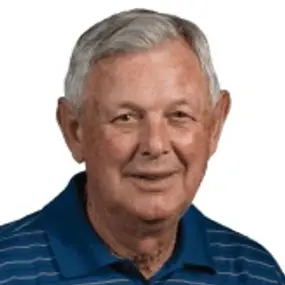
Golf Professional and Golf Course Architect
Professional golfer, broadcaster, course designer and philanthropist, Australian-born Bruce Devlin amassed 40 world-wide wins in his professional career. As a young man, he followed his father and began an apprenticeship in plumbing. It wasn’t until a tragic accident took his father’s arm that he began playing golf at age 13. As a fine amateur player, Bruce enjoyed a great deal of success with wins at the Australian Amateur and Australian Open before turning 23. In 1958, as a member of the Australian team, he won team and individual honors at the inaugural Eisenhower Trophy played at the Old Course in St. Andrews. He turned pro in 1961 and won his first international event in 1962. Over his career, he also achieved eight victories on the U.S. PGA Tour. In 1972, he earned $119,768 and finished eighth on the money list. Bruce was inducted into the Texas Golf Hall of Fame in 2014. Bruce is one of only four golfers to have scored a double eagle at the Masters Tournament. He achieved this in the first round of the 1967 Masters, holing a 4-wood from 248 yards on the par-5 8th hole. His last victory came on the Senior PGA Tour in 1995. At the end of the 1998 golf season, he retired from the Senior PGA Tour to concentrate on his Golf Course Architecture and Design business and his commitment to ESPN's Golf Telecasts. He worked for NBC from 1977 to 1982 and ESPN from 1983 to 1987. Bruce currently serves as Board Chairman for The Devlin Foundation and is an active volunteer with The Ben Hogan Foundation.