Curtis Strange - Part 2 (Amateur Experience and Early Life on the Tour)

 Apple Podcasts
 Spotify
 iHeartRadio
 PocketCasts
 Overcast
 Amazon Music
 RSS Feed
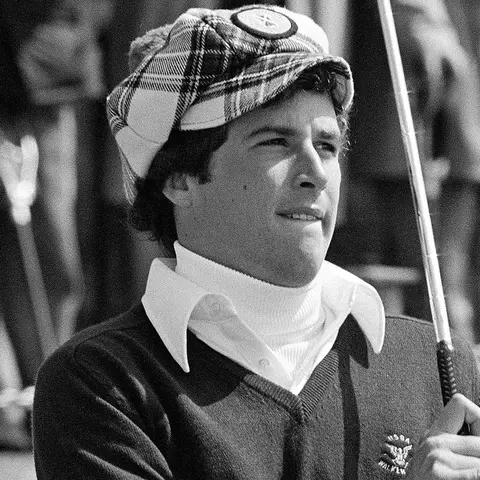
 Curtis Strange, World Golf Hall of Fame member, recounts his amateur experiences winning the 1974 Western Amateur over good friend and Wake Forest teammate, Jay Haas, and playing on the winning side in the 1975 Walker Cup at the Old Course. Curtis reflects back on turning pro at age 21 just short of graduation and going out on the road on the PGA Tour with a bit of debt to keep the pressure on. He fondly recalls his many good friends, the locker room environment that he misses most and breaking through for his first win at the 1979 Pensacola Open. You will enjoy this engaging look-back with Curtis Strange, "FORE the Good of the Game."
Give Bruce & Mike some feedback via Text.
Follow our show and/or leave a review/rating on:
Our Website https://www.forethegoodofthegame.com/reviews/new/
Apple Podcasts https://podcasts.apple.com/us/podcast/fore-the-good-of-the-game/id1562581853
Spotify Podcasts https://open.spotify.com/show/0XSuVGjwQg6bm78COkIhZO?si=b4c9d47ea8b24b2d
About
"FORE the Good of the Game” is a golf podcast featuring interviews with World Golf Hall of Fame members, winners of major championships and other people of influence in and around the game of golf. Highlighting the positive aspects of the game, we aim to create and provide an engaging and timeless repository of content that listeners can enjoy now and forever. Co-hosted by PGA Tour star Bruce Devlin, our podcast focuses on telling their life stories, in their voices. Join Bruce and Mike Gonzalez “FORE the Good of the Game.”
Thanks so much for listening!
Just to let you know that content from this episode actually spans interview content from two different sit-downs with Curtis Strange, including one where we lost Bruce Devlin due to uh internet failure for a period of time. So you'll notice at the middle of this episode there won't be much Bruce content, but uh we welcome him and back uh toward the end of the episode. In the meantime, cue Mr. Crosby.
Outro MusicStraight down the middle. It went straight down the middle.
Mike GonzalezThen it's welcome to another edition of For the Good of the Game. Normally at this point, I kick things off uh and pass them over to my co-host, but uh Curtis Strange, uh Bruce didn't really have a lot to say last time, did he?
SPEAKER_01He was the best I've ever heard.
Bruce DevlinAnd I would I would expect nothing less than that from you. Uh I'm sorry for uh, but I just, you know, I I I checked out.
Mike GonzalezYeah, we we we just had a little disclaimer at the top of our episode number one with Curtis Strange, where we mentioned that we lost Bruce Devlin. Really, for the first time we've had any technical difficulties, and and uh you must have lost internet connection at home. So we kind of lost you uh 10 or 15 minutes in. So we just kind of carried on without you.
Bruce DevlinYeah, well, as as Curtis said, it was the best show you've had so far. So I'll just stay quiet today.
Mike GonzalezWell, we were able to cover a lot of our first discussion, uh, but before we get to um uh a lot of the PGA tour activity stuff, I did want to come back, Curtis, to uh a few things, uh, really dating back more to your younger days, your amateur career. I guess the first thing is I'd heard a little bit about your shoe salesman experience. I wanted to hear a little bit about that.
SPEAKER_01Oh, wow. Uh I needed a couple extra dollars. I was starting to date. And um, you know how those women are. It takes it takes a couple of dollars. So uh but anyway, I was just uh at that time I was playing golf in the spring and and fall, and and in the winter I was playing basketball, and I had, you know, we go to school, I had basketball practice afternoon, and eh, I'd get a job. So I went to Kenny's shoes and got a little job for a couple hours a night and half days on Saturday, and and and it worked out. But it was it was it was a I'm not gonna say it was a wonderful experience by any stretch, but it gave me a sense of real life and you know uh making a couple of dollars and having it, you know, some spending money and and uh just moving on and growing up.
Bruce DevlinSo you did you trying to date Sarah when this was happening, or was this another one?
SPEAKER_01This is this is B BS. This is before Sarah. So uh I met Sarah a couple of years after in college, but uh this was uh uh that's as far as we want to go on. I understand. I understand.
Mike GonzalezSo it's true that you can still look at somebody's foot and tell them what size they are.
SPEAKER_01You know, I'm pretty doggone good. Um uh the hosiery business, not so good, but yeah, shoes I was pretty good. And it was it was really interesting, uh uh dealing with people, I guess, number one, uh, which was the main uh thing I got out of it. But uh uh yeah, people's feet are are really, really weird. Put it that way. Really weird.
Mike GonzalezWell, we're we're probably not old enough uh for you to have used the little x-ray machines they used to use in the shoe stores. You ever seen those?
SPEAKER_01No, no, I wish I did. I had those old clunky metal things that big old nasty looking smelly foot got on, and you had to close it in and read it out, and and of course you never had the proper shoe that they wanted. So uh it was it was like I said, uh I guess a learning experience to some extent. Oh well.
Mike GonzalezUh we did, after we lost Bruce last time, we did talk a little bit about your Eisenhower trophy experience back in 1974. Uh you shared your memory, which was not a pleasant one. Uh really. Uh Bruce, uh uh we we we talked a little bit about your experience too back in 1958.
Bruce DevlinYeah, that was uh that was that was quite an experience for a young Aussie to uh get on a get on a 707 plane and fly for 52 hours to to get to uh Dublin. But uh you know, having read a lot about the old course it was uh quite an experience for me. And then and then to actually uh be a part of the the winning inaugural team, it was uh it was it was quite a treat. And then after that we uh I was on the team again in 1960 and had the great pleasure of uh being invited to the White House by by our uh esteemed president at that time, our uh oh I've forgotten his name. How about Ike Ike Ike, right, General Ike. Yeah, what a what a wonderful individual.
SPEAKER_01You know, Bruce, the I I'm I'm thinking about what you what you felt like at that time at your age and what I felt like at the time at my age. We would have we would have rode a rowboat to go play golf at places like that. We would have done anything in our power to go play golf at another place or another tournament and just be around be around something we'd love to do.
Bruce DevlinYeah, no doubt about that. It was uh like I said, it was it was a fabulous experience to uh to go play the old course.
SPEAKER_01I'm sure, for sure. That's where we played my Walker Cup um in 70 uh 75 was um at the old course, which was um quite the experience as well, seeing something like that. Yeah.
Mike GonzalezWell, tell us a little bit about that. Uh, because you had uh you had a victory there, you had uh uh some great teammates and Stadler, Jerry Pate, uh uh Jayha's Vinnie Giles, among others, right?
SPEAKER_01What a group. Yeah, we were we were a bunch of young kids that were uh way too cocky, and going to the old course kind of set us back uh a bit. But um it was it was a great experience to play and learn and play links golf. And you know, it was fun. I went back to the Walker Cup reunion here in in uh March, I believe it was, down at Seminole, and seven of the ten members were there. So we so we had a couple of beers during the day, and it was it was a lot of fun. A lot of a lot of members come back. They do a reunion every time it's in the US, and a lot of members come back, and it's just great memories, great friends you haven't seen in many, many years.
Bruce DevlinYeah, that's a that's a bad that's a bad part about all the people you you play golf with, you sort of uh you lose contact with them. And uh to be quite honest with you, Curtis, uh Mike came up with this idea of uh, you know, for the good of the game and do the podcast, it's been a it's been a great it's been a great thing for me to you know get to chat with you guys that that we played a lot of golf together and had a beer or two together. I don't think we saw one another in the uh workout room very much, but well, you know, that's you're exactly right, and I didn't even think about that.
SPEAKER_01Yes, you're getting to talk for for quite a while with guys you haven't talked to in a long time, and I think that's the one thing I miss. Oh, I know it's the one thing I miss more than anything else is the locker room by not playing. Yeah, you know, uh, you know, you didn't go to dinner with all of those guys out there. There's some you did, some you didn't, but it was still a camaraderie that you had so much in common because you were playing this game that we all love so dearly, and we were trying to be the best we can do we could be, and that was the commonality of it was we all had a background in the game and we're trying to do the best we can. And and uh I I missed the guys. I miss talking to them, I missed just everything about it, hanging on the practice tee, putting green, all the things we used to do.
Bruce DevlinYeah, that's uh that's uh it and the the one thing that I know you miss as much as anything else was the fact that uh you know you had all that great camaradership between everybody, and then the moment you put that peg in the ground on the first tee, you just wanted to you wanted to beat the other guy.
SPEAKER_01Uh well it wasn't and it wasn't you know to me, Bruce, it was never me against Bruce or me against somebody. It was just me. Yeah. And if you were my best friend standing in the way, it never affected me at all. No. Um it was just you went to play, and of course, if you were playing Nicholas or somebody of great talent, you know, in your in your era, then you would you would know who the hell you were playing, of course. But you kind of got your own little bubble out there, didn't pay attention too much, and uh just grinded your ass off. That's all you could do.
Mike GonzalezWell, let's talk about one other thing, uh, at least from your amateur career, Curtis. Uh we didn't uh talk about that our first uh get together, and that was your 1974 Western Am win at Point of the Woods uh over a buddy of yours.
SPEAKER_01Yeah, that was and and talking about what we talked about, that was one of the times I was playing my best friend, my roommate uh at Wake Forest, Jay Haas. And we were in the finals together against each other, and uh it was uh I came in on top, but it could have gone the other way. But the Western Amateur is is one of the great memories that I have. Uh it's it's the longest golf, it's the longest golf tournament in the in golf, I think, professional and amateur. And uh it's play it was played on uh a great, great golf course in Point of Woods up in Benton Harper, Michigan. And every great amateur was there. It was like two or three weeks after the the NCAA, and my when I won it, I just won the NCAA two or three weeks prior. So I was playing well and and uh riding a high and went in there, and it you play 72 holes a stroke and 72 holes a match. Um and uh you're playing against your your colleagues, you're playing against the best there are. And it uh it was a great win for me. It uh it really well, help, I don't know if that's the right word, but it was uh certainly an accomplishment that I'm very, very, very proud of. Uh because the Western Amateur's been around for a long time, as well as the Western Open. And um uh you know, it's one of those things that uh they can't take away.
Mike GonzalezYeah, what a great list of winners over the years, too. Who who was the tournament director for the WGA back then? Do you remember?
SPEAKER_01Marshall Dan. That's right. Marshall Dan in the day. And um uh both for the open and the amateur in all of their tournaments, and uh he was a grand old old master, and it was just uh it was just a big event. And and and the people from the community came out, there were thousands out there, yeah, say thousands, it was two, three, four thousand out there watching the semis and the finals, and it was just a great experience for all of us because we'd never played in front of people uh very often and and not very many.
Mike GonzalezWell, you turned professional at a fairly early age, uh, so you was probably just right out of college, I guess, age 21. You probably just graduated. Is that right?
SPEAKER_01No, I didn't make graduation. I left after three years. I I I we couldn't financially support another year of amateur golf. Uh I took out a loan on myself, uh, my last year of amateur golf, and that supported me for the first you know, six months of of my professional career, and then I won some money and went on on my own. I didn't have any, you know, so-called backers at home or anything like that. And I and I started to play reasonably well and make some money. But uh I turned pro at 21 years old after three years of college and was on my way. But with that came a really stressful time, Mike, and uh it was hard for me to adjust for a while, but eventually I did.
Mike GonzalezYeah, you know, uh there's probably not many guys that start out with a little chunk of debt to add a little pressure, huh?
SPEAKER_01Well, it's not a bad thing as long as you can can pay the bills, but you know, I kind of I wouldn't change the first thing. Um struggling on tour a little bit the first year and a half or two years, it makes you harder, it makes you tougher, it makes you uh appreciate the good times a little bit more. Um and we were going, Sarah and I were going from hand to mouth. Uh you know, we I tell the story used to tell it often is that we ate for ten dollars or less every night for dinner. We tried to stay every week in a hotel or motel for eighteen dollars or less. That was the budget. Um golf tournaments didn't give us any food to eat, uh maybe a Coca-Cola in the middle of the day. Uh so you paid your freight and you paid your way. There was no courtesy cars. We drove the tour, and I was having the time of my life. Uh Sarah looks at it back a little differently, but uh I was having the time of my life, and I was going to the golf course every morning and coming home at dark, and uh it's what I wanted to do, and uh I was in love with it. I was in love with every part of it.
Mike GonzalezWere there certain uh players or couples that you guys would uh tend to travel with?
SPEAKER_01Yeah, we were. Uh they were the ones that made it fun. Uh they were the ones that made it got you through the tough times. Peter and Jan Jacobson, uh uh uh Jay and Jan Haas. Jay wasn't married at the time, uh, you know, Bill and Beth Rogers, the Liskys, uh Bobby Watkins and his wife, uh Crenshaw a little bit. The groups that we, you know, we I can't we kind of kind of uh got together because the wives were such good friends. And all the wives traveled because nobody had any children at the time. So we all got in our cars every Sunday afternoon and stone to on to Chicago, on to Des Moines, Iowa, on to Moline, Illinois, back to Boston, New York, Florida, the West Coast. We we were gone. And uh we were uh we were before cell phones, before this, before that. But we were uh uh it's amazing how life has changed in a short time, but uh we were we were doing what we wanted to do.
Mike GonzalezYeah, you know, you you Bruce will tell the story about before they came to the the U.S. in 68, um he he brought the family over. I think somebody helped pay and buy some round trip boat tickets for glory and the kids, and they came over and they so they were traveling together. Well, at some point uh uh he runs out of money. But he can't he can't get the family back because it's uh whatever. They couldn't rebook passage, they had to wait till the you know the fall to go home. So she and the kids end up going living with the Nicholases for a while. Yep just what they had to do. And he'll he'll he'll he'll relate his stories of traveling the tour in a greyhound bus. Oh, the stories are endless. With cloth diapers with the kids.
SPEAKER_01Oh my second born, when he was still traveling, he slept in the in the drawer of the of the of the uh dresser drawers. We pulled out the drawer and put him right in it with his sheets and his blanket. We didn't shut it on him now. Trust me, we didn't do that. Yeah, yeah, yeah. But you know, and and I'd I'd I'd fall asleep and Sarah take the kids out in the hallway and play a little bit, or they'd go to, you know, that was before nurseries on tour, and and uh none of it. The two kids didn't travel that often on tour because it was just so hard for for everybody. But uh it's just what you did, and all the wives and kids got together at the local park every day, and while we were out at the golf course and and and things like that. So we used to travel with a little hibachi uh to cook hamburgers and steaks out uh outside the the hotel and things like that.
Mike GonzalezHopefully by the pool.
SPEAKER_01Yeah, no, where we stayed, there weren't pools, okay? You want to hear a funny story? So we're staying in a very, very small, dilapidated uh motel in uh Milwaukee. The Jacobsons, the Haases, and the strangest are there. Well, it looked like the room we were in looked like Elvis had just left. There was red velour everywhere. Um and so the first morning I got up early and went to the golf course, and Sarah's coming out later on to meet me for lunch or something. And when she walks out of the room, the maid says to Sarah, Does your mother know where you are? Yeah, I just talked to my mother this morning. Well, come to find out, the the hotel, the motel had an hourly rate. So that's that was the type of place we tried to avoid after that.
Mike GonzalezOh my.
SPEAKER_01Oh gosh.
Mike GonzalezWell, you can only get so much for 18 bucks a day, I tell you. Oh wow. Well, you had an outstanding pro career, 29 professional wins, including 17 PGA tour victories, a couple wins on the European Tour, three wins on the Australasian tour, uh, 200 plus weeks in the top 10 world rankings from 1986 to 1990. PGA player of the year in 1988, leading money winner in 85, 87, 88, and uh I think in 88 you might have been the first guy to win a million bucks. Is that right?
SPEAKER_01That's right. That's right. Um it was uh it was a good run.
Mike GonzalezUm that was a lot of money back then.
SPEAKER_01Oh my gosh, it's still a lot of money. Still a lot of money.
Mike GonzalezIt was a hell of a lot more in 1988.
SPEAKER_01Well, it was uh a thrill to do that because uh I was Arnold was the first one to win a million in a year, and then I became the first one to win it uh and first one to win a million in his career, and I became first in a year, so we were kind of linked a little bit like that as well. But I it was a you know, you don't know what you're doing at the time, Mike. You and Bruce would I think would agree. You kind of go from one day to the next. You uh you might play well this week, and the first thing on your mind on that airplane Sunday night is how am I gonna play the next week? Um I didn't allow myself to to uh to enjoy some of the the the sweet smells along the way too often. Uh I think most of us are are like this where the the defeats hurt a whole lot more than the uh the victory um uh feeling. So uh what I'm saying is the the defeats hurt a whole lot more than uh wins. And um so that's what you seem to remember, and that's where um uh sometimes we should let go a little bit and enjoy the success, but we just don't do that as as humans, I guess. But anyway, um you kind of go along and do your job and move on to the next week and do your job and move on to the next week, and next thing you know, you're in contention at a big tournament or or win in a big tournament and you move on from there. And uh it's just the way it is.
Mike GonzalezYou mentioned earlier Kisner's quote about uh you know, 20th doesn't pay too bad. I don't think any of you guys ever said that. Do you ever remember saying that back when you were playing?
SPEAKER_01No, no, but uh it it's actually it's uh it's it's the way I kind of looked at it. You know, I never got on the first hand and said this is my week or I'm gonna win win this week like Tiger or some other guys look at it. You know, if I finish 20th, this is the way I looked at it. If I finish 20th and I tried on every shot and I hit the ball reasonably well, and I didn't make any big screw-ups, and that's the best I could do that week, then it was okay. It was okay. There was nothing, if I didn't have some hiccup in my swing that I was working on, if I made a few birdies, obviously you're not gonna make all your putts. It comes down to putting every week anyway. But if I didn't do that, if I made some good up and downs, and I just, you know, a couple here or there, you finish third or fourth, then I was okay with that. I really was. Now I wanted to do better, but I didn't beat myself up so badly by finishing 20th. Um it just it's it's a hard game, and there's a lot of moving parts. And the difference in 20th in winning, or 20th and second or third, is a putt here, a putt there, and maybe burning the last hole on Sunday. I mean it's it's as simple as that. So uh you had to be hit and on all cylinders um to win, and you still do.
SPEAKER_02Were there any weeks where you didn't try on every shot?
SPEAKER_01Not many. Um I think early on I learned that uh it's it's a long year. Um I got mad, trust me. But I think I learned early on, and some people would would disagree with this, but they don't they weren't inside in my head or my heart. I I I think I got really pissed off at times and early on in my first or second year and would maybe hit a shot on the run or get really disgusted. And at the end of the week, I would count up and say, Well, if I didn't throw away those two shots on Friday afternoon, I would have finished 20th instead of 40th. And so I learned early on that just try for for God's sakes, that's all I can do is try. Much like if I if I do my work on the practice team every single day, and at least I Can try on the golf course. I learned early on that you know, just give it your all. That's all you can do. It's a long year. A shot here, a shot there over the course of 28 to 30 weeks, it's gonna make a big difference. So let's give it your all and uh and and do the very best we can because over the course of a 25 or 30 year career, it's gonna make a difference. And uh I learned that early on.
Mike GonzalezWhy don't you describe for our listeners sort of how the tour evolved? Uh now there's probably a bit more security for players week to week, but you know, back in the day when there was a lot of Monday qualifying, when you had to finish a certain position within a tournament to even be sure to play in the next week. What was the what was the setup on tour when you first came out?
SPEAKER_01Well, try to keep it simple. Uh the exempt status was top 60 money winners from from year to year. So if you didn't finish in the top 60, you had to go to Monday Monday qualifying to get in each week the next year. When I went through qualifying school, all that enabled me to do was have the opportunity to go to Monday qualifying. That gave me really no access at all. So I got on tour and I got a couple exemptions because I was a good amateur, but I basically had to go from Monday to Monday. Now, if I qualified this week on Monday and I made the cut, then that got me in the next week. So as long as you kept making cuts and I made a lot of cuts, you had somewhat of a schedule. And this week, if I finished 24th or better, then that made me exempt for this tournament next year. So if you finish top 24 eight or 10 times, then you could the next year, even if you didn't make the top 60, you could set up some kind of schedule. So that's the way it was. And that made you work. That made you bust your ass uh to make the cut because that got you in the tournament the next week. That made you bust your ass to if you were 40th on Sunday morning to shoot your very best score. Not that they don't try, but it really had huge consequences if you played well enough to get in the top 24 for next year. And then of course the the the end goal was to finish in the top 60 to be completely exempt in the following year. And I did that in 79. I finished top 60, but also won the last tournament of the year in Pensacola, and then I was exempt for the rest of my life. But but for two uh two and a half years I was not exempt. And uh I uh I learned a great deal in that time, Mike. I you know, you work hard and you it's it's good and bad times, but uh it didn't come easy right from the start. And uh I think sometimes that was a good thing.
Mike GonzalezWhat do those Mondays look like then, Curtis? How many players, how many slots?
SPEAKER_01Oh, I'll say that probably be uh a hundred, maybe a little more than a hundred players for 20 spots, maybe 120 or 30 players for 20 spots. So a good score would get you in, but you talk about choking now. You talk about nervous when you shot a good front nine and say you shot 32 on the front and say 68's gonna get in, and my gosh, you're choking like a yard dog on the backside to get in. Because if you don't get in, you don't play that week. And now you're out there in Chicago driving the tour. So now where do you go for a week? So you you you busted your ass to to qualify and then make the cut. So it was it was hard. Um and now they go to the top 125 are exempt and and and the different story now. And uh I remember when that all happened. Um, and it was probably for the better, but it made life easier for those who are on the fringe every year.
Mike GonzalezYeah, you know, these young kids today, they they couldn't relate. I mean, right now they can lay out pretty much their whole year in travel. Of course, they got everybody doing that for them. Yeah. Uh, but here you are with there's no GPS, uh, no cell phones, no this or that. And and you know, how do you map out your your your play, especially if you're traveling with a family? Uh it ain't easy.
SPEAKER_01No, it uh but uh if it was easy, then everybody would do it. And I don't want everybody to be able to do it. So uh, you know, it was uh uh different times, you know. That's okay. That's okay. I I you know people say once in a while, boy, you were born a generation too early. No, I wasn't. I loved where I grew up. I grew up on the heels of Arnold and Jack and and and and then played against Johnny and and and and and uh Watson and and still against Jack head to head a couple of times and and Norman and Sevy and Faldo and and all the greats from Europe that finally got access over here. And uh I I just uh I I loved it. I liked who I played against. Um we had great respect for each other. We also wanted to beat each other's brains out. So uh I loved the time I played, in which in which I played.
Mike GonzalezI I think your era was one of the great eras in golf, actually.
SPEAKER_01You know, I will say this. I I'm I'm not a great fan uh of of some of the things that some people say, and in particular when when Johnny Miller boasts all the time, he says his his age was the greatest age uh of players. I agree with him, but I don't think you have to brag about it all the time. Um but with Jack and Wyiskoff and Johnny and Arnold was still around, but Trevino, forgot about Lee, the greatest ball striker I've ever seen in my life. Um Watson, if I said him, uh you had Sevy, uh uh and and I'm forgetting somebody.
Mike GonzalezWell, Crenshaw, anyway, yeah, the whole the whole game.
SPEAKER_01They they had a generation of players that were quite incredible. Uh and and I played at the end of that, or I played a lot during that. And uh, you know, to come up in an era where those guys are still playing, you kept your mouth shut and your eyes and ears open because you had to do nothing but improve every day if you think you can compete with those guys. Hey, Erwin, we forgot. Yeah, uh one of the toughest competitors I ever played against.
Mike GonzalezYou you got guys that maybe don't have the broad body of work, uh, but had they stayed with it, a guy like Bill Rogers, who uh back in 1981, I'm not sure there was a better golf on the planet than than Bill Rogers.
SPEAKER_01Yeah, one of my dearest friends, and uh he won like eight times that year. And uh he he he it was he was phenomenal. And he burned himself out, is what he did because he he went around the world a lot during that three or four year stretch. But never the nevertheless, uh Bill and Bruce Lizky, some of the guys that were just outside of that that bubble of great, great, of great players, uh uh, you know, Lanny was bubblish. Lanny should have been better than he was, and I and I say that with all due respect. Um you know, we had uh uh there were some phenomenal players that uh didn't win multiple multiple majors but were capable of, and for whatever reason or another, didn't.
Mike GonzalezI remember I remember somebody saying something about uh Litzke. He said, I never saw him play bad.
SPEAKER_01He was phenomenal, ball striker, and he did it his way, he lived his life this his own way. Uh he didn't work at it the way I would have liked to have had him work at it, but it was his life, his choosing, and you have to respect the hell out of him for doing that. And you know, God bless him, we lost him three, four years ago, and uh uh he was a good man. Uh it was a sad day, but uh uh you know we're getting to that age. Um, Mike, that uh we're we're losing some dear friends. But uh, you know, there's just it was a great it was a great time of great personalities and and getting to know the guys and and learning from them. And when you got to play with them, gosh, you you just you didn't watch too much, but when they when you saw them have a particularly hard shot or a shot of of that interest you, you watched on how they went about it. I mean it's like whenever I play with Sam Sneed, I play better because of his rhythm and tempo. Um I I seem to always play well with Trevino. Don't know why, but uh I I I in you get in your mind that you know you like these pairings and you weren't comfortable at other pairings. Uh uh I was always uh just so intimidated by Jack Nicholas and then got to know him. And he's still uh uh you know a wonderful man and has become absolutely the ultimate voice of golf and does and says all the right things every time he he speaks, but uh he's still an intimidating man. Uh and he really is. And uh and Arnold was. And and and and God, my my life was was just so so lucky to be able to get to know Arnold the way I did and become friends with your your hero growing up, and and Arnold never disappointed when you finally meet your hero. He was phenomenal. And much like most of these guys, you know, we had to get along. We were in the same locker room 30 weeks a year, thereabouts, and lockers might be beside each other, and you're eating together and you're playing against each other. And you know, my my goal was to get along with everybody because if you didn't, it might affect you on Sunday afternoon somewhere in your life. Uh, that type thing. And you know, you had different personalities and different characteristics, but you all had this common goal is to be the best you could be and to try to master a game that that was that was nothing short of an impossibility. And so we were all after the same thing, and you had to respect each other for doing that. People went at it differently, and that's what I admired about everybody is that the way they went about it differently, and then you might learn from somebody the way they go about hitting a shot or a putt or swing or practice or whatever it might be. Um I practiced a lot with VJ Singh when he first came out, and uh we used to uh just to hit different funny kind of shots that uh that you might need somewhere along the way. It was uh I can look back on uh some of the time spending on the practice tee uh with different people. Um people are brilliant playing this game. They make it look easy, but they're brilliant in the way they hit these shots.
Mike GonzalezWere you able to play much or spend much time with Sevi?
SPEAKER_01You know, I didn't know him very well in that I guess maybe because he didn't have access to the US tour as much as they do now, so we didn't know him as well. We didn't play against him as often. But between the Ryder Cup and the four majors, you did play with him. I played a lot with him, I actually did, because any time I went to Europe I seemed to get paired with him and I played him quite a number of times in the Ryder Cup. But he was a tough character. Um he was um he thrived on a little uh uh adversarial contention, uh if that's the right phrase. And uh but I respected him for it. He was a hell of a player. He made European golf what it is today. He made the Rider Cup what it is today. Uh and God bless him, he he died a young man and uh uh you know we lost a great charismatic figure uh when he passed. But uh, you know, it was uh there was a contentious atmosphere in the Roder Cup back then, and one that I didn't really enjoy all that much. You get me you get me thinking about these things and which you don't ever think about, but you start to reminisce and you start to think about the good and the bad times. And you know, the times that Sarah had to go through. You know, the wives put up with a great deal, and it's uh it's it's a lot of memories back there.
Mike GonzalezHow do you do it and and and and be at your best mentally on the golf course if you don't if you know behind you you you don't have a a great supportive spouse? I don't know how you would have been.
SPEAKER_01I don't think you do. I don't think you do. We've seen over the years some players who have had some some issues and it does affect them. And how can it not? You know, it affected me when the kids had the flu at home, and Sarah had to put up with all that by herself, and I might shoot a good score that day, but it doesn't mean it affected me. Um and and and you sleep and you know what's going on and that type of stuff. And you miss you miss ball games, you know. I miss Thanksgiving for 15 years because of the skins game. Um you just adapt. You know, you adapt, you you uh uh you know, you do what you have to do, and and and and the kids are the kids are uh they're easy. They they can adapt anything, but uh it's just the way it is. Um it's a it's a nomad gypsy kind of lifestyle, which uh I'd do it all again tomorrow. I miss it.
Mike GonzalezYeah. Let's move on to talk about the PGA tour. And uh the highlights, obviously, a couple of majors, which we'll talk about, one tour championship, but let's go through some of your other wins. Uh uh, I don't know if we've got time to go through them all because you you had a bunch of them. You had uh uh 17.
SPEAKER_01Well, don't don't don't don't you had some people on this podcast that would be the case, but it's not the case to me. Okay. I uh I it uh you know I'm I would never ever put myself in the same category as some of the people that you've had on your show. So uh, but be that as it may, Carrie. You got time, we got time. You know, before well, I think that without even asking me a question, what cut what what comes immediately to the mind immediately? My first win uh in in 79 Pencil Cola because you haven't done it yet. People say, Did you think you could do it, or did you wonder? You don't think like that. P players don't think like that, but you haven't yet. And you always want to know how you're gonna feel and react when you when you win your first PGA tour event. Because remember, this is the goal for Bruce and I since we were had our first pair of golf shoes. And so when you I had a couple of chances and didn't do well, and all of that was part of the learning process, um uh because it's a huge stage that you get on in professional golf. And I won my first one, and it was uh quite the quite the experience uh with my wife and her parents were there, and$37,500, and I was bloody rich.
Mike GonzalezHad you paid your debt off by that point?
SPEAKER_01You know, I had. I paid my debt off uh a year before that. Um Bruce, just to re-up you, I took a$10,000 loan out to play my last year of amateur golf, which carried over into my first year of professional golf. So I had a debt before I even turned pro. So uh immediately I started to repay that. And and uh actually I got out of debt. Um I went to Morocco and finished second, and then two weeks later I went to the Australian Open in 1976 and finished second to Jack Nicholas. And I was just dumb enough to think I could win. That's how stupid I was. But I finished second to Jack, and that got me out of debt. That's when I could pay off the debt with those two weeks.
Bruce DevlinWell, you you obviously have all your life, you've underplayed your ability, man. You you're just one of the one of the greatest players that ever stood on the first tee to play golf. I can tell you that. You've won some great, you know, two open championships, not too many people can say that, especially back to back. That's quite a feat.
SPEAKER_01Well, uh, thank you, Bruce. And coming from you, it means a lot. I I think sometimes we dwell too much on the ones we didn't win, and that's the nature of us. Um, but uh you know, and you never really look back until I guess you get to the stage in life when you're not playing anymore. But uh uh you wonder how sometimes you had the energy to do a lot of that stuff. You wonder how you got up and did it every single day. In the day you weren't beating balls and playing practice rounds uh and practicing and putty and you were traveling. So there was never an off day until you went home. And uh in your first three or four years, that didn't happen very often. So um you wonder how you beat that guy or how you hit that shot, but you do it. I mean, you react and you're in the you're in the the mindset of even if you're uncomfortable, um, this is what I I've trained myself to do. And so you kind of attack it. And uh uh I I I don't know. I just you kind of just did it. You don't think too much. You get asked all these questions that I said a moment ago about who, what, when, where, and how. And you don't think like that. You react and and you let your hand eye coordination hopefully take over for the best. And and uh sometimes you do and sometimes you don't. But the times you don't is when you really do learn something about how you reacted, you know, how you reacted mentally and physically, uh, how your game stood up, uh, what you needed to work on. And um and and another time in the limelight on that stage was another kind of little small stepping stone to uh getting more comfortable on that stage. And you don't know it at the time because you're all pissed off at yourself, but it is. Um you you do, and the more times you're there, the more comfortable you get. And I got to a point, Bruce, in all honesty, um I was extremely comfortable there. I was nervous and I was anxious, um, but I was I felt like I was more comfortable there than the guy I was playing against. And and that that to me uh gave me a one-up. I always felt like in my mind uh coming down uh the last couple holes. Because you have to hit a shot. Yeah, you have to make a putt to win. We saw this great, great playoff here two days ago, um six-hole playoff. Uh you can it comes down to making a putt. Yeah. And uh you just, you know, when you finally get the opportunity, you kind of kind of you know say, okay, it's time to be a man. Um, you know, you're the only guy on this planet you can do this, so let's get it done. And and and sometimes you do and sometimes you don't.
Bruce DevlinNot only that, but uh I know it's easy for you to recall. You you didn't even have a uh uh physical fitness guy and a psychological guy and a coach with you all the time either back in those days, right?
SPEAKER_01No, that was way before that. But uh I did work out, I did run um three or four times a week, um uh from uh from 1978 on to about 86, 85 or six. Um, and then I took it up later on in my mid-40s. But uh, you know that physical your your physical well-being was utmost, um, and you had to listen to your body. Um but I still played 18 holes every day and hit balls. I still played, you know, practice rounds, 18 holes and hit balls every single day prior to our tournament. Uh it was none of this non-hole stuff. Um but uh uh you know it you kind of do, you know. I was made up like that, I guess. Um I uh I had plenty of energy and work ethic, and I don't know. You just uh you do what you think is right. And I all I knew, as I said in the first show, all I knew how to do was work. And I felt like I was gonna put in the time to give it my best shot. Correct. It's all you can do.
Mike GonzalezCurtis, first time we were together, and and uh I'm glad you mentioned that again. Uh just to remind our listeners, Curtis Strange uh has the honor of being our first repeat guest, so that's pretty special.
Bruce DevlinThank you, Curtis. Well, thank you, Bruce, for losing his uh internet.
SPEAKER_01Well, you've you've had T Watson and Jack and Finchie, you know, but these guys, you don't want you don't want but 30 or 40 minutes from those guys, okay? It just doesn't it doesn't work. What are they what the hell do they have to say? Yeah, really.
Mike GonzalezThat's like what Finchie said. I don't know if I mentioned this to you, but we were talking to him and uh and uh uh oh it was a guy that's uh right on the right on the cusp, I think, of maybe making the the writer cup team. He's playing with them down his club in Florida. And uh they get on the first T and he'd met him, but he he finally said to Finchie, he said, he said, You won something, didn't you? He said, Well, yeah, I won the open championship thirty years ago. But yeah, yeah. Wow.
SPEAKER_01You won something, yeah, and you'll be damn glad to do it.
Bruce DevlinThat's right. Yeah, really.
Mike GonzalezThank you for listening to another episode of For the Good of the Game. And please, wherever you listen to your podcast on Apple and Spotify, if you like what you hear, please subscribe, spread the word, and tell your friends until we tee it up again for the good of the game. So long, everybody.
Outro MusicWhack down the fairway. It went smack down the fairway. Then it started to slice just smidge offline. It headed for two, but it bounced off nine. My caddy says long as you're still in the state, you're okay. Yes, it went straight down the middle, quite away.
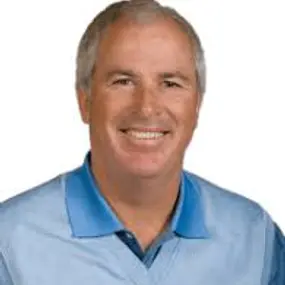
Professional Golfer, Broadcaster
Nobody, it was long said on the PGA TOUR, ever hated a bogey more than Curtis Strange. Although good to great with every club in the bag, it was the ferocity with which the Virginian played that will always be his signature. Strange’s intensity was his edge and led to back-to-back U.S. Open victories.
The first came at Brookline in 1988, when Strange led late only to three putt the 71st hole from 15 feet. When he hit his approach on the last into a greenside bunker, the man who had lost the 1985 Masters on the back nine seemed destined to never win a Major. But Strange got up and down to tie Nick Faldo, then defeated him with flawless golf the next day, 71 to 75.
“We only have so much energy, physically and mentally, to be the best.”
The following year at Oak Hill, Strange was an opportunist, staying in touch with the leaders with 15 straight pars on Sunday before taking the lead for the first time with a birdie on the 70th hole. He became the first man to win consecutive U.S. Opens since Ben Hogan in 1951.
Strange’s quest for the three in a row that would have tied the record of Willie Anderson fell short in 1990 at Medinah, where after a late challenge he faded to T21. The effort took something out of Strange. Although only 34 years old, he never won on the PGA TOUR again, finishing with 17 official victories. The flame that burned hotter than anyone else’s burned out. As he once said, “We only have so much energy, physically and mentally, to be the best.”
Born January 30, 1955, Strange was a child of golf. His father, Tom, was an ac… Read More