Ian Baker-Finch - Part 2 (The Broadcaster)

 Apple Podcasts
 Spotify
 iHeartRadio
 PocketCasts
 Overcast
 Amazon Music
 RSS Feed
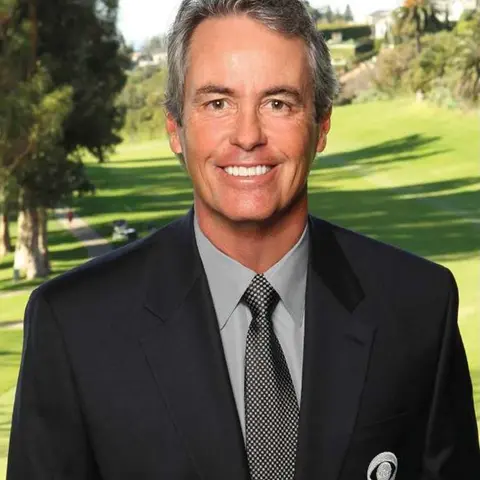
 Major Championship winner and CBS Golf Lead Analyst, Ian Baker-Finch, takes us behind the scenes of televising a golf event and the changes in approach, brought on by the global pandemic, that are likely here to stay. He and Bruce Devlin remember the advice each of them received as they started in the television business and recount the lessons learned from some of the masters like Frank Chirkinian and Don Ohlmeyer. Ian Baker-Finch with the call, “Fore the Good of the Game.”
Give Bruce & Mike some feedback via Text.
Follow our show and/or leave a review/rating on:
Our Website https://www.forethegoodofthegame.com/reviews/new/
Apple Podcasts https://podcasts.apple.com/us/podcast/fore-the-good-of-the-game/id1562581853
Spotify Podcasts https://open.spotify.com/show/0XSuVGjwQg6bm78COkIhZO?si=b4c9d47ea8b24b2d
About
"FORE the Good of the Game” is a golf podcast featuring interviews with World Golf Hall of Fame members, winners of major championships and other people of influence in and around the game of golf. Highlighting the positive aspects of the game, we aim to create and provide an engaging and timeless repository of content that listeners can enjoy now and forever. Co-hosted by PGA Tour star Bruce Devlin, our podcast focuses on telling their life stories, in their voices. Join Bruce and Mike Gonzalez “FORE the Good of the Game.”
Thanks so much for listening!
What aspect of your game specifically did you feel you needed to develop further to come onto the American scene?
SPEAKER_03At that time, I was I was playing well, once again, there wasn't the science in the game. I couldn't look back on stats or figures or whatever to see what I could do better, but I I I knew I had a an all-round good game. If there was any one thing I I wished I could hit the ball a little farther than I uh than I did, which became a pattern, which is why I work for CBS now, because that didn't work out. But that's another story.
Mike GonzalezYou're also 60 years old.
SPEAKER_03But uh you know, I I just wanted to be the best I could be. That's all I ever wanted. And it's why uh I used to run second and third a lot, because I was just happy, not that I was happy to run second instead of winning, but I didn't have that killer instinct necessarily um to be to desire to be the best in the world or desire to be the best player or the leading money where whatever. I just wanted to be the best I could be and provide for my family. That was where I came from. And I'm sure Bruce would have very similar similar thoughts. That that's just the way we were, you know, where we came from and um uh I didn't if I if if I a couple of times I say I playing with a friend, Davis Love, he beat me at uh Hilton Head one year. I was so happy for Davis that he won. I finished second, I still made eighty grand. My little baby was over there at the side of the green, you know. How could you be disappointed with that? Putting eighty grand in the bank and you know, I didn't it didn't bother me. I didn't have this desire to be number one in the world. I just wanted to be me and be as good as I could be, I guess.
Bruce DevlinAnd it's interesting too, because you if you look at all the players that have been uh multiple major champions, uh they they had that killer instinct, like, you know, it was common, it ran through their blood. Yeah, think of Jack and Travino and Gary and uh even Peter Thompson, you know. Uh they they they knew what they wanted to do, and uh and that was their only uh desire to be the best that they you know, best in the world, actually. Not the best they could be.
Mike GonzalezAnd just uh briefly recapping a bit of your career, 17 professional wins, uh including a couple of PGA tour victories, two wins on the European Tour, uh 10 wins on the Australasian tour, and including, as you had mentioned, your first professional tournament, I think, which was the New Zealand Open in 1983, which was your entree then, I guess, into the Open Championship in 84 and many other opportunities that that opened up to you. Um we'll fast forward to the senior tour. One one win on the senior tour with Bart Bryant uh teaming up in the 2013 Liberty Mutual Insurance Legends of Golf. Um so we talked a little bit about the PGA tour. You you just sort of brushed by the 1981 win at the Southwestern Bell Colonial at uh Colonial Country Club by four over David Edwards. What's your recollection of that experience?
SPEAKER_03I I loved Colonial. Um it it was really reminded me a lot of Australia. Um the plaid jackets, not so much. It was nice to get one, though, wasn't it? It was. It was nice to get one, as you know, and nice to have that name on the wall of champions. Um I came there with Jenny and little Haley. Haley was uh about three or four months old, it was my sixth tournament of the season as my first season as a rookie. And uh I shot 6570, 6570 to to win comfortably. Um just a fantastic uh event to win back in those days. Bruce knows it was along with Arnold Palmer and Jack Nicholas's tournaments that the Colonial was they were the top three events to win. And I actually won 180 grand, Bruce. That was a million dollar tournament that year in 1989. It was one of the first million dollar events. I still have the check. Actually, I might have it on the I do, I'll show you. I'll take a photo later. I've still got the check on the wall up here. So uh that that once again that kind of uh gave me the feeling that I had made the right decision, moving my family to the US, buying a house, living in the US to play. Uh that that validated pretty much everything that um I'd set my heart to. So I didn't play well for the rest of the season because every time I teed it up, I kept thinking I gotta I've got to win this, I've got to play like a champion. I instead of just saying, oh, hey, let's just keep doing what you're doing, you know, make the cut, top ten, whatever. But um but I finished, I think I finished 50th on the money list that year after that win. But it was the win was the main thing.
Mike GonzalezWell, it takes some pressure off, doesn't it? Didn't uh come with an exemption as well. I mean, it's so it frees up your mind a little bit for a while.
SPEAKER_03Yes. And it got me into I went and played the world match play, I played in the the Dunhill Championship over in uh in St. Andrews. You know, I did a lot of traveling that year after the win, which probably why I didn't perform well because I was just traveling so much. And you you know, you're traveling with a with a young family for the first time, you you you're not practicing as hard as you normally do because there's a lot more stuff to do. Absolutely. You know, you don't you don't have a nanny and and two SUVs picking you up at the airport, you know, it's uh it's a grind. I don't know how Gary Player did it with all those kids.
Mike GonzalezBut um Yeah, it's how important was it for you and others, I suppose, but for you to have a supporting family to be successful as a traveling golfer.
SPEAKER_03Uh fi 50-50, it was a great partnership. Jenny made every week feel like home. I went out and made the money and played my best. It was it was a family deal. And I'm sure Bruce can attest to that, but that's the same thing. But that's that's the way it is.
Bruce DevlinIt's uh it it makes it a lot easier than um you know sitting around in a motel room and wondering what you're gonna do for the next two or three hours before you can hopefully go to sleep.
Mike GonzalezBruce, remember what your winning check was when you won this tournament 23 years before?
Bruce DevlinUh it was uh twenty-five thousand.
SPEAKER_03Yeah, amazing, isn't it?
Bruce DevlinYeah.
SPEAKER_03I still remember you you won the Carling back in the day, I think it was fifty grand, wasn't it? First prize back in the 60s?
Bruce DevlinIt was, and that was uh that that gave me an uh it was very interesting, actually. They gave you the option in those days of deferring some of your prize money. And it just so happened at that time that the interest rates were like about 12%. So I took a quarter of the money uh and left three quarters behind, and for the next three years took uh took the quarters off it plus all the interest. So I mean, sort of sort of weird, but uh yeah, that was a in those days that was a you know, that was a huge check.
SPEAKER_03Yeah, that was like um uh a full prize money almost.
Bruce DevlinPretty much.
SPEAKER_03Yeah, that's that was incredible. I know I still remember that. You were one of the guys that we used to always watch. You and uh David Graham and Bruce Crampton, I believe, at the time were the were the players in the late 60s that we used to really follow.
unknownYeah.
Mike GonzalezWell, Ian, let's move on to some of your major championship experience, maybe starting with the Masters. And and I guess the the first question I'd have for you, because you had a couple of really good finishes back in 91-92, which you may want to reflect on, but how much does your experience playing at Augusta help you with your job today, covering that tournament?
SPEAKER_03Oh, I'd huge, huge amount of um knowledge going to play at a major championship. You put so much effort into being uh aware of the course and how to play it and and compete. And uh I'd played in '85. I didn't play from 86 to 90 because they didn't take the top 50 in the world in those days, and I was well inside that for those years, but they already had uh David Graham as a major champion. I think Bruce, you you were playing then as well. Um Greg Norman. So they they didn't need another Australian, so they didn't invite I wasn't invited, even though actually one year uh Roger Davis was 10th in the world, and I was 20th in the world, and we weren't invited to the Masters. And that's deplorable these days. Then it was like, oh well, you know, they already had the dog and and uh and Greg there and a few others. Um Bruce was famous there because he had an albatross on the 8th, didn't you? Didn't you have a have a two on the eighth up the hill there at the masters? I did.
Bruce DevlinI used to be the uh trivia question at Augusta for uh a lot of years. He and the question was who, besides Gene Sarazen, has made a double eagle at Augusta? Yeah. No, no, not too many people knew the answer, I can promise you that.
SPEAKER_03That's fantastic. So yeah, now that I do the TV, I've been going there since 1985. Uh I played until 1996, and then I missed '97. And then from '98 on, I I worked as in TV for Australia until I joined CBS in 06. So I've been doing it for 15 years now for CBS. So basically, all of those years, uh, great memories of of playing there and also great memories of watching all the great champions and how they played there. So yeah, it's a big help with the TV knowing a golf course, having competed uh there. Having um Nick Faldo on our team as a three-time winner, um, really, really helps. I think Nick does a great job at the Masters. That's his that's his best week because he really gives a lot of insight and strategy and uh must be fantastic having a green jacket in the closet, and he's got three of them.
Bruce DevlinSo go back to the early times in the uh in the television business, Ian. What was there anybody in the in the organization either at ABC or CBS that that sort of sat you down and give you some really uh great points about you know what you were to do and why you should do it?
SPEAKER_03I'll tell you a little quick quip first. The first day at ABC, the producer says, There's where you sit, there's the microphone, don't f up. That was that was my training at ABC. I I'm sure that's like a common theme to all young announcers when they start out. I think it's just something that the producer does, you know, on your first day, he says that, so I've got the story for the rest of my life. But you know, Bruce, as you well know, having done it for a long time yourself, there is certain people that are willing to help. There's those that aren't that capable of helping you, and there's those that don't really want to help you because they don't want you to have their job eventually.
Bruce DevlinRight.
SPEAKER_03So some of the best help I had was from some of the stage managers back in Australia where I was working, I was the lead analyst in Australia before I came over here for a couple of years. And they uh taught me like imagine you're in the living room or the lounge room, as we would call it in Australia, with your friends and family, and talk to the camera and the microphone like you're in that environment. When you are on camera, uh be friendly with the camera, smile at the camera, talk to your talk to your friend in the camera. Um, things like that. No, no one at at work ever taught me that. That was from or no one above, you know, like no one said things like that to me. That was more how a stage manager could could see I was never going to take his job. He was in charge of making sure everything worked well, as you know, and and some of those guys were were really, really helpful. And then along the way, with um people I worked with, boy, I I could name a hundred that have been very helpful. But it when I first came over, I worked with Mike Tarico, who's a genius, Roger Twybel, who you worked a lot with, worked a lot with at ESPN. Yep, great, great fella, really man's man, good bloke, a lot of fun to work with. Um that that helped a lot. Terry Gannon, another one I'm I'm telling you all of the professional announcers, if you will, rather than the other golf guys like us.
Bruce DevlinRight.
SPEAKER_03And then they they really helped. And then when I came along to uh to CBS, obviously now work with Jim Nance. I worked with Bill Mackerty a lot, who was very, very helpful. I was always up on the 18th tower with Bill when Jim wasn't there with Nick. Um same with Terry at and Roger at ESPN. So they were the guys that I got a chance to work with that I I learned from because they're very, very special. They're they're the best in the business. And then the guys like yourself, you know, Billy Kratz at Charlie Rymer at ESPN, Judy Rankin was was like a big sister to me. She really, really helped when I first came in. Uh, Andy North was right there beside us as well. He was he was a good friend and and confidante uh when I first came to ESPN. Good producer. Good, yeah, there were so many uh so many people along the way that that helped. And then now I've been 15 years at CBS. I think that the best team there is. Uh Pete Costus and Gary McCord, I missed them. You know, I had them alongside for 13 years. We were the three musketeers and ate dinner every night. But now we've we've got uh Jim and Nick sitting the main table. They're they're the lead. We have myself at 17. I sit beside Frank Nobolo, where the two hole announcers, he's 16, I'm 17. But now we're all in one tower, Bruce, like we used to be all in one thing. Yeah. Uh Dottie Pepper is on the ground with Mark Immelman and Trevor Immerman, and next year probably Colton Ost will do a bit of extra work with us. So we've got a really, really good team, and then you know, 200 people behind us uh making those beautiful pictures and producing the show, Sellers Shy. Lance Barrow I worked with for for 15 years, he was great. He's he's left now for sellers to take over his lead producing role. Steve Milton, the director. Um, yeah, just just a real good. You know, and Bruce, it's like a family, isn't it? Yeah. When you're with those guys day in, day out, uh, it's a real family vibe.
Bruce DevlinIt is. And uh confirmation of your early discussion, I think, is very apropos because when I first uh when I first got involved with NBC originally, uh a guy by the name of Don Olmeyer, uh, who has since passed, his son is still in the business, but uh he sat me down first time I ever sat in front of him and said, Okay, here's your job. He said, and it's it's so much like what you said, he said, you're there to add to the picture. So don't talk about what you see on the screen because the people at home are seeing exactly the same thing as what you are. So your job is to add to the picture. So if somebody's uh, you know, if you know somebody's tendencies, talk about the tendency for that particular shot rather than say, yeah, you know, well, the 14th holds um dog leg right par four, you know. Uh so I thought that was very interesting, said just remember you see the same picture as the guy sitting in his living room does.
Mike GonzalezI like the line that uh I'd heard uh Gary McCord share, uh his early experience with Frank Shirkanian, who I'd I'd like you to comment on because I think you might have overlapped a little bit with Frank, didn't you?
SPEAKER_03Yeah, Frank Frank was more the um the producer well he was the best. He he finished up producing when I came to CBS. Uh Lance Barrow had taken over. But I knew Frank well as a player, but not necessarily uh working with him.
Mike GonzalezYeah. Of course, his words to Gary McCord as Gary was starting out was if you ever tell me what I'm seeing on the screen, you're fired.
SPEAKER_03Yeah, I know. We're all guilty of it though. I I do it all the time, and I still I look over at Frank, and he'll look over at me if he says, Oh, he's left that one short. And I'm like, no shit. Yeah, you know, and then he goes, No, I know, I know. It's so funny. Yeah, it is pretty funny, but you can't help yourself sometimes.
Mike GonzalezIs it easier for you to be all together the way you're organized is?
SPEAKER_03Yeah, like this. This is so much easier doing it where we can see each other on the zoom screen. Yeah um no one else needs to see us, but it makes us better being able to see each other, and it's the same there. I can now uh see Jim and Nick face us because behind them is the hole and the view for the camera when they go on camera. Frank and I are looking at them, we're behind the camera, looking at our own monitors at a desk, but we can all signal each other, and it's made Nick Faldo a lot better. Nick Nick's so much more comfortable jumping in on our holes. He'll he'll put his hand up, or he'll see me put your hand up, or I'll go, hey, you know, you you go or keep going. Um usually in the trucks, the producer and the director are so busy. There's there's 200 people doing the telecast. There's probably a hundred screens that they're looking at, 20 cameramen. They've got to produce the show. They can't just listen to us and stay with us all the time. We have to stay with the pictures. Yep. And that's the big difference. Quite often we'll get caught out by not finishing a thought, not finishing a story, because we've got to go to the next hole. You went to the producer will say, hurry up, hurry up, you know. Because a lot of it's on tape. You know, we'll we'll tape. In ad break, we go to ad breaks, sometimes they're three minutes, two and a half to three minutes. So there might be ten shots that we have taped ready when we come back from break. We'll go to the leader live always, and then we catch up on the story. The producer weaves the story throughout the show on tape. So we don't want to go to a shot that happened five minutes ago to get to the leader live. We have to show those shots from five minutes ago, then we go to lead alive. So there's a there's a pattern that they follow. They can't wait for us. We can't be slow, we have to be quick. I I joke, Bruce, and uh, you know what I mean. We we become 10-second sound bite machines. Yeah.
Bruce DevlinYou're absolutely right.
Mike GonzalezNow, between the two of you, you you know the the we've had advancements in technology affecting a broadcast, just as we've had advancements in the game of golf. And Bruce, you haven't had first hand experience with today's broadcasting game, I suppose. But I'll ask the both of you, do you think it's easier to do a broadcast with all this additional information and input coming into your ears and everything today? Or was it easier to do it 30 years ago?
Bruce DevlinWell, I I'll take that first, Ian. I I think it was uh I honestly think it was a lot easier for me uh than it is for Ian with all of the new technology they got and the replays and the following the flight of the ball. And I mean it's it's a it's a busy time.
SPEAKER_03Yeah, it there's a lot going on. I would rather have been a storyteller as you can tell today. We've been going for an hour and I haven't shut up but for five seconds to take a breath. I would rather be a storyteller, but you can't be these days. So you become a seven or eight second sound bite machine, and we have to get in, you know, top tracer technology powered by Top Golf. I mean, if I was a viewer at home, I would be so sick of hearing that every time I have to say it. Um, but they help pay for the show. So the drones, the drones are costing, you know, 50 to 100 Rand each week to have. So we've got to point to them and make that feasible. That those ribbons that we all have got used to seeing through the air now, people are expecting that. That costs a lot of money because that technology has to be attached to the camera. That doesn't just happen. Yeah, a camera doesn't do that. You've got to have a computer attached to it, you've got to have an operator. So, yeah, there's a lot of stuff that once again you could do a whole podcast on this. I'll I'll get one of the producers from CBS to come on with you one day. It'd be a very interesting podcast because their job is so difficult to weave a story in where in we're on three hours, but we probably have close to one hour of commitments to pay for that. So we're really telling a two hour story in you know, three hour story in two hours, if you will. And uh it gets very, very quick and you've got to be alert. If you I think that's why people stay a long time in television, Bruce, because y you kind of learn it through the seat of your pants and you can either do it or you can't do it.
Bruce DevlinYeah, and you'll get uh they'll weed you out if you can't.
SPEAKER_03Yeah. Yeah, it's uh and then then other relevant people come along, like for instance, I believe I'll probably move aside whenever they want me to or whenever I want to. And someone like me 20 years ago will come in like a Trevor Immelman. Wonderful player, won a major. Probably won't be the lead guy because they'd probably want a US Ryder Cup captain or a multiple major winner or something like that to be the lead guy. But he could be me, he could be the second guy. Yeah. Um, he's 20 years younger. So that that's what will happen. That'll be the process, I believe. That uh not necessarily, I'm not giving anything away or saying that's what's gonna happen, but that that's typically what happens. Someone will move aside at a certain age, like we just got a new young guy to come in, Bill McErty retired. Andrew Catalon has come in as our second lead, like Roger Twybull was Bruce, as as the uh as the host. Now on some of the secondary events, Andrew Catalon comes in, and I'll be the analyst with him when we go to Detroit and the John Deere Classic next month. Uh Jim and Nick have got a couple of weeks off, so we've got Andrew Catalon and me uh on the main tower. So it's uh it's a nice progression and uh a great job, but it's it's not it's not easy, but it gets easier as you get older if you can continue to do it and stay sharp enough.
Mike GonzalezSo how many weeks a year on are you on the road?
SPEAKER_03Uh I do twenty twenty to twenty-three depending on the year for CBS. Um sometimes I go back and do two or three back home in Australia now. So not as much as I used to be. When I was at ABC and ESPN, I was probably doing 30 for them and 10 back home in Australia, so I was doing a lot. But now not so much, sort of half the year, really, seven months is all I do.
Mike GonzalezFor a non-major, are you typically on site uh sort of Friday, Saturday, Sunday?
SPEAKER_03Yes. Yeah, Friday, Saturday, Sunday. For the majors all week, Masters uh and the PGA Championship. That's they're they're a much bigger role, much more important, lot more to learn, a lot more to digest. And then the other events pr pretty much just Friday, and then Saturday, Sunday, I'm on air with CBS.
Mike GonzalezAnd tell us a little bit about the preparation that you go through personally to get ready for an event.
SPEAKER_03Um my whole life really is is preparation. Um I'm a golf nut. I I play uh play a lot of golf, always talking golf to the guys at the club. I run a Tuesday game up at the club that I'll be heading to uh shortly to to go play with a group of guys. We play a goal T Day. Um so I'm I'm doing that. Each morning I get all of the emails that come through on golf from all the golf outlets, so I'm always reading up. And then once you get to the tournament, it's more about the 10 or 20 guys you're gonna see on the show the next day. Reading all of the notes. A lot of people uh produce information for us, various outlets coming in. We have to read it, digest it, copy and paste, have it ready at our side. I have my phone, a computer, an iPad, the shot link computer, a monitor, and the main leaderboard in front of me on my desk. So it's it's full. All my notes, everything I want to plan on saying, but you you never know. And then every once in a while someone out of the blue will get thrown at you. So you've got to have something ready for everybody. Um so it's it's hard to remember it all because over 20 years of doing it, a lot of it's just jumbled up in there, and you've you've got to check notes to make sure that you got that wife name correct.
Bruce DevlinYeah.
SPEAKER_03Or I made a I made a big mistake at the masters this year. Oh John and Kelly Rahmer. I just had this beautiful little baby Keppa, little baby boy. And I didn't know whether it was Kappa or Keppa. So I asked Amanda, I'm on, I'm on the phone, I'm I'm about to come on and I want to mention it. And I'm I asked Amanda said, How do you spell the name? How do you say it? Like phonetically. She texts back and spellcheck said kepka. Damn spellcheck, it's a killer. So here's John Roger. Kelly just said little baby Kepka. And as soon as I said it, I'm like, Oh no, you didn't say that, did you? And then I said, Beautiful little baby girl, oh no, you didn't say that, did you? It's a little boy. So now I'm now I'm so I'm frazzled. I'm like, oh my god, this is the masters, and I've just made a complete idiot of myself, and I've embarrassed them. So as soon as we got a chance, I'm waving to to uh get a chance with Nick to jump in and say, hey, I just want to correct what I said before. It it's Kappa and uh it's a little baby boy. Not a girl. I was so frazzled with getting his name wrong that I I misspoke. But that sort of stuff happens, you know.
Bruce DevlinYeah, it does.
SPEAKER_03Um it's and it's on the fly. You think golf is slow and boring, but when you've got the headsets on, uh it's it's you're flying around. It's uh it's frantic.
Mike GonzalezAnd and the viewer isn't hearing all this barking going on in your ear while you're trying to talk, right?
SPEAKER_03No, correct. It's hard to finish a thought when you're getting stuff in your ear.
Bruce DevlinYou know, that's the hardest part. It's uh you're you're saying something and somebody's talking to you in your headset, and you've got to keep remember the thought you were you were, and uh and and take that in as well.
SPEAKER_03And then try and sound sensible too. Why we're throwing it to break, and sometimes the producer's in a hurry, so he goes, 10, 9, 8, 7, 6. And so now you panic because and then sometimes he's not in a hurry, and it's 10, 9. Finish your thought. 9, 8. So sometimes now you've got 17.
Bruce DevlinNow you've got to add up, add some more stuff.
Mike GonzalezSo, Ian, I'm sure COVID caused some changes in the broadcast. You mentioned one just in terms of how you're organized together in the booth. Are there other COVID-induced changes that uh were made? And how many of those were likely to survive COVID?
SPEAKER_03The biggest change was um Frank Nobolo, myself, Nick Faldo, Trevor Emmelman, Mark Immelman at times. We would call it from Orlando last year. So when we came back at the Charles Schwab at the Colonial in June, last week, by the way, was the one-year anniversary. We were in Orlando calling it, and Jim Nance was in a booth by himself, he had to turn the lights on himself when he got in there for the on camera. And then in break, he could go turn them off when he wasn't going to be on camera. And then Dottie Pepper was out on the grounds and uh and walking the course. So we had two on-site that whole time. Dottie and Jim traveled, and the rest of us just traveled to Orlando and called it from there. There was a lot of different people in a lot of different trucks all around the world, all around the country, because in the trucks normally there'd be 10 people in there all crammed in. Now they all had to be six feet apart. So we needed more trucks, we still have the same amount of people. We had people in Connecticut, uh, Burbank, Florida, uh, Jacksonville. The the um the virtual displays were coming out of New Zealand. That's a New Zealand company that provides them. They were up in the middle of the night doing it from there. So there was a lot of delays. A lot of a lot of times we spoke over each other the first couple of weeks because we were trying to come to grips with the fact that Jimmy might be two seconds behind us or vice versa. But we got through that. I don't think the viewer was hurt too badly. I think they had a lot more on their minds than worrying about whether we were talking over each other occasionally. So the one thing that came out of it was we were all better being in one place. So we developed for 2021 moving forward the super tower, the guys at CBS call it. So we're all in one tower rather than put around the course in various places. And that's become something that will last forever. That's the best way to do it. They've they've figured it out.
Mike GonzalezYeah.
SPEAKER_03And so that'll be the one thing that lasts. And uh just what everyone had to go through from the PGA tour to the players to the television people that had to travel to those that couldn't travel, the blue and red teams. We had two teams that were on standby. Uh, every two weeks they swapped over in case one team went down, everyone goes down, so the other team had to come in. Um, all of that semantics that goes around the whole production was just amazingly uh costly and difficult to organize. And and CBS and the PGA Tour did a fantastic job. Just amazing, really. And and we're getting back to normal, Bruce. We we actually first week we didn't all have to wear masks last week.
Bruce DevlinUm first time, huh?
SPEAKER_03And and uh those of us that are vaccinated, we don't have to all the time. For those that aren't vaccinated, they still have to get tested every day. So there's still a lot of that going on. But I think by the end of this year, that'll be we'll be back to normal for next season.
Mike GonzalezWas the vaccination line pretty long the day after the ROM incident at Mamorium?
SPEAKER_03You would think, right? You would think if any of the young guys were thinking I'm not gonna get it, that was a a costly God, didn't he handle it well? Just fantastic. You know, he had a lot of help from Podrig Harrington, I found out the next day. Jimmy Nance spoke with Podrig, and Podrig got hold of um John early and said, mate, take this on the chin. I know it's difficult for you right now. You'll be remembered fondly forever for doing this the right way. It happened to me once. I had a six-shot lead like you. I had done something wrong on the Thursday. I was three quarters of the way through the round on the Sunday when I was taken from the course. Um just and just take it. Just just be gracious, be humble, accept it, and uh and he did. And that that was a difficult place to be in because he'd he'd been dealt a a tough hand uh the year before when he won on the last green with uh with a drop that really wasn't shouldn't have been a penalty, but they decided because he won by three that they'd still penalize him, he still won. But anyway, that's just my opinion. But he he handled it great. And that I think a lot of the young guys now if they hadn't started their vaccination process, they they will they will do it.
Bruce DevlinWell, they need to, don't they? Really. Just makes more sense.
Mike GonzalezSo, Ian, we've certainly enjoyed our time with you today. You know, we there's so much to cover, obviously, and uh if if you would be so willing, we'll have you come back and reflect on the the open championship, talk a little about golf course design. There's so many things we could cover if uh if that's something you're agreeable to.
SPEAKER_03I would love to. I'd love spending time with you guys. It's a good chance for me to catch up with the devil again. Uh we had a lovely lunch at the Colonial a couple of weeks back and uh hit with Robert Stennett and a few of the other guys from the Hogan Foundation, so it's always good to be with Bruce and uh I miss you, mate. So all the best to Gloria and all the family. But yeah, I'd love to come back.
Bruce DevlinYeah, thanks for thanks for being with us today. It's been a joy, and uh we look forward to uh picking it up again in the future. Thanks a lot. Me too. Thanks very much. Thanks again.
Mike GonzalezThank you for listening to another episode of 4 the good of the game. And please, wherever you listen to your podcast on Apple and Spotify, if you like what you hear, please subscribe, spread the word, tell your friends to do this to eat it up again.
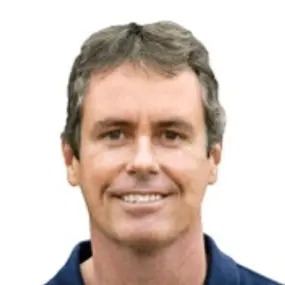
Professional Golfer, Broadcaster
Ian Baker-Finch, winner of 17 tournaments worldwide, including the 1991 Open Championship, has been a member of the CBS Sports golf team as an analyst for the Network’s golf coverage since 2007.
Baker-Finch began his professional golfing career on the Australian Tour in 1979, and after more than a decade of successful competition around the world, he won the 1991 Open Championship at Royal Birkdale. From 1983- 93, Baker-Finch won 17 titles worldwide including tournaments on all four major Tours. He represented Australia in the 1985 World Cup, four World Tours Championships from 1985-91 and the Dunhill Cup in 1989 and 1992. Baker-Finch also served as Peter Thomson’s Vice Captain for the International Presidents Cup Team in 1996, as well as Gary Players’ Assistant Captain for the 2003, 2005 and 2007 International Presidents Cup Team.
Appointed by the Australian Olympic Committee, Baker-Finch served as Team Leader (Captain) of the Australian men’s and women’s golf teams that competed in the 2016 Summer Olympic Games in Rio de Janeiro, Brazil. He will assume the same role this July at the Summer Olympics in Tokyo, Japan.
Prior to CBS, Baker-Finch worked for more than a decade as a golf analyst for all the major tours throughout the world on Australian television, as well as ABC and ESPN. He also worked for TNT as an analyst for its golf coverage. He began competing on the Champions Tour in 2011, shortly after his 50th birthday. Baker-Finch travels extensively, fulfilling his passion to play the world’s top-rated golf courses while honing his skill… Read More