Jan Stephenson - Part 2 (Early Wins and Being the Face of the LPGA Tour)
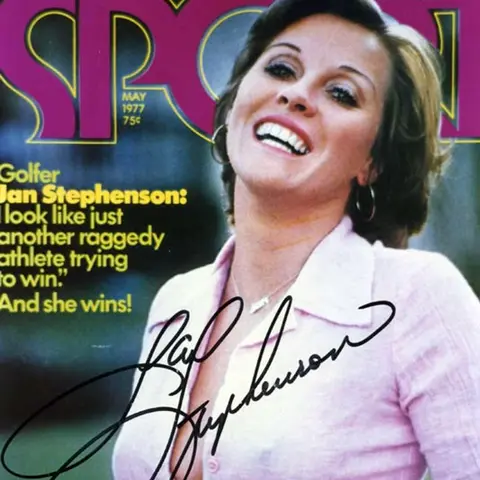


3-time major championship winner, Jan Stephenson, reflects back on her early years on the LPGA Tour and recounts several of her 27 professional wins including her first at the 1973 Wills Australian Ladies Open. Jan describes how her life changed when, in 1977, Sport Magazine used a photo of a bra-less Stephenson, not intended for publication, on the cover of their magazine. She relates how, in the crazed aftermath of that photo, LPGA Commissioner Ray Volpe recognized an opportunity to change the tour's image to attract more fans and sponsors. And so, Jan Stephenson became the face of the LPGA Tour and a reluctant sex symbol. She worked tirelessly, often giving of her time freely, to promote the Tour for the benefit of everybody. Despite the distractions, she was able to amass a marvelous record in golf, "FORE the Good of the Game."
Give Bruce & Mike some feedback via Text.
Follow our show and/or leave a review/rating on:
Our Website https://www.forethegoodofthegame.com/reviews/new/
Apple Podcasts https://podcasts.apple.com/us/podcast/fore-the-good-of-the-game/id1562581853
Spotify Podcasts https://open.spotify.com/show/0XSuVGjwQg6bm78COkIhZO?si=b4c9d47ea8b24b2d
About
"FORE the Good of the Game” is a golf podcast featuring interviews with World Golf Hall of Fame members, winners of major championships and other people of influence in and around the game of golf. Highlighting the positive aspects of the game, we aim to create and provide an engaging and timeless repository of content that listeners can enjoy now and forever. Co-hosted by PGA Tour star Bruce Devlin, our podcast focuses on telling their life stories, in their voices. Join Bruce and Mike Gonzalez “FORE the Good of the Game.”
Thanks so much for listening!
Straight down the middle. It went straight down the middle. Then it started.
Mike GonzalezI'm thinking ahead 50 years from now, we got little kids listening to this episode, and they're thinking, what's a phone bill? And why would it be$3,000?
Jan StephensonYeah. Well, it's probably still that if you're calling from the hotel, but nowadays you don't have to, obviously.
Mike GonzalezNo. Yeah.
Jan StephensonSo and so, and then Quig was the one that really turned it around for me because I was in Mexico. We're playing um Bing Crosby had an event um he down at his house, in his place, I think it was in somewhere in Tijuana. And um I was playing really well until the last round, and then of course I got sick, and I was I barely made it, but I had to finish the round so I could get some money. But I was so sick the next day that I I didn't know where we had two weeks off because it was a week off, and then it was the dinosaur, which I hadn't qualified for if she had to win an event back then. And um, you had to finish in the top three or win an event from the year before. So I had two weeks off and nowhere to go, but I was so sick that I couldn't go home and I didn't know what to do. And Marlene Hagee said, Well, I live in Palm Springs and we can't leave you here in Mexico this sick. So why don't you fly with me? I'll help you get to LA and then you're you're up to on your own, because I'm gonna I'm gonna rent a car and drive to Palm Springs where I live. And I said, Well, if you can just help me get to LA, I'll figure out what I'm gonna do from there. And Quigley had said, and she said, Do you know anyone else in the country on this side of the. And I said, No, I know no one. Um, you know, I know Bruce and Dan, and that's it. And so they she said, I said, Oh, I met Dana Quiggley, he runs Canyon Country Club, and he had been in Australia with you. And she said, Well, when we get to LA, I'll show you how to make a you know a phone call. Call him and see if he'll let you stay. And so I called him and I said, I'm really sick. Is there any way I can stay at your hotel without it being too expensive until I get back on my feet for two weeks? And he said, Come on, and then he never charged me, he comped me the whole thing.
SPEAKER_00Oh, that was nice.
Jan StephensonAnd then I finished up buying a house in Palm Springs.
Mike GonzalezWell, let's recap a little bit for our listeners the the career of Jan Stevenson. Of course, we've covered a lot here in the last few minutes, but uh uh Jan did turn professional in 1973 at age 21. She had 27 professional wins, including 16 LPG8 tour victories, which puts her 36th on the all-time list. As we heard her talk about, she uh she started in Japan 1973. I think you finished eighth in that first event in Japan, so that won you a little money. Uh you kind of blitzed.
Jan StephensonOh, you did your research. I couldn't remember I knew I finished top 10.
Mike GonzalezYou kind of you kind of blitzed through the season in the in with the Australian LPGA, as you mentioned. I think you won like five out of 10 events that you entered, including you mentioning the winning the last four. And then joining the LPGA tour, which we're just talking about now in 1974. Rook of the year that year, we'll talk about that with 14 top 20s. Uh 13 years later, you're the leading money winner. You won three majors, only 23 players have achieved that, which is pretty phenomenal. Uh the 1981 Peter Jackson, which we'll talk about, the 1982 LPGA Championship, and the 1983 US Open. Um but uh you had some other significant wins. Let's just let's just stay with that rookie year where uh you had six top tens uh coming out of the box in America. So you found yourself being able to compete right out of the box.
Jan StephensonWell, I've I struggled with with the different grasses uh on the greens. I remember I remember playing in Texas. The greens were so grainy, and I really struggled with that. I I was quite shocked that I that um I didn't and I still was so homesick um because I was so used to being around my parents. So my parents broke up their trip. My mom would come for like three months, she would take a long service leave. Um I don't even think she worked then by then, or she worked one job because she now was a bookkeeper, so she worked um for Unilever and didn't do the clothing one. And then so she came for three months, and then my dad would take three months long service leave, but they had to spread it out because I really didn't feel comfortable. I was so homesick for them, and and I I I really didn't have any very many friends. I think I only had one friend, and that was I didn't really have her until um we got forced to room together with somebody in Japan when I was a rookie. Um so and she had she had qualified the year before. Her name was Mary B. Porter. Sure. For the USGA. And she kind of took me under her wing because we had to room together and didn't even know each other. But after that, we became really close friends, and then we roomed together after that. So I I struggled up until um I'm you know, I'm I think we went to Japan in October or November, I think early November, we would always play them at Mizuno. And uh that's when we had to room with a player, and they put us together. So after that, and we every time you'd have to room in a condo, um, Marlene Page helped me a lot. She kind of took me under her wing. And when we'd room in condos, though, as a rookie, um, and the next year after that with Mary B, we'd give they'd rent a condo and we'd have to clean everybody's golf shoes. And I just think I I think back now, can you imagine asking one of those rookies to clean your shoes? Do the laundry and do the dishes? It just wouldn't happen.
Bruce DevlinNo, no. No, they worry about getting their lockers now. But you your first professional win, you picked a pretty good one, didn't you? You remember your first yeah in Naples. No, I'm talking about the very first professional win was the Australian Ladies Open, wasn't it?
Jan StephensonYeah, it was.
Bruce DevlinYeah.
Jan StephensonYeah. It was it was really it was actually fun because um i it I I uh it the the one in Manley or the one in Melbourne? The one in Manley, it was in my hometown, it was it was really fun. In fact, I went to Manley last month just because they have this new green tech water technology, but it brings back so many memories, and uh of course the media loved it because it was kind of like sticking it back in their face.
Bruce DevlinYeah, yeah, sure, sure.
Mike GonzalezWell, it took you a little a while to get into the winner's circle. I mean, your first uh tour win on the LPGA tour was at the Sarah Coventry Naples Classic at uh Lily Country Club in Florida by one over Sandra Haney, who was the defending champion at the time, and Judy Meister.
Jan StephensonWow. I I know I played in the last group with Judy Rankin, who was leading the event, and um I was really nervous, and it it they had one of these their freaky cold fronts come in, and I hate cold weather, and it I was doing really I was playing well, but then the cold front came in on that Saturday night, and I was trying, and I had had a chance to win a few times before, and they're like, Oh, you you've got to stop being so confident, you're not you're not gonna win that quickly. And I listened to the players when they said that, and then I I realized that that's not true. I I know I've played with them for two years, I know I can win. So this time I was one shot from behind, or two shots, I think, going into the last round with Judy Rankin, who was in the last group. And um, you know, and that's what's so amazing is that when I came on tour to think that I mean my era, I mean, and I'm not even saying it because I think it was the hardest era, it's a lot of players will say that, you know. I mean, uh I've talked to like Laurie Kane from Canada and a lot of the players of you know, of Kari Webb and Annika's era, they didn't have this incredible competition of all these players that could possibly win. I mean, you when I came on, we still had Mickey Wright playing and Kathy Whitworth and Sandra Haney and Carol Mann, and so and then of course, you know, then Judy Rankin, and so there were these great players, and that's before then we had you know Lopez and Patty Sheehan and Pat Bradley and Ben. And there it was just an incredible player list that when you won, it was really, you know, a big competition. There wasn't like there was kind of been lulls over the years where there isn't wasn't a lot of competition. You know, there was like Annika was way ahead, or Kari was way ahead, or Lorena was way ahead, but there wasn't a lot of competition. There was if if you just messed up at all, one of those top players would come by.
SPEAKER_00Yeah.
Jan StephensonAnd so when I was playing against Judy Rankin, I think she might have even been one number one at the time, I didn't think she would ever falter. But she had um it was really cold and windy, and of course, at least with the wind, you know, growing up in Australia, I'm used to wind, and of course, playing at Shelley Beach, or by then it was called Tugra Lakes Golf Club, but now it's called Shelly Beach. It's right on the water, so I'm used to the wind. That part helped a lot because she hit one out of bounds. She had a big hook and it was a right to left wind, and she hit it out of bounds. And when I realized that she was human, it's just like I've got this. And even though it was cold, I I've still got a picture of when I won it. I've got a black wool hat on and wool sweater, and I've and at least wool clothes, and I and uh and which is amazing to win my first one in cold weather because I absolutely hate cold weather.
SPEAKER_00Yeah.
Bruce DevlinThen you uh you won again in 76 the uh Birmingham Classic in Green Valley Country Club uh by four shots this time over Kathy Martin.
Jan StephensonWell, I love Green Birmingham. I remember when it was one of my when I was a rookie in 74 when my mom came to Birmingham um and we stayed with the family. We did a lot of staying with families because uh the because of you know the cost of everything. And so as a rookie, I stayed in a lot with a lot of families. Um stayed in touch with a lot of them for a long time. And they they said, no, no, you can come and and uh and actually I was staying with a family who was a he was a apparently a uh he played for Auburn, so he was a big golfer, um, Malin Kent, and um and so he would take me to play um the Birmingham Country Club, and so I was there a few days early, and my mom was there. And I remember um I shot my rookie shot 74, 74, 74, and I think I want to say um uh Jane Blaylock won. And she shot like six better than that. She shot like three 72s or maybe one under. And I said to my mom, I don't think I can beat that score. That was as good as I can play. And I don't know how I'm ever gonna win if that's as good as I can play. And it's amazing. So, like two years later, um I shot 66 and a 67 at that tournament. And so it's just amazing what you can do when you get to play in competition and when you when you have to, how much better you get to play. Yeah, yeah.
Mike GonzalezYour rounds that tournament were at the Birmingham in 76, 65, 70, 68.
Jan StephensonThat's pretty much Oh, I had shot 65 at that.
Mike GonzalezThat's pretty that's I knew it was low. That's pretty good playing.
Jan StephensonBecause I remember when I shot 74, I'm like, how am I ever gonna get lower than that?
Mike GonzalezYeah. So you you you must have been, I don't know, were you going back and forth? Because in 77, then we go to kind of the next significant win, and you you win the the Australian Open again uh in Manley.
Jan StephensonYeah, and that was a big one because um uh Nancy Lopez was there, and uh um I think who else uh I know Donna Capone came, Pat Pat Bradley obviously, because I want to beat her in a playoff. And it was really good because the headlines were awesome because it was now I I was like a favorite because it was Australia guess versus the Americans on the big hot shot. So now, of course, everybody loves me, which was pretty funny. Um, to go from you know, hating me to now I was they were hoping I would beat the Americans. And so, and I have a terrible playoff record. And I think that was the only time I ever won a playoff. I think I was one for six or seven, and I remember my mom was catting for me at the Australian Open at Ma at Manly, and um my dad was so nervous he couldn't even watch because it was it was scary. And and and the playoff, I birded the last hole to get into a playoff. It was a par three, and I shot it, I hit it really close, and I made the putt. And of course, Pat Bradley's always been known for her how what a good long putter she is, and she's always been a great scrambler. Um, you know, she was always named the you know the trash the trash queen because she could get up and down from a trash can. And so we in the playoff, you know, she missed the first five greens, and I was on the green every time, and and she would get it up and down, and I'd miss the pot. And I was getting my mom could see I was getting really frustrated because I was hitting fairways and greens, and she lays, it can't last. I said, I don't know. I mean, it seems like she can do this forever. And she goes, It cannot last. There's too many hard holes that she cannot get up and down from these bunkers every single time. And so on the fifth one, she missed the green, and I hit it to about 10 feet, and she finally hit it outside of me. And so she missed the part, so I had to two pot to win. And I was like, my mom was right, because I was getting really frustrated.
Mike GonzalezSo it was it was during this year that um you gained some notoriety for a certain uh photo in the cover of Sport Magazine.
Jan StephensonYeah, that was actually pretty funny. I was I remember vividly to this day, uh they came to Palm Springs, the Canyon Country Club, where I now was representing. So Quig was giving me a good deal on a condo. And um they came for pictures, and so I they said, Well, let's put your makeup on. Well, put your makeup on, and then we're just gonna figure out the lighting, we're gonna go down to the golf course. So I just, because you know, they wanted to make sure everything with makeup that I could take the shirt off and on without affecting my makeup, I just had tied a you know a shirt on and I had a pair of jeans on the bottom. So they went down to get the lighting and what where they were gonna do it on the putting green. And so we took a whole bunch of pictures with the lighting, because you know, in those days you had a Polaroid, you didn't even have what you can now with a digital, it was it's easy now. And then they came back upstairs and I put on my golf outfits and did all these golf pictures and everything was great. And then the commissioner called me, Ray Volpe, and said, They're gonna use the one with you, the pink shirt. And I said, I didn't, I don't have a golf pink golf shirt. We didn't take any pictures with a pink golf shirt. And he said, Well, like, and then I remembered which one it was. I was horrified. I'm like, oh no, you can't use that one. So I wrote a letter to the editor of Golf Magazine of Sport Magazine and said, Please don't use that. I'm just trying to get out of this controversial figure that I grew up my whole life with. And, you know, I I don't really need that in my career. I really want to be known for a golfer. And of course, the commissioner loved it. And um, I was like, You please you've got to let him, you've got to not let it. So he said, Oh, I'll make the phone call, which I don't know that he ever did, because you know, he had moved the moved the headquarters to New York. I said, You've got to call him and tell him we can't use that picture. It's just gonna be a huge controversy, which of course they all loved, and it didn't do any good. They they ran it, and of course, then that part of my career took was now uh started.
Mike GonzalezYeah, I think one of the uh most memorable lines I heard from back in that time, a sports writer or some sort of writer talking about uh people looking at the picture being more interested in the nipples than the nib than are nibblics.
Jan StephensonOh, I haven't heard that one. I've heard a few of them.
Mike GonzalezAnd I I doubt that we were I doubt that we were all playing Nibblics back in 1977, but that's what I think I I think uh just to help our listeners with the context, historical context, Jan, because you know you think back to the formation of the you know the women's professional tour in the 40s and then evolving to the LPGA in 1950, what women were going through during those decades of the 50s, 60s, even before. Um being an athlete uh uh appearing to be less feminine as a particularly as a professional playing for money, not in vogue at all. Um so you had a lot of that going on with you know women playing professional sports and being competitive and being aggressive and all these anti-uh feminine sort of traits that were being attributed to these players. And even coming into the 70s, the the PGA Tour was still sort of fighting that and finding trying to find a way, I guess what, to to sell, to promote, to find new sponsorship that was all operating in that context, wasn't it?
Jan StephensonYeah, the the Tour was no question was struggling because at those days, you know, back then, you know, if you were good looking, you're kind of a cheerleader, and if you were an athlete, you're gay, you know, that's just the way it was. I mean, I just happened to have even with these amateur golf in Australia, I mean, I just happened to be um with my dad, you know, my father always said, you know, you can play like a man and look like a woman. I mean, that was his deal, you know. Uh as long as you're, you know, you're a tough competitor, uh, you know, you can still be yourself. And of course, I was so much into fashion. But um, when the commissioner called me, uh, called me in and said, you know, when the new commissioner with Ray Vulper, who'd come from, you know, he was a he was the commissioner of the hockey of NHL, and when he got the job, he goes, We have got to change this image. We've got to move it away from what it is to get to create sponsors and get attention with the media. So when they moved it to New York, they hired um a big advertising marketing agency called People and Properties, and then they uh they actually had an office in the LPGA's office. He said, We have got to turn this whole thing around. And he said, We need we need a new image, we need someone to be that. And of course, you know, I've come, I've just won, now I'm done this article, you know, I've done this controversial magazine. So he said, I would like you to be the face of the LPGA. And what that means is we're gonna have you meet potential sponsors. You want to wine and dine them, take them to play golf. We're gonna um we're gonna start a magazine that's gonna be part of the program. Every week, our program, we're gonna have a big program at each of the events, and we're gonna insert this magazine. We want you to be part of that. And, you know, and if and I said, well, I it's gonna really hurt my game. And and he was like, if if we don't do that, there may not be any LPGA for you to play in. So, you know, it's it's not a case of, oh, it's I want to play golf. It's a case of if we don't, how are we gonna turn the image around and get sponsors? We desperately need media, we desperately need sponsors, and this is what's gonna take. And they're and it's gonna be signing tenure contracts. And I said, Well, you know, I really want to make it to Hall of Fame. I really want to make a career. And he said, Look, you're gonna make way more money doing this, and people they'll be bait, they will be down on their bended knees thanking you for what you've done for the tour. And so I I did it reluctantly. Um, I look back now, I wish I hadn't. But um, so whenever I'd play a tournament in my on my locker, I'd have all of these requests for interviews, and then every Sunday there'd be a ticket on where I was flying to, a message to pick the ticket up at the airport to meet a potential sponsor. And I would fly out on a Sunday night, play golf with the new sponsor, um, most of the time in New York, and and um we'd sign huge contracts that were at least 10 years old.
Mike GonzalezAnd the reaction from your fellow players a bit mixed, and I think some of the negative reaction to say the least, you know, in retrospect, probably some of the negative reaction, you'd look back and think, well, that was probably rather short-sighted of them in terms of what it eventually did for the tour.
Jan StephensonAnd actually, some of them even say that today, especially when we started the senior tour. They all go, you know, it's kind of funny when we first started the Legends tour, they're like, make sure you wear one of those low-cut dresses to the party. I'm like, wow, things have changed. Now I'm trying to be the other way, and now you're telling me to do that. But um Yeah, it was very negative. I I remember, you know, I'd that's what Mary B was a big help because she knew how much I was doing because I was rooming with her so much, and and um she would have to check us in and do my laundry because I'd because Monday was always travel and laundry day, and I'd be off doing all these things for the LPGA for free. And um, and so the problem was that by the time I got to the events, I'd already done a press day because I'd, you know, I'd signed contracts and we'd do press days. So the the players, when we have our our meetings about once a month, we'd have a meeting and they go, Why is it always Jan, Jan, Jan? Why is she the one that's getting attention? And he goes, Well, two reasons. Number one, she's done all of those free publicity and free press days. And number two, if they talk about what she's wearing or what she's doing until Thursday or Friday, that's extra media and extra people. And he said, We've already done the numbers that she's bringing an extra 10,000 people a week when she does this. So that is huge, and that's the way I can get special. And that's how we and then we signed huge TV contracts with all of the networks. We were always on TV. We had enormous galleries. And of course, it was, you know, my practice rounds, I had people and I and then I'd have to have security. And so it, you know, I became a like a this superstar. I mean, people see what to this day and age you'd be amazing. You'd have your podcast and all these people. And but back then to have every I couldn't go anywhere. I finished up having to do room service because I couldn't go anywhere to eat.
Mike GonzalezAnd I think that's what uh and we've talked about this with a few of our other guests, but what our listeners uh maybe uh forget is that um while your life is you know what we see is focused on what you're doing inside the ropes, life continues to go on outside the ropes for you too, and it got complicated.
Jan StephensonYeah. It got very complicated, and I've I've always been I've had horrendous choices in men. It's probably why I don't want to have anything to do with them anymore.
Bruce DevlinUm it's excuse me for laughing.
Jan StephensonThat's okay. You I you I know you understand. But um it's it's just it the image, I mean, that's you kind of hit it on the the nail on the head, Mike. I mean, it's the image of what they portrayed of me was really nothing like what I am. I mean, to the I've always been a very quiet person, and I'm you know really not, believe it or not, don't like to show off that much, but it it was the image that was we had to do. I mean, it's in in you know, and I I I got used to it. I mean, if if I remember one time, the second or third time I was on Johnny Carson and I didn't show up in a low-cut dress, and everybody was horrified. They're like, Well, do you have anything else to wear? And I'm like, no. I had a pantsuit on purpose. As I'm like, you know, I'm trying to show that I'm you know a a winner here. And and and uh and so for for ten years I had um pretty well actually it was less than that, it was it's probably about eight years I had a great life of that image until um the commissioners changed. But it was it really isn't me.
SPEAKER_00Yeah.
Jan StephensonI'm very much a homebody.
Mike GonzalezYeah, well I I think what uh what people maybe didn't come to appreciate until much later on, once all this uh PR blitz from the LPGA sort of subsided and we got on to to something else that uh uh people came to realize just what a hell of a golfer you were and and the tremendous golfing record that you posted, and and uh most people don't know how hard you worked at it.
SPEAKER_00Yeah.
Jan StephensonWell, in spite of all of the time that I took, yeah. I mean, I talked to Mary B. Porter, well, she's Morty B. Porter King now, she's married and lives in Hawaii. I talked to her about once every six weeks, and she goes, People have no idea how much you would have won if you weren't running all over the country for the LPGA. Um, we may not have had an LPGA, but um I a lot of times I wouldn't get practice rounds. I would just come in on a Tuesday night or or Wednesday after you know, spending two days with potential sponsors and or doing photo shoots for the LPGA or something. And um, later on I did get a lot of corporate outings and and um because of it, probably. I mean, I talked to Ray about it and he goes, think of how much money you made off the golf was. And people kept saying, why would you be doing corporate outings? But back then the prize money wasn't that big. So if you got offered second place prize money to go to do a corporate outing or a stag event, and all you've got to do is show up and do a clinic and wear something low-cut and make the money. Um, in those days, it it you know, it's it's easy now to say I wouldn't do it, but you've it's much more money to be made on the golf course. You know, to get 15 or 20,000 for a day back in the in the 70s is pretty incredible.
Mike GonzalezYeah, yeah. Well, let's come back to um uh the LPGA tour in 1978, where you won the Women's International at Moss Creek, just down the street from us here uh by four over amateur Beth Daniel.
Jan StephensonWow, she was an amateur back now. Yeah, I had lost the tournament, I think, the year before to Sally Little. I thought I'd had the tournament won. And um I had come, I was on the second last group, so I finished with a pa and she hit her ball um into the bunker on the last time. It was on TV, obviously, and so I was getting ready for a playoff. If she got up and down, we'd go into a playoff, and it was a horrible lie, and there was water behind it, and she bladed it and was going in the water, and it hit the flag, the actual flag, and dropped in the hole, and I lost. Yeah, and I'm like so that helped that golf course owed me, and I loved that golf course, and yeah, and I was dating a man I probably should have married instead, but um, he was a quarterback for the for the Falcons. He was there watching at the time and in 78. So it was a pretty fun win.
Mike GonzalezYeah, she and Sally Little told us all about that.
Bruce DevlinShe did, she did tell us about it.
Jan StephensonThat was I was because I was getting ready to go into playoff.
Mike GonzalezYeah, that was uh that was two years ahead of that. It was 1976 when she did that. She dunked that.
Jan StephensonWell, I couldn't remember when, but I was I know that course owed me.
Mike GonzalezYeah, yeah. I guess it's more appropriate to say she holed out from the bunker rather than she dunked it from the bunker, though to hear you describe the shot.
Jan StephensonThat's right. That's right. Yeah, she bladed it. Did she tell you she bladed it?
Mike GonzalezI don't know if that came out, did it, Bruce? No, it didn't come up. No, it didn't.
Jan StephensonYeah, exactly. Because on TV they went, oh, it's bladed, and I went, I won't even have to go into a playoff. And then it was like, what happened? It hit the flag and dropped in the hole. And I'm like, what?
Mike GonzalezOh boy. Uh well, I think maybe later that year, Bruce.
Bruce DevlinUh she got to play with the dog.
Mike GonzalezYeah.
Bruce DevlinYou remember playing with the dog? With David Graham, the dog. He won the world team championship.
Jan StephensonIn Japan, yes. Yeah, that was um that was fun. You know, he was he was good to play with, actually. He was way better than Greg Norman to play with. Um, he was he was fun, you know, he was sarcastic, which I like, because obviously we're all sarcastic as a str's. But um, yeah, it was nice to win that one against Donald Palmer and and uh I think he did he play with Laura Ball or Nancy Lopez that you're not, I can't remember. Did you play in that one?
Bruce DevlinNo, no, I didn't play in it. No, no, I did not.
Jan StephensonI know because actually we never played any team events back then, because I think over the years the team players, the people I've played with, I've played um I played with I played with David and then I played with um oh Graham Marsh, that's who it was. Oh, Marshall. I played with Graham Marsh in Europe. We had a European world event. And he got upset because we played against Sally and Gary Player, and he's he's accused Gary of cheating and playing games, and he I'm like, well, whatever. Don't and he would let it up seem upset him. I was like, don't let it upset him. That's what that makes him win. I couldn't get him to calm down.
Mike GonzalezSo let's go on to your next win, 1980 Sun City Classic at Hillcrest Country Club by one over MJ Smith, a Kiwi.
Jan StephensonYeah, actually, that was a fun one because I lived in Arizona at the time, so I could stay at home.
Bruce DevlinYeah, that's good. Then it's starting to do that.
Mike GonzalezThank you for listening to another episode of For the Good of the Game. And please, wherever you listen to your podcast on Apple and Spotify, if you like what you hear, please subscribe, spread the word, and tell your friends until we tee it up again for the good of the game. So long, everybody.
Outro MusicWhack down the fairway. It went smack down the fairway, and it started to slice just smitch offline. It headed for two, but it bounced off time. My caddy says long as you're still in the state, you're okay.
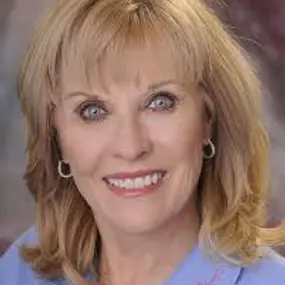
Golf Professional
Jan started her winning golf career at an early age, winning 6 consecutive State Schoolgirl Championships in her home country of Australia. She was selected to represent her State in the National Women’s Championships when she was 15 and won the Australian Foursomes Championship with Diana Thomas. She won all the trials for the World Team representation, including the State Stroke Play Championship and the State Match Play Championship, but was not chosen to represent the State. The Australian Ladies Golf Union cited that Jan as too young to represent her country, even though she had won the Trials. This was a devastating loss to Jan, but turned out to be the best lesson for her. The Australian Media used this to jump on Jan’s “Band Wagon”. Realizing that she would never be chosen to represent her country, Jan turned professional and joined the Australian LPGA in August of 1973.
She won 5 of the last 10 events including the Australian LPGA Championship and the Ladies Australian Open. Jan joined the US LPGA tour in 1974 and won Rookie of the Year Honors. In 1975 Jan was invited to play in the Inaugural Moroccan Open. Jan won the event and added another National Open title to her resume. During 1976, Commissioner Ray Volpe immediately saw that Jan could be the new “face” of the LPGA. “She has sex appeal and talent. What more could we ask for”, Volpe said. He proceeded to utilize Jan for programs for the new tournaments and promote this “new image” for the LPGA. Jan traveled around the country meeting potential new sponsors and attending press conferences for new e… Read More


