Jerry Pate - Part 1 (The Early Years)

 Apple Podcasts
 Spotify
 iHeartRadio
 PocketCasts
 Overcast
 Amazon Music
 RSS Feed
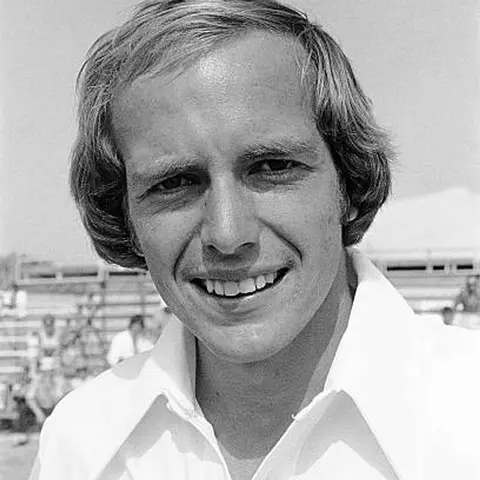
 Winner of the 1976 U.S. Open as a 22-year-old Tour Rookie, Jerry Pate shares his early days growing up in the South, walking-on to play golf at Alabama and his deep affection for their legendary football coach, Paul "Bear" Bryant. Jerry recalls his U.S. Amateur title in 1974 and his team and individual win in the Eisenhower Trophy representing his country that same year. He fondly remembers his Walker Cup experience in 1975 at the Old Course and how he tagged Craig Stadler with his now-famous nickname, "Walrus". Jerry Pate tells his early story, "FORE the Good of the Game."
Give Bruce & Mike some feedback via Text.
Follow our show and/or leave a review/rating on:
Our Website https://www.forethegoodofthegame.com/reviews/new/
Apple Podcasts https://podcasts.apple.com/us/podcast/fore-the-good-of-the-game/id1562581853
Spotify Podcasts https://open.spotify.com/show/0XSuVGjwQg6bm78COkIhZO?si=b4c9d47ea8b24b2d
About
"FORE the Good of the Game” is a golf podcast featuring interviews with World Golf Hall of Fame members, winners of major championships and other people of influence in and around the game of golf. Highlighting the positive aspects of the game, we aim to create and provide an engaging and timeless repository of content that listeners can enjoy now and forever. Co-hosted by PGA Tour star Bruce Devlin, our podcast focuses on telling their life stories, in their voices. Join Bruce and Mike Gonzalez “FORE the Good of the Game.”
Thanks so much for listening!
Welcome to another edition of FORE the Good of the Game. Bruce Devlin, our guest today, is known for hitting great five-iron shots when it counts.
Bruce DevlinWell, that's true, but you know, I I happened to play the first two rounds with this gentleman in the very first tournament that he won on the PGA tour, and it was the U.S. Open Championship in Atlanta. And we're so proud to have you with us, Jerry Pate. Thanks for coming and joining Mike and myself.
Jerry PateThank you so much, Bruce. Um, I'm I'm just grateful that you invited me to do this. And Mike, it's nice to meet you.
Mike GonzalezJerry, thanks for joining us. And uh, as we've talked about before, this is all about telling your story. And uh to do that, we always go back to the beginning. So uh we'd like to get a sense for your early life, uh what life was like growing up in Georgia, how you got introduced to the game. Uh, our understanding is you were born in Macon, Georgia. Why don't you just take us through some of those early memories?
Jerry PateWell, my family moved to Georgia in 1800. I was born in 1953 in Macon, Georgia, and uh my family uh uh they were they were farmers early on. Uh but uh my dad had uh uh uh finished school at uh Chapel Hill, University of Georgia, and uh my grandparents uh lived in Jacksonville, and so uh my father and mother, when they finished college, moved to Macon. Now I only lived there about six months. We moved to Aniston, Alabama. My my family uh uh had worked together. My grandfather was running Sheron Williams Company for the Southeast out of the Jacksonville and Atlanta office, and so my father, his first job out of college, was opening paint stores. Uh a few years later, he got introduced to a family that had lost their son, uh, who was an original Coca-Cola bottler from the 1915s, and uh half of the family lived in Pensacola, the other half lived in Aniston, Alabama, where I was living. So they hired my dad to take on the responsibilities of the other half uh family. And so I grew up in a little town, Aniston, Alabama, had a beautiful country club, and uh I played golf. My I was one of six kids, and uh I was the fourth of six, and all of us played either golf or tennis. So my grandfather was a scratch player at one time in his career, and my dad was a very good keen player and a scratch player, also.
Mike GonzalezSo very clear how you picked up the game then was through family. At what age did you finally hold that first club?
Jerry PateI was probably six years old. You know, I tell stories that I can remember being eight years old, and my dad would drop me off on the way going to work early in the morning, about 6:30. And growing up in a little southern town in Anniston, Alabama, they allowed the caddies to play golf early in the morning. In those days, all the employees were pretty much black, and the caddies were black. So I would rush out to the 16th green, and the caddies would be playing the back nine of the of the club. And uh it was a par three up the hill, and I would watch them in the morning looking back towards the east, and you could see their silhouettes of the swings, and I knew everybody's swing, and you'd watch them uh play golf. And the funny thing, I told the story as an eight-year-old kid, you learned a lot of things about people's mother when there was a bad shot hit. And then and the uh the 16th green was elevated some 50 feet above the the floor where the T was, there was a creek, and you shot directly uphill to the clubhouse, and then all of a sudden a guy would miss a putt, and there goes a helicoptered putter off the green. But in those days it was it was interesting because it was the civil rights movement was not quite there yet. And uh if black people said and did the right things, they had privileges that white people had. And when you look back today, it really was kind of sad to think that that was their opportunity to play golf. So I learned from some of the black caddies when I was a kid, and of course, my dad was a fine player, and we had a great pro at the club, Darwin White, and then later a guy named Jim Scott. And uh I can remember, and I moved from uh Anniston when I was 13, but I can remember 10, 11, 12. We had Byron Nelson came to town, and and we had uh uh some of the other uh really good players that came and did golf exhibitions. We had Julius Boris, and so I watched these great players as a kid growing up, and I dreamed of maybe one day being a good enough player to be reckoned with.
Mike GonzalezYeah, you mentioned tennis too, that was in the family. Did you play other sports as a kid?
Jerry PateI played a little bit of basketball. I played football, and uh that's also a great story. I I played in junior high school and basketball when I moved to Pensacola, and then I played at Pensacola High School, and in 1969 they rezoned all the schools. And so I lived on the east side of Pensacola, and between Pensacola High and my house was uh a part of town where there was Booker T Washington High School, all black, had never had a white go into Booker T. And so in 1969, my junior year, I was basically uh moved to Booker T, which was uh an all-black school, and there were no white seniors my junior year, and so we segregated the school or integrated the schools uh to that to the to the extent that we had to switch schools. So a lot of blacks went to Pensacola High and Woodham High and Escambia High, but in those days, all the blacks went to Booker T. So I went out to basketball in the 11th grade, and we had a guy that was 6'9, another guy was seven foot, and they could all slam Dunkin'. And I went home after a week of practice, and I said, Dad, there's no way I can play basketball with these guys. And ironically, our high school then got moved to the division, I think the division six A, which was the best division. They didn't let the blacks play with the with the with the big schools around Florida and in Alabama and in the South. And our school won every single basketball game, I think, for two years, and we were state champs. So it was quite thrilling. I loved to go to the game and support the guys on the team. They were all friends of mine, but I knew one thing, I couldn't play basketball with them. And I was a pretty good shot at basketball, but these guys were in a different league. So uh I learned a lot in high school growing up. I learned a lot as a kid growing up, ironically, from people that did not have the privilege that I had growing up in a family of parents that had college degrees, my grandparents had college degrees, and these families were just working class people just trying to survive. So it gave me a lot of empathy to realize how lucky I was to be able to play the great game of golf. And uh, and and and I'll jump ahead here. You know, I saw Lee Elder last year, God bless him, he just passed away, and Bruce was a friend of yours. I watched Lee Elder be honored at the Masters this last year as the honorary starter with Jack and Gary Player. And I'm standing there right up against the ropes with my wife Susie, and everybody was talking about Lee winning the 1974 Pensacola Open. And I'm standing there, and I know I don't think Gary played. He might have played that year. I don't think he didn't. I know Jack didn't. And I looked at my wife and said, you know how many people saw Lee Elder win that Pensacola Open 75 that are here today at the Masters? I said, probably you, me, and Lee, because his wife, Rose, was not there, his first wife. And I watched, I was dating Susie, and I watched Lee go down the fourth fairway in a four-hole playoff, fourth hole, and watched him beat Peter Oosterhouse and jump up in the air and hold his hands and watched him win the Pennscola Open Bruce. I don't know, you might have been prepared in the field, and it was a big deal. And at that time in my life, I was not a very good player. I had not won any golf tournaments to speak of. I hadn't played anywhere, and he kind of inspired me to go on and try to play golf on a higher level.
Bruce DevlinYeah, what a that was a wonderful victory for him. And uh I I'm I believe I played in that tournament too. I can remember remember him winning there.
Mike GonzalezJust a few years later, Jerry, and we'll get to it later, you actually won that tournament yourself, not the Pensacola Open.
Jerry PateYeah, in fact, uh, you know, it's kind of interesting. I I watched Lee win. I played in a tournament that spring right after the the Pensacola Open. It was called the Monsanto Open in those days. And a guy named Andy Bean from the University of Florida asked me to come down and stay with him in Lakeland, Florida to play the state amateur. I had never played a state junior, I had never played a state amateur, and I'm 20 years old, I'm dating Susie. I'm I'm in business school. I think I'm gonna go to work for Coca-Cola and study, I'm studying business. And Andy says, no, come stay with me. And so he called, got me in the tournament at the 12th hour. Really, it was at the deadline that day. I went down and stayed with Andy, and I beat him the last three holes. He was beating me by a shot, and I ended up beating him. Uh, and I won the Florida Amateur. And I looked at that trophy and I saw names on there like Gary Koch, who was a fine player, Eddie Pearce, people like uh uh Tommy Aaron had won it, Bob Murphy, Dan Sykes. There were a lot of great players who won the Florida Amateur, and I said, Oh my god, I'm on this trophy with these, it was a big silver bowl with these great players. So Andy said, let's go to Jacksonville, we'll stay with your grandparents and try to qualify for the U.S. Amateur. I'd never played in the U.S. Amateur. And I go down there and I win the qualifier. I'm the medalist at San Jose Club. Ironically, my grandfather had been a founding member in 1926 or 28. He was also a founding member in 32 of Pana Vidra Club. And although he was playing at Ponta Vidra, I didn't know he had ever been a member of San Jose, but my they had lived in that part of the south side of Jacksonville. So I win the qualifier. He came out and watched me qualify, go to New Jersey, I win all the eight matches, and I win U.S. Amateur. And at that moment in my life, Bruce, I was studying to be a business person, and I was going to go to work for Coca-Cola for the distributorship that my father uh was working. And uh so you never know where God puts you. And uh so because I won the U.S. Amateur, I got to play the world amateur at Casa de Campo, I won that. I come back to Alabama, I win the preview NC2A at the Scarlet Course at Ohio State, and then I start winning these tournaments. I get invited to play the uh Jacksonville Open because my grandparents were from Jacksonville, my dad. On Sunday, Bruce, you don't remember this, 1975. I was I was in college, I was tied, I was one shot back of Arnold. Arnold was leading, and I was in the second group to the last group on the final day. I want to say Gibby Gilbert or somebody won it. I shot about 75. I think Arnold shot about 75. And then I made, so I made the cut. So I go to Hilton Head, I make the cut. I go to the Masters and I make the cut. In fact, I shoot 71 the first round. Gary Player shoots 73. He was the defending uh Masters and British Open champion in 75. And I was the defending uh U.S. Amateur Champ in 75, and that was my first Masters. And uh I made the cut at Augusta, and I go to Pensacola Open, which was at Pensacola Country Club, which was the Monsanto Open, and Jerry McGee won it. It's an unbelievable story. Jerry McGee won it. I finished sixth, I almost won it. I was I was close, and that was my home course. And Jerry's wife was holding this little baby, which is Mike McGee, who's married to Annika Sorens for today.
Bruce DevlinHow about that?
Jerry PateI mean, it's an unbelievable how you never know where you're gonna be in life and how it all falls out. But so that's how my golf career. And then I went on to the U.S. Open and it was low amateur at Medina at the U.S. Open. I made the cut there. And so after playing those tournaments, went in the amateur, the world amateur, playing six times and making the cut, my father said, son, you better try to be a golf pro, maybe not a Coca-Cola bottler. So uh I changed my game plan and I didn't go to school much, my senior year, and I didn't graduate. Later on, I came back about 28 years later and got my degree at Alabama, which was really, to me, was a great accomplishment in my own personal life to graduate. And I graduated with my daughter Jenny when she graduated. But uh Bruce, I had no idea I was gonna be a golf pro. And I tell people this and they can't believe it. Andy Bean knows the story, and he's been my dear friend since uh college, but um actually before that, junior golf. I knew him in junior golf, but uh I was a very, very average golfer and not a scholarship golfer going to college in Alabama.
Bruce DevlinYou turned it around quick though. You turned uh professional, what, 1975, right? And uh you went to the tour school that year and was medalist, and some of the guys that were there were pretty good. Uh Burns and Gary Koch and Andy Bean and Bob Gilda, Jim Thorpe, and Don Pooley. Well, I mean, what a group of great players.
Jerry PateWell, you know, it's amazing. Uh people ask me how did I do it? And when I was a freshman and sophomore, we would play these tournaments in the Southeastern Conference, and you'd see guys at Georgia like Lynlot and Danny Yates, and and you saw players like Tommy Valentine, and then you saw Eddie Pierce and and uh uh the guys at Wake Forest that could really play, and Kite and Crenshaw in Texas, and Danny Edwards was at Oklahoma State, and in Florida, you had gosh, you had Andy North, he was still there, and and uh you had guys like Dennis Sullivan, Mike Sullivan, Fred Ridley, Andy Bean, Phil Hancock. All those guys could beat my brains out, and I would I would get paired with them because Alabama would play with the other SEC schools, and I would get paired with them, and I noticed from a hundred yards in they just killed me. I mean, they could hit wet shots in four or five feet, make the birdies on the par fives, the short holes they scored. Uh they didn't have a double bogey and follow it up with two more bogies, and that's kind of the golf that I played. I could shoot a good score occasionally, but it just clicked one day. And I tell people, it's like working the Rubik's Cube, and that's a whole nother story. Uh and I once learned how to do that. Once you learned how to turn the cubes, it was easy, and it was sort of a formula. And uh when I believed that I could play and I got gained some confidence, uh, I had a lot of outgoing cockiness, but it was just insecurity. I really wasn't very confident until I won a few tournaments on tour. And Bruce, you know this because you won many golf tournaments. Even when you win golf tournaments, there's always that thought of, can I win another one? Am I good enough?
Mike GonzalezYeah.
Jerry PateAnd uh, you know, who would have known I played seven years on the tour as well as I played, and then one swing I tore my shoulder, and that was the end of my career until I was 50, and I had five shoulder surgeries to come back and play. Um after uh 20 years of just agony trying to get well to rehab to get back on the tour.
Bruce DevlinLike you said, you never know. You're never quite sure what's going to happen. But uh what a great career you've had, really, when you consider the limited amount of time you were able to play.
Mike GonzalezJust for our audience, uh, because Jerry covered a lot in a short time, but uh we'll unpack some of that for our listeners and and provide a little bit of detail. He he did as he talked about uh uh attended the University of Alabama and uh had some success as an amateur, as he's mentioned. You you beat John Grace in that uh 1974 uh uh U.S. amateur. He was college roommate with John Mahaffey at Houston, wasn't he?
Jerry PateThat's and that's another unbelievable story to think that I beat John Grace in the amateur. Two years later, I beat John Mahaffey roommates. Their wives were had the same name. I think they were Susan. And uh the crazy thing is both of them had similar Hoganist type swings. They were short guys with kind of flat swings, beautiful swings, perfectly on plane. Neither player ever missed a fair way. I mean, it hit it dead straight. But the crazy thing about the amateur, I went up there. Bruce, you have stories, I don't know how long I have to tell this story, but so I had met a guy through Vinnie Giles named Ed Tutweiler from Indianapolis, and I played with Vinny and Ed in the practice round at the amateur, and I was pitching off the edge of the green. I had never really played on bent grass greens, and I was hitting Sam wedges to pitch and wedges. He said, Come over here, son, and he took a six-iron out of my bag on the collar. He said, You take the six iron, you put it back in your stance, you trap it, and you make it roll like a putt. So I picked up on it pretty quick. So I get paired against Ed Tutwater in my fourth round. And uh I was paired in a in a in a in a a group of players that were really pretty good. And I I really didn't know how in the world I ever beat them. But guys like I played Bob Young, who was a scholarship player at Georgia, who could really play. I played Laura Ball's brother Bo Ball. I played Keith Fergus, who was an all-American from Houston, and then I get and I beat them. Now I get paired against uh Ed Tutweiler, and I get on the last hole, I'm one down, Bruce. You can't believe this at Ridgewood Cutter Club. I hit a bad drive, pitch it out, left of the green. He hits it about eight feet above the hole, the pins on the upper right hand side of the green, big slope going downhill. I hit my wedge out across the green in the collar. Now I'm laying three, he's laying two, and I'm one down. I hold the chip shot with the six up. And he looked at me like you little SOB, and I said, Well, you taught me the shot.
Bruce DevlinHe three puffs. Oh dear.
Jerry PateAnd we go extra innings, and I beat him on the first extra. Hold he couldn't even hit his drive, he hit the worst duck hook on the first hole. I think he double bogey, and I won the first hole into the match. And then I go on and play, you know, George Burns. I played uh uh Bill Campbell, who was a great amateur player, who became ultimately the captain of the Rural Ancient Golf Association, president of the USGA, Gus Annal member. He had won a uh U.S. amateur and uh enough Walker Cups to fill a room full of memories. And uh and so I beat Bill Campbell, and then I get paired against Curtis Strange. And Curtis was the best player in the country at that time. And George and Curtis were like one and two, and somehow they were in the same bracket. So I knocked off George and Bill Campbell, then George, and then when I beat Curtis, I had a feeling, look, I could win this thing. But with John Grace, this is also a great story. I mean, all of this is just a God thing. I played the morning match, it's 18 holes. He has me one down. There's only two people at the club, John Grace and I. I go in the locker room to change shirts. It was kind of hot in August in Ridgewood, New Jersey. The locker room tenant says, Look in your locker, there's a message for you. And I'm thinking, who in the world sent me a message? So I look in there, there's a telegram taped on the inside, he's taped it, and it says, I hope all your putts drop. Win one for Alabama, Coach Paul and Mary Harmon Bryant. So Bear Bryant had sent me a telegram. He was the athletic director. He didn't know me from Adam. I didn't know him, even though he was in charge of all the golfers in my now I had earned a scholarship on the golf team. I was a walk-on at Alabama. And so I go out, I put the telegraph in my bag for good luck. And I go out the first hole and I lose the first hole. I think I lose the second hole. I'm going, well, a lot of good that did. So I was, I think I was three down. And I ended up coming back and I beat John on the 17th hole, two and one. And I go into the press tent, Bruce, and I pull out the telegram, put it in my pocket, and and so people said, you know, nobody's heard of you pretty much. And all the great writers in New York, Chicago, and uh UPI AP, and the New York uh Times writer Gordon White, I can just remember the names of all these guys. And they were so kind to me, but they said, Look, nobody's ever heard of you. And I pulled out my telegraph and I read it. Well, the headlines the next day was not Jerry Pate wins the U.S. amateur. It's another national championship for the Bear.
Bruce DevlinThat's funny. Great story. That's a great story.
Mike GonzalezI bet uh, Jerry, you and I were probably both at the Liberty Bowl for Bear Bryant's last game. Were you there?
Jerry PateI'll tell you a funny story about that. So I flew uh my brother and another friend up on my plane, and a guy named Bud Moore, who played for Coach Bryant in the 60s, and he was a coach. In fact, Bud Moore's still alive. He was the head coach of Kansas and was head coach of the year one year. And uh so we fly up there, and of course, Bud's scared to death the coach. We're in the room in the hotel, and he tells my brother and my other friend Ed Boltwright, you guys got to leave. Go to the bar and have a drink. And he said, Bud, you sit here. Jerry, you sit over here. So I sat in the last coach's meeting Coach Bryan ever held before a game. And I rode on the bus with him, front seat of the bus. I always rode front seat of the bus with Coach Bryant. I went to the 78 National Championship game with him, stayed at the the uh Hyatt with him. In fact, my daughter Jenny, who's here today, was just born, and he was holding my daughter and calling her Paula. I said, Coach, your name is Jenny. He said, I'll be damned. All my players name their kids either Paul or Paula, because he was Paul William Bryant. So I ride on the front seat of the bus and he gives me these little baggies to put on my seat. We're playing the Liberty Bowl against Illinois. Tony Easton is quarterback and one hell of a quarterback. There's no way we're gonna win. And he had this big heavy coat, which right here on the wall of my office, I have a picture of it with the big fur uh collar. And he gives me the coat, he says, pro carried that and put it on the bench. Just go and get cold in the second half. So Coach Bryant never ran on the field. He walked on the field, and that way it took longer for the cameras to stay on him before the game started. He had it all figured. And so Bud Moore and my brother and Ed Boltwright, my brother Chris, were looking at me, and I'm carrying this big coat. And I said, pick this coat up. The coat must have weighed 25 pounds. And I looked in the label, it was an LL bean coat. And so the second half he put it on. So all the famous pictures you see of him wearing that coat. Today, his great grandson is a backup quarterback. His name is Paul Tyson, named after his great grandfather. His son, which is Coach Bryant's grandson, Mark Tyson. A good friend of mine in Birmingham the other day or so, actually this summer, we were talking about he called him Papa, and he was talking about Papa. And he said, you know, I know you were with him, and he was you were one of his uh uh uh uh you know favorite uh athletes. And I said, Who has that coat, Mark? He says, I have it. And I said, It's an LL bean, isn't it? He said, How'd you know? I said, I carried the damn thing on the field. And I remember how big it was. But uh Mark's son went on to play now at Alabama, and he's the backup quarterback to our Heisman uh candidate uh that's going, I think, uh Mr. Young, Bryce Young, who I think is going to win the Heisman this week. But uh I was very close with Coach Bryan. He loved golf. Umce I won the U.S. Amateur, I was kind of his boy, and he treated me like a king. And the fall semester after I won the amateur on the marquee of the Coliseum for about three months, my name was on there in a big red letter. I said, Congratulations, Jerry Pate, U.S. Amateur champion, U.S. Amateur golf champion. And so I went from the fraternity house to the White House or the penthouse with Coach Bryant. So I got invited to go on the front seat of the bus with him to all the games. I got to go up in the spiral tower. It was a famous tower on the practice field that nobody even got near the tower unless he invited you up there, and they didn't invite many people. I was kind of I was his boy because he loved golf, and that was a big thing for a golfer to win the U.S. Amateur, and no one ever figured I'm gonna win a U.S. Open. And of course, he came over to the Masters my first year. I played in 75 and watched me play as an amateur, and he came over there almost every year and would watch me play. And uh, great story, I guess it was 77 after I'd won the the open. He's standing right outside the ropes, and I come out and there's kids all around him getting his autograph. And those days are when all these people, the masters, and I'm walking down to the putty green and I walk over, and he's with a friend of mine, Gary Drummond, a coal miner, who's flown him over on his plane, and he says, Hey pro, how you doing? That's what Coach called me. Hey pro. I said, Hey Coach Bryant. I never called him Bear or Paul Bryant. It was always coach, it was either Paul Bryant or Coach, not Bear. And uh, even though the fans called him Bear Bryant, and uh the kids broke away and then, oh my god, there's Jerry Payce. So I'm signing autographs, and he looks at me and he goes, Damn, if mama could see you right now, you've stolen all my fans, and now they're asking you for your autograph. And I signed about 20 autographs, and the kids went away. And I said, Well, coach, we're at a golf tournament, not at a football game. But he was bigger than life and probably the one of the most famous uh sports figures like Nick Saban is today ever in the history of football. And of course, we're blessed to Susie and I to be friends of Nick and Terry. And uh that's a whole nother story. I've been fortunate enough to go to a lot of the bowl games and on the sideline with Coach Saban and play a lot of golf with him, and he's just one of the finest people you'd ever meet. But uh, but Coach Bryant, uh, you know, he was unbelievable. And to send that telegram for me to win the U.S. amateur, that meant a big difference for my for my win. Oh man.
Mike GonzalezYeah. I I'm sure you're I'm sure you feel really bad for Georgia, though, don't you?
Jerry PateWell, interesting enough, I was born in Georgia. I wanted to go to Georgia. My mom graduated from Wesleyan and Macon. My dad graduated from the University of Georgia, played on the golf team two years there after he left Chapel Hill during World War II. He was at Chapel Hill training to be a Navy pilot. The war ended, so he got to go back to Georgia. And uh I was actually interviewed to play at Georgia, and they said you could walk on, but you weren't really good enough to make it in so many ways. They didn't insult me, so I got in my car. It was in the spring of 1971. I drove up there in my mom's car. I didn't even have a car, and drove to Athens from Pensacola. And ironically, Danny Yates, who's an Augustine Ashton member today, his father was an Augustine Ashley member, one of my dearest friends, he was my host that I stayed with, and I played golf and shot probably 78 or 88 or something at the university course. So later on, my dad said, Where do you want to go to school? And my coach in Pensacola was a guy named Conrad Rayleigh, who had been 15 years in Florida. He'd left Florida, came to Pensacola two years. He was helping me with my game, and ironically, again, this is all a God thing. Coach Bryant signed him as the golf coach in the fall of 71. And Coach says, If you can come up here and make the team, we'll get you a scholarship. So I walked on, and only because my dad was involved with sponsoring the Bear Bryant television show, Coca-Cola was half of the sponsor, he called his friend in Birmingham and they gave me free books, which was nothing. That was the only scholarship I had to start. So I was a total walk-on, and I worked with Coach Rayling for my whole career, my whole golf career until he passed away. And he was the one that helped me with my swing and more importantly, helped me with my ability to control my emotions so I didn't get mad when I hit a bad shot and to manage my game. And he was the guy that really helped me figure out the puzzle of the Rubik's Cube.
Mike GonzalezSo let's take you back briefly to the Eisenhower Trophy. You mentioned the World Championship. That's a team and an individual event. Uh, you guys won it in 1974 at Casa de Campo. A couple of recollections, uh, one involving Bruce, but the other involving one of our previous guests. That team was George Burns, Gary Koch, Curtis Strange, and yourself. And Curtis Strange's only recollection of that was he had Montezuma's revenge.
Jerry PateWell, exactly. He he made a mistake. The golf course was built about 1970 by Pete Dye, and Golf and Western was the developer. They had sugar holdings in Dominican. And uh we actually flew to New York from Florida, uh, and Curtis had to go to Virginia. George lived in New York to take Pan Am to Santo Domingo and then take a bus that looked like uh Romancing the Stone movie with the chickens coming out of the bus to this little development. They only had one golf course. And uh I met Pete and Alice Dye, who influenced me tremendously in my career. But I ended up winning the medalists. We had Horde Harden, who was a banker from St. Louis, who was our captain, had been president of the USGA. And we don't know Horde Harden from Adam. Ironically, Horde Harden went on to become chairman of Augusta. So I've had so many little ties with people in golf that just by God's gift, this really helped me out in my career because I was fortunate enough to meet a Horde Harden, win the World Amateur, get to play in the Masters, you know, know Clifford Roberts, knew Bill Lane, who became the next chairman, knew Hort Hardin, you know, Jack Stevens, all the way to Fred Ridley, who's chairman today at Augusta National. Fred played at the Florida, uh, at the University of Florida on their golf team while I was at Alabama, and ironically, Fred won the U.S. Amateur in Richmond at Vinnie Giles Club the year after I won it, and Vinny was my agent, and I didn't even play in it. I turned pro. So, I mean, it's crazy how golf is so interlocked and interwoven, and it's a small cottage group of people that all know each other. And if, you know, you you you you you land on the right foot and God puts you in the right place, he's afforded my family and me so many opportunities. But uh Curtis was the best player, and Gary Coke was unbelievable. George Burns, I was really the number four player in my mind, but in their mind, I was the number one player, and I guess they saw something I didn't know. I didn't have any confidence. And I went down and I shot 70 the last round, and we won by a couple of shots, I think over Japan, and I was the medalist. And I think at that time they realized I could play. And then you've already heard the story. I went on and played more college tournaments, won a bunch of college tournaments my senior year, got beat a shot at the U.S. uh, the uh NCAA by Jay Haas, of all people, from Wake Forest, who was Curtis's uh teammate and roommate. Uh and Jay beat me at one shot, and then Curtis and Jay won the NC2A that year in 75 at the Scarlet course, and that was the first time I met Tom Weisskoff, who was an influence on my golf swing and career. He was from Columbus and living in Columbus and was an Ohio State graduate. So we're playing on his course. So it all kind of ties together, just kind of all flows together.
Mike GonzalezYeah, the other the other connection uh involving Bruce Devlin at the Eisenhower Trophy. Uh, and Bruce, you can talk about this more, but Bruce played in the inaugural uh Eisenhower trophy for Australia in 1958 when the U.S. captain was none other than uh Bobby Jones.
Jerry PateOh my goodness.
Bruce DevlinThat's right. Yeah, that was uh that was very interesting. Uh the Wednesday evening before the uh uh inaugural Eisenhower Cup, they gave uh they gave Bobby Jones the key to the city and uh uh when we when we interviewed uh Ben Crenshaw, Jerry Crenshaw, I believe, knows uh Jones's speech from that night pretty much word for word. He's he's always been a great fan of uh uh Bobby Jones, but it was it was quite it was quite a week, and then you know I was fortunate enough, and Australia was fortunate enough to win the uh inaugural Eisenhower Cup matches, so uh it was it was quite a week. You know, that was my first time I ever flew out of the country of Australia. And well, I hate to think how many years ago it was, 1958's a lot.
Jerry PateThat's a long time ago, Bruce. But I know you were always revered as one of the great players of all time in Australia. And you know, you mentioned Ben Crenshaw, uh he's obviously one of my closest friends. We played in the team championship many times, and and when we play together, he always throws a Bobby Jones one-liner out there, and I know we played together in some bad weather, and he would say, When hitting into the wind, swing easy and merely accept your loss of distance, you know. And that was a Bobby Jones slide. Don't swing hard into the wind. I used to think it was because your tempo was better, but you know, ironically, Bruce, you know this growing up in Australia and all the international golf you played in the wind. When you swing easier and hit it a little bit easier, the ball actually doesn't spin as much and it'll go through that wind. It'll pierce the wind. And so Bobby Jones was a great mentor for so many people. And I I obviously have his books. And being from Georgia, you know, went in the open in Georgia. His father was the Coca-Cola Company's lawyer. People don't even know that. You talk about a crazy thing. Here, my father's in the Coca-Cola business. I was born in Georgia. Uh, my dad was born in Jacksonville, but he he spent a lot of time in Georgia, grew up in Thomasville and Atlanta in Jacksonville. My family moved as cotton farmers in 1800 from Newborn, North Carolina. Uh my family came in 1675 to Alexander, Virginia, 1700 to Newborn, North Carolina, 1800 to Sandersville, Georgia area, or a little town called Riddleville. And so here a Georgian goes to Atlanta, the first time and only time the U.S. Open's been played there, because Bobby Jones asked the USJA to please host a U.S. Open in Atlanta. They had the new Atlanta Athletic Club, and that's where we played it. And here I'm a Georgia guy, and my dad's a Georgia guy, my grandfather, and here I win it. So, you know, that's not an accident. You know, these are all God things. I mean, there's a plan that God has for everyone. Bruce, when you played with me at the open, I was a young, egotistical, cocky kid, and I started figuring out I could play golf. I never knew it wasn't me, that I wasn't in control. I knew I wanted to work hard, I knew I wanted to win, I knew I wanted to do good things in life, but I was basically just a young kid trying to conquer the world of golf. Uh, when I got injured at 28, my priorities shifted because I realized it wasn't about me being a golfer that was a consumer of events and a consumer of money and a taker of trophies. I I learned to be a giver and a producer. So to produce opportunities for other people and to be a giver to give people opportunities. And so uh it's amazing. And I know it's a God thing, uh, and that's well in my chapter of golf and life, well beyond the U.S. Open. But you were a big part of it, Bruce. When I played with you and Charlie Cootie, you guys were class acts. You knew I was a young rookie on tour, and instead of having uh the ability to play gamesmanship with a young rookie in his first U.S. Open as a pro, you guys uplifted me and supported me and cheered me on when I made a birdie and congratulated me after two rounds when I was towards the top of the leaderboard. Instead of trying to beat a young kid down and say, hey, this is all about me, not about some kid. You guys were were actually givers and producers, and you helped produce uh a win for me, and I I thank you for it.
Bruce DevlinWell, I gotta tell you one quick little story about it. Uh you hit a golf shot on the 15th hole at Atlanta Athletic Club. That uh I think you were the I think you teed off third. Uh the wind was come from left to right into us, and then you if you'll remember the water on the right hand side there. And and Cootie and I are aiming it out, you know, 10 yards left of the green and hoping that it'll sort of get back and sort of catch the left side of the green. And well, I think we both put it in the bunker, anyhow. Uh, you stood up on the T and your ball started off at the a little bit right of the flag, and I thought, oh my God. And it and you just held that thing, turned it right into the wind, uh, and I said, My God, somebody hit a shot like that. Uh, this this guy's got some talent. Well, so I'll always remember.
Jerry PateYou know, the 15th hole is uh a great story for my career because everybody talked about the five iron at 18. I'm standing on the 15th hole, the T, and I think Mahaffey has a two or three shot lead, and it's 230 yards, and there weren't any par threes in those days, 230. You know, today they'd hit a five iron. Uh the kids on tour.
Bruce DevlinYeah, that's right. You were one iron.
Jerry PateIt was a one-iron shot, and Sunday the pin was in the back right corner, and I'd already had some success. I'd already made a couple of uh two there. And I hit a one iron, Mahaffey hits first because he's leading, hits this forward, pulls it way left to the green, and I hit this one iron in about six feet, and I made a two. I knew right then I could win.
Bruce DevlinYeah, well, that you you you owned that hole that week, I can promise you that.
Mike GonzalezAnd I promise our listeners we're gonna come back to that uh that shot and that moment. But before we do, uh just briefly mention your Walker Cup experience because uh I remember Bruce Devlin, because this was at the old course, and and Bruce Devlin, uh his inaugural Eisenhower trophy was at the old course. I would bet that uh Jerry, you probably got to St. Andrews quicker than Bruce. Bruce, how long did it take you to fly from Australia?
Bruce DevlinNo, it only took me 52 hours total. Flew to uh we made uh we made two stops. Second stop was Hawaii, third stop was LA, fourth stop was uh New York, and then we went up to oh trying to think of the place, up up in the ice country, and then to London, and then finally got to uh Edinburgh. So it was a lot of crazy, crazy, crazy. And it wasn't a jet, by the way, it was uh the old super constellation, the one that had the the I think they had six engines on them.
Mike GonzalezBut you were on the winning team 17 years later at the old course with a pretty good uh uh cast of characters playing with you.
Jerry PateThey just figured in England when they sent you down to Australia 250 years ago you'd never get back.
Bruce DevlinYeah, that's right.
Jerry PateI used to tease Norman about that. He said, Yeah, my grandfather stole the loaf of bread and they sent us to Australia. But uh anyway, I love playing in Australia, and that's a whole nother story. But the Walker Cup was a unique experience. We're playing at St. Andrews. We have in those days, I mean, I was I mean, you think about it, I was on the dream team of Walker Cup and the Dream Team of the Ryder Cup, the 81 Ryder Cup. And uh, but we had Curtis Strange again, get Jay Haas, Vinny Giles, who won a British and a U.S. amateur, Dick Sidderoff, two British amateurs, uh Bill Campbell again, who was a great amateur player, George Burns, John Grace, Gary Coke, and uh who am I missing? Uh Craig Stadler. Stadler. And that's where Stadler got the name the Walrus. We room together. I named him the Walrus after the second practice round. Walking up the stairs to the Real Nature Clubhouse, we had played in a practice round and pouring down rain. They had given us these beautiful Pringle sweaters, cashmere, and Craig, we all had long hair in 1975. And uh Craig had the hair coming down and the mustache, and he was always grumpy and walking, and his sweater was wet, it was just sagging on him. It looked like just layers of fat from a big walrus. And he walks in there with his feet, he wears about a 13 and stomps his feet going up the stairs. We're having lunch at the RNA Clubhouse, and the team's already in. It's just Craig and I. And he walks in there, and everybody's looking at him, and I said, He looks like a big, wet, raw walrus, doesn't he? And oh my god, Gary Coke and George Burns and Curtis and Jay Haas, they lit into him, and we were all really close, all of us. The older guys didn't lay into him, but so we named him, and I guess if not we, I did, he'll tell you that. And it really was the the greatest uh uh name I could ever put on him because he he used that, he's used it his whole career. And you know, who would have thought I played him in the masters in the final group in '82, which was really my last masters? He beat me a shot. I finished third, but I actually got beat a shot. Dan Pohl and Craig ended up playing off for first. But the Walker Cut was so unbelievable. So I was ranked number one on the team, and so I get paired with Dick Sitter off in the in the foursomes match, honoring it shots, and we get dusted off twice in the last hole. And then I played against a guy named Patty Mulker from Ireland, who was a cop from Dublin, and I never lived that one down. He dusted me off on the last hole, and Mark James, I think, might have beaten two and one. Mark and I became great friends. He lives in Leeds, England, and a great uh uh Ryder Cup. Uh Mark might have even been the captain of the Ryder Cup. I can't remember. You know, it's been so many years. But he played on the Ryder Cup many times, and every time I'm in Great Britain with Mark, he always reminds his friends around me. You tell everybody, I beat you not only in the Ryder Cup, he beat me in the Walker Cup. So I was 4-0, uh, and I was ranked number one on the team, and I think our team only lost like seven and a half points or something. We didn't lose many points, and I lost four of them. So I I it was hard to live that down. I kept trying, and that's the way golf is. I went back and uh I just got beat in match play, and you know, match play you can lose no matter how well you play.
Mike GonzalezThank you for listening to another episode of For the Good of the Game. And please, wherever you listen to your podcast on Apple and Spotify, if you like what you hear, please subscribe, spread the word, and tell your friends until we tee it up again for the good of the game it went smack down the fairway.
Outro MusicYou're okay.
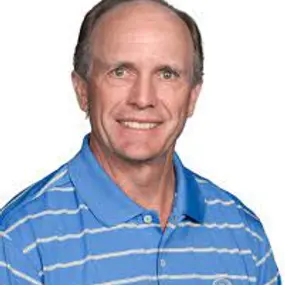
Golf Professional and Golf Course Architect
Are you a big golfer? Do you watch the PGA Tour whenever it’s on? Do you find yourself on https://golfingjourney.com/golfing-guides/improve-my-golf-swing/ – hoping to improve your game? Are you always on the green of your local course? If you said yes to these then the chances are you know Jerry Pate.
No player has ever made a splash – literally and figuratively – on the PGA TOUR quite like Jerry Pate. After winning the U.S. Amateur Championship and playing on the victorious U.S. Walker Cup team, Jerry took low amateur honors at the 1975 U.S. Open and was medalist at the 1975 PGA TOUR Q-School.
Jerry dazzled the golf world during his rookie season on the PGA TOUR. He won the U.S. Open title with one of the greatest shots in championship history – a 190-yard five-iron over water to within two feet of the hole. He added a second national crown when he won the Canadian Open later that year and garnered Rookie of the Year and Co-Player of the Year honors.
Between 1976 and 1982, Pate won eight times on the PGA TOUR and was one of the TOUR’s top players. Fans loved the color he brought to the game, including his orange golf ball, which he began using in 1980. In 1982, Jerry made golf history – and golf legend – when he won the THE PLAYERS Championship, the first held at Pete Dye’s diabolical new Stadium Course at the TPC Sawgrass. During the awards ceremony, Jerry delighted his fellow professionals and thousands of gallery members when he threw course architect Pete Dye and PGA TOUR Commissioner Deane Beman into the lake adjacent to the 18th green. Sho… Read More