Jim Furyk - Part 2 (The Early Wins and 2003 U.S. Open)

 Apple Podcasts
 Spotify
 iHeartRadio
 PocketCasts
 Overcast
 Amazon Music
 RSS Feed
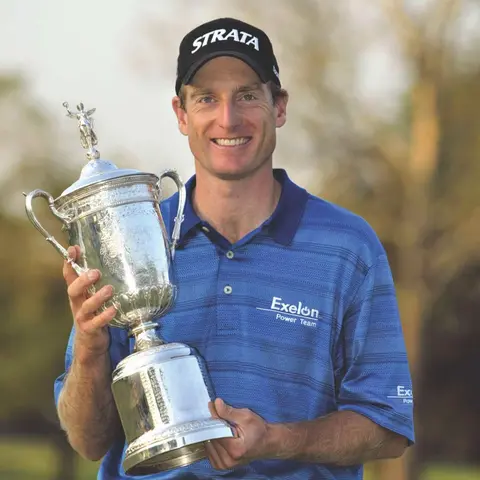
 2024 nominee for the World Golf Hall of Fame in the Male Player category, Jim Furyk recounts his early wins on the PGA Tour including his first at the 1995 Las Vegas Invitational and reflects on winning Jack Nicklaus' event, the 2002 Memorial Tournament. Jim speaks fondly of his relationship with long-time caddie Mike "Fluff" Cowan. He concludes this episode taking us through his major championship win at the 2003 U.S. Open at Olympia Fields CC. Jim Furyk continues his life story, "FORE the Good of the Game."
Give Bruce & Mike some feedback via Text.
Follow our show and/or leave a review/rating on:
Our Website https://www.forethegoodofthegame.com/reviews/new/
Apple Podcasts https://podcasts.apple.com/us/podcast/fore-the-good-of-the-game/id1562581853
Spotify Podcasts https://open.spotify.com/show/0XSuVGjwQg6bm78COkIhZO?si=b4c9d47ea8b24b2d
About
"FORE the Good of the Game” is a golf podcast featuring interviews with World Golf Hall of Fame members, winners of major championships and other people of influence in and around the game of golf. Highlighting the positive aspects of the game, we aim to create and provide an engaging and timeless repository of content that listeners can enjoy now and forever. Co-hosted by PGA Tour star Bruce Devlin, our podcast focuses on telling their life stories, in their voices. Join Bruce and Mike Gonzalez “FORE the Good of the Game.”
Thanks so much for listening!
29 world ranking 2000. From 1999 to 2016. That's unreal. We talked about it. Quite a few other honors along the way. 2010 also brought in both the PG Player of the Year and the P Gate Tour Player of the Year. Every year from 1998 to 2003. I'd have to check my notes. I might have a book there.
Jim FurykOh it's it's 98. I was in high school in 88.
Mike GonzalezThat's right. That's right. Fourth on the all-time money list. I won't mention the amount, but it's done fine. And uh a few other things we're gonna want to talk about before we get into some of your uh uh significant wins, particularly the 2003 U.S. Open and Olympia Fields. Uh one of the things we probably just want to talk about because uh this guy's been uh your your wingman since 1999, and that's your caddy.
Jim FurykAbsolutely. Uh so uh I was searching for a new caddy uh about the players' championship 99. Um Fluff had just been let go by Tiger about two, two and a half months earlier, and uh my wife actually gave him a call. I was finishing up around at the players to give him a call to see if he was available, and then I called him later on that night uh to see if he wanted to work the masters for me in 99. Um it's turned into a great relationship. Mike's a good friend, uh 23 over 23 years now in the bag. He's 74 years old. Uh it's amazing that he uh I don't know he still has the stamina and the ability, but he he loves his job. And I guess the best thing I can say, Mike uh two things about Mike. Uh he loves his job, he loves what he does for a living, um, loves being with the guys in the caddy yard, loves being on the golf course. And uh he's the same guy. And I and I mean this, whether I'm shooting 83 or I'm shooting 58, he really is the same person. Like nothing changes about the way he does his job. There's never uh over excitement about us playing good, and there's never a slump shoulder about us playing bad. And uh that that's probably the highest compliment. I watch other player, other caddies, and their player misses a putt or they're struggling, and while while they're not looking, they're shaking their head, their body language is terrible, and I make kind of a mental note, like, you know, if if I ever needed another caddy, like that would not be the guy. Like I that's not what I w that's not what I want when I'm not looking, if that makes sense.
Bruce DevlinIt does make sense.
Jim FurykSo uh that's probably the highest compliment I can pay to Fluff, is that he really never changes, no matter uh no matter how I play, and and uh it uh it it's it's great to have him on the back.
Mike GonzalezHow long did it take you two to kind of find your stride with each other?
Jim FurykSo we went to Augusta and people would always ask him, like, was it hard to adjust to Jim's game? And I always laughed about that. You know, I hit a seven-iron at that time, probably 165 yards, 160 yards. That wasn't really hard to adjust to because that's what everyone else hit their seven-iron, right? True. Try adjusting the Tigers game when he came out out of the box and he's hitting it two clubs longer than everyone else and hitting it over corners. I I imagine that would have been difficult to adjust to because we hadn't seen much that looked like that in the past. So um uh I don't I don't think it was a tough adjustment. We did have one funny moment. So I brought him in early to Augusta. I said, Why don't we can start practicing there the weekend before? So I said, why don't we just start practicing? Maybe we'll play nine holes on for on Saturday, nine holes on Sunday. We'll kind of talk a little bit about you know working together and what I like and what you like, and uh maybe just get some yardages down and just get ready for the golf course and and you know, we need a little extra time since it's a major. And he said, you know, I think that's a great idea. And uh he had been off work for about two months. Alright. So you know, if if you see pictures of Fluff in 1999 versus pictures now, like I just saw a replay of the O3 US Open, and Fluff's probably 40 pounds lighter now than he was back then. So he was a much younger man, but it was much bigger, and he was off for two, two and a half months. So he really hadn't been working out or or walking. And we caught this heat wave at Augusta, where it was in the mid-80s, high eighties on Saturday. We're playing the front nine. And I'm playing by myself. I mean, there's no one out in the golf course, so you can play what, an hour and a half, you know, hitting extra shots, chipping and putting a little bit. You can play pretty darn quick. And so I'm moving. Like I'm moving. We get to eight, and I hit my second shot up the hill, and he goes to replace the divot, and so he's already about 10 yards behind, 20 yards behind. But by the time I get to the top of the hill and I look back, Fluff is a minimum of 40 plus yards behind me. And he is when he gets to the ball, you know, he's just he's a smoker, he's wheezing, he's gasping for air. And I'm looking at this big ugly mustache, and I said, you know, and so one of my first things I ever said to him, I said, you know, buddy, if it comes down to mouth to mouth, are you dying right here on this fairway?
Bruce DevlinNot me.
Jim FurykI go, it's gonna be a really close call. It's touch and go. And and he started, he started laughing, but then he couldn't catch his breath even more. And when he finally did, he goes, We're gonna get along just fine. So um, and he goes, at the time I needed a job. He goes, but I was thinking, Jim's got to be thinking, what in the hell did I just get myself into? But uh it's interesting. He uh he's really taken care of himself. Uh he's gotten himself in in really good shape. Um and it's hard. I mean, it caddian is a young man's game. It really, you know, it's a lot of hard work out there. I mean, I'm 52 and I see the effects of walking three rounds of golf in heat on a hilly golf course. You know, he's doing it carrying a sack, right? He's got to catch up, rake a bunker, catch up, fill a divot, catch up. Um, it takes its toll. And so it's it's pretty amazing what he's able to do at 74.
Mike GonzalezYeah. I remember uh Bruce when we visited with uh Nick Price and we talked about his years with Squeaky, and I really struck me, uh uh Jim, how Nick talked about he and Squeaky spent some time together to really just turn everything positive, eliminate anything negative that could occur between the two of them. It wasn't let's think about you got a bunker right or you got water left. No. You got plenty of room right, or it was something more on the positive than the negative. I don't know if that's anything you've you you went through with Fluff at all.
Jim FurykUm, I think one of the best compliments Fluff gives to me is you said that I'd make a good caddy. You know, like I I really like I like I like to be in my yardage book. I um I want to talk through things with them. I want to make a young player makes the mistake and I see it a lot. They don't know how to use a caddy. And a young player starts to rely on the caddy. Oh, what do you think? And then he says, Oh, I think it's a smooth seven. Well now I'm making a decision in my head with that with that opinion. And so I really what I want Mike to do is I want him to kind of play the round of golf like he's in my skin, but I don't want his opinion until I have my own set. You know, like I go through the yardage, we talk about it. You know, alright, it's 155, it's playing seven uphill, one sixty-two, it's a little under the way, and maybe five yards, you know, it's probably a one sixty-seven shot. You know, and in my mind I'm thinking, okay, I'm gonna hit a good firm seven iron. You know, I go, what club do you think it is? And then I want him to tell me. And if he comes up with something different, you know, if it's if he says, Man, I think it's a good firm, you know, good firm seven, I'm pulling it and letting it fly in probably 20 seconds. If he gives me something different, then we need to talk about it. Okay, why? I was thinking hard seven, shoot, why am I wrong? And you know, and uh, you know, but he doesn't know how I feel. Some days I wanted it easy, some days I wanted it hard, he doesn't know how I feel on the shot, so we discuss it and go. Um but uh you know, uh I I I think a young player, one of their biggest tasks on the tour, and one of the most difficult things to do is to to find a caddy that he works really well with and understand what he wants out of a caddy, because sometimes you I didn't know. Um and and then finding that right guy and and learning how to use uh a caddy very well. Um but I I agree the the you know you can't miss it left rather than there's a lot of room right. There's a it's a totally uh different. I I I remember playing a practice round with uh I have a distant cousin, a second cousin that uh plays at Oakmont, and I remember playing a practice round for the 06 US Open there, and Oakmont's probably the hardest golf course I've ever played, and there's a lot of places on that course you can't hit it and play from. And so we're playing this practice round, and he's telling me, you know, one, you can't be short right, two, you can't be long. Three is really difficult because if you leave it short or you hit it long, it's hard to get it up and down. Uh four, you can't do this. Five, you can't be right. You know, six, six, you can't. I said, finally, I was his name's Kurt, and I said, Kurt, uh, we need to talk about what I can do on this golf course because you got me so tied up and so nervous to make a golf swing. Like, I I I wanna I want somewhere to hit it. You want to be left of the pin here, you want to be short of the pin here, you want to make sure you're long of the pin. You know, like give me something, you know. Here's the danger area, but here's where you play from. And so he goes, Oh, well, I can do that. And he goes, watch this. You know, like if the pin's over here and you miss it to the right, you can hit this shot and it'll feed right to the hull. And so, like, he knew how to play the course. Um, it was just interesting how it was more that, like you said, it was more the negative side of things. Then when he flipped it the last 12 holes, it was all positive. Like, you can play from over here. It was such a you know, like I it was a sigh of relief, and then I could go ahead and let it fly and hit it. So, yeah, absolutely. I understand what Nick's talking about, and he had a great, great partnership with Squeaky. I know uh Mike loves Squeaky and uh it was one of his favorites.
Mike GonzalezWell, you must have worked it out at Oakmont because you had some pretty good luck there, and we'll go through that as we talk about some of your U.S. opening successes. Let's uh, if you would, take us, let's uh uh let's go down memory lane with you and talk about some of your wins. Uh we'll go back to 1995. We're in Las Vegas for the Las Vegas Invitational, where you won by one over Billy Mayfair.
Jim FurykYeah. Um well uh two things strike me. Uh I was playing with uh weird story, my my caddy at the time was a gentleman he's he's since passed, his name was Steve Duplanis. Um Steve was my caddy for four and a half years. Um three of my first I think my first three wins were with Steve. And uh we were playing in a practice round, and out of the blue we stepped on the 18th T and I looked at him and I said, if we had a three-shot lead, right, and I was standing on this T last hole of the tournament, what would you do? And we just started talking about it. I go, would you play it as a because the treble's left? But it's it's pretty wide. But I said, what would you do? Would you would you hit one out there to the right, play it as a three-shot or make five and just get out of here? Would you you know, would you just take driver and bomb it right? And you know, if you got a good lie, you might hit it at the green. If not, you lay up. You know, what would you do? And so we just started talking about it. And I was standing on the 17th T with a three-shot lead. Uh the first time I had ever really had that lead, that opportunity to to win coming down the stretch. And Billy birdied eighteen or birdied 17. He is a tough hole, par three. Uh, he birdied 17. And in in my mind, I'm on the 17th green saying if he misses his putt, we're gonna have that same situation that we talked about. And uh I'm not sure we ever came up with a with a plan of what we would do, but it was just something we talked about. And uh so he birties 17 and he gets the hit first off the 18th D. And I looked at Steve and I go, Well, I guess it doesn't matter now, it's only a two-shot lead, so we're letting it fly. And he goes, Absolutely, we're his driver. So Billy might have birdied 18 as well. I think he might have birdied 17-18 at one by one. So uh, you know, kind of interesting, um interesting scenario. I remember that, but uh your first win's always really special. And so uh to be a young player, uh looking at my college career, and I told you my my college career was solid, it was decent, but it would definitely I was not one of those guys that anyone was picking to uh to be a successful tour player. It had no wins uh as a college player, and then uh my first, uh my second real good chance to win a tournament on tour was my rookie year at Vegas, and uh got in a leader group with Bruce Litsky the last day and he kicked my butt. Um and uh which was was kind of fun. One of my heroes, but also, you know, uh uh played a solid round and he just wore me out uh as Bruce could do ball striking wise. And uh I got another opportunity in my second year at Vegas and was able to close the door. So, you know, that that that's a big confirmation for a young player. You know, I I thought I could win because I had some opportunities in my rookie year, and I really didn't have the experience to close the door. But then to go ahead and do it and to actually win your first event, and it's a it's a it's just a real stamp, you know, on your career and an approval that okay, I can do it. Uh, I've just proven it. I don't think I can, I know I can because I just did it. So uh special moment. And uh you know, uh that first one will always, you know, if you said you know, pick out the most special win. It's I mean, I guess it's the US Open in 03, but man, that one and that one in 95 is it's tough to get over that first one.
Outro MusicYep.
Mike GonzalezYeah, as I recall, uh Vegas was paying pretty well back then, too, wasn't it?
Jim FurykIt's a big purse, one and a half million dollars. So average purse on tour, and we most of them were all about a million dollars, but Vegas was was time and a half, 1.5. So uh 270,000 to the winner.
Bruce DevlinIn fact, uh You got it up there.
Mike GonzalezYeah, here we go. We'll get that on camera. It's up there somewhere, huh? Yeah. Oh yeah.
Jim FurykUh huh. You see it to the uh by the window. It's a little bit.
Bruce DevlinI see.
Jim FurykI gotta I just found it. We were moving uh kind of I still have some stuff at another residence, and and I was in there and I saw the check and I started laughing. It was in the garage and it was all dusty, I had to clean it off. Uh and I was like, I gotta hang this up in my office. So I'm kind of sitting in a weird spot right now, but uh it uh it'll go in a nice spot in the office first one.
Mike GonzalezI think most of our listeners probably picture you guys carrying those big cardboard box uh checks into the back trying to trying to cash those, endorse them on the back.
Jim FurykI don't think I've been given one of those in a long time. I have about four or five of them in the garage uh from the old from the the old place. Uh but I I don't I haven't been given one of them in a long time. I think I think we we need to re-in. You know what? We did it you know at our event at Champion Store Furican Friends. We had one of them last year. So yeah, we've got to we've got to make sure that's done.
Mike GonzalezGood. We're gonna talk, we're gonna talk about that in Tim Oquana later. Uh so let's talk about validation the next year, right? It's it's it's nice to get that first one, but I think it's also nice to validate, isn't it? So now we're in sixty in '96 at the United Airlines Hawaiian Open at Wiley in a playoff with Brad Faxen.
Jim FurykYeah, uh I found myself, I I was so excited about that first win, and it was towards the end of the year, right? It was in October. Um the event, you know, I think I think it was this it was the last regular event of the year, and then the the tour championship was the following week. I just missed the tour championship. I think it that that bumped me up to like 33rd on the money list. Um, so I wasn't in the tour championship, or maybe it was the second to last event. I didn't make the tour championship, but um I I had that taste, that just little taste of honey, I was so excited uh to win an event, and I wanted that feeling again. I mean, I wanted it, and I found myself out kind of in January, maybe pressing a little too hard, like uh being impatient, trying to make birdies, you know, maybe not playing the way I wanted, but uh got my opportunity again in February. Back then the uh Hawaiian Open was in February, and uh got an opportunity, got in contention, and uh got in a playoff with fact. So uh, you know, lucky to uh feel fortunate to to win a playoff and and I got my second win. So that second one they say sometimes is really difficult, right? It's tough after you win your first, they say the second can be even more difficult than the first, but I was able to kind of do it really quick and in about four months got my second win, and maybe only I actually won an event in between, and I won Kappa Lua in between in November. Uh and it was kind of at the time Kappa Lua wasn't the tournament champions, it was just uh the Lincoln Mercury Kapalua Open. So it was kind of a a silly season event, yeah, if you will.
unknownYep.
Jim FurykAnd shortened field, and and I so I ripped off three wins October, November, uh took December off, you know, January, February. So in four months of playing, I won three events, and and uh, you know, it was a huge boost to my career.
Mike GonzalezYeah, Bruce, did you have to wait very long for your second?
Bruce DevlinOh no. Well, I think I did uh pretty much the same as Jim. Won at St. Pete in uh in uh 64, and then No, I had to wait two years, actually. Yeah, I I missed in 65. I think I had like four seconds or something. But but Jim, yeah, you love Vegas, don't you, pal? I mean, you win your first tournament there, then you win your third and fourth tournament there.
Jim FurykThird four. Three of my first four. So what I find funny is um, you know, if if you go on Google and you read like nicknames, I think they throw out uh the grinder was one that I got tagged with. Now, not not one person in my entire life has called me a grinder. Like that's never not one media phone. I think it was just something the media tagged, uh kind of for my style of play and not making a lot of bogeys and and playing well on hard courses when par's a good score. What I find funny about that is three of my first four wins came in Vegas, and the scores were 25 under, 28 under, and 29 under.
Bruce DevlinRight.
Jim FurykUm, and then later in my career shooting 58, 59. So kind of being comfortable with both scenarios. If if you have to go low, if you have to make a bunch of birdies, I was I was I was comfortable. And then, you know, if if if we're at a US Open and 72 is going to be a great score, I'm I'm fine with you know grinding it out and and uh and making a bunch of pars as well. So uh you you kind of have to, I I guess you have to change your style for what's it what's expected at each golf course.
Bruce DevlinWell, it's pretty obvious that uh you you weren't too worried about uh going too low because because of those scores plus you know breaking 60 twice. Uh I mean a lot a lot of guys get scared when they get four or five under par. They think, oh my goodness, I hope I can get it into the clubhouse from here. But you you seemed like you just wanted to keep adding them up.
Jim FurykYeah, I I I think uh a lot of that work, uh a lot of that probably came uh late in my career, just maybe because I was a little bit, you know, the the 58, 59 came at the age of uh 46 and 43. Uh and I and I really believe that that happened because I was a little bit more mature with my game. I think uh I had sought to help uh basically at the age of 42, 43 of Bob Rotella a little bit. I was going through some things in my game that that I wanted to talk to him as I got older in my career, and uh and then that branched into helping me with putting, that branched into just your whole thought process uh on the golf course, and and so I I I really believe that I was if that if I'd gotten the same situation in my twenties or in my early 30s, uh I was much better prepared at the age of 43 and 46 to kind of handle that and and enjoy uh trying to break 60. I mean, really, really kind of enjoy the moment and I kind of in both instances, you know, if it happens, it happens. If it doesn't, it doesn't, but man, you don't you don't get this opportunity too often. And so uh enjoy it. And and uh and I think that that process and that thought process really helped me uh both times. Um the two opportunities I had to break 60, I was able to do it.
Mike GonzalezYour next one came in 2000. Uh you wanted Durale by uh two over Franklin Langham.
Jim FurykYou know, I I I love Durale. I got in there as an alternate my rookie year. It was one of those events that very few rookies got in and just fell in love with the golf course immediately. Uh it's been through a series of I mean a bunch, probably four redoes since since that time. But when I first started on tour, that was one of my favorite golf courses. And um, you know, I found myself, I was actually I Entered that week kind of thinking that I was uh rarely have I done this in my career, one, but I really felt like I was playing super golf. Like I'm playing good enough to win this week if I just stay out of my own way, is kind of what I told myself. And a lot of times, if I had that thought in the past, I I pressed the envelope too much. I tried too hard to shoot a low score, and and that always bites you. So I did a good job of playing well, but Franklin had just really separated himself from the field. I think he had a six-shot lead going to the back nine on uh on Sunday. And so, you know, he's trying to protect the lead, and I'm basically at this time I gotta be a little hyper-aggressive. I gotta make some birdies and try to put some heat on them. And uh things went my way on the back nine. I just you know, I was able to, I think I birdied 10, 12, uh maybe 13, 14, 16, 18. I mean, I birdied five holes in the back nine and and shot 31. Um, you know, I uh in one respect I feel bad for Franklin. I mean, uh he he didn't play a bad bad round of golf, and he shot a couple over on the back nine, things didn't really go the way he wanted, and but uh uh you know to to fire 31 on a very difficult on the Blue Monster on a difficult golf course was uh was a lot of fun. And so uh winning is always fun, but uh to kind of close it out that way and and uh we really had kind of parted from the field, if that makes sense. It became a two-man race.
Bruce DevlinYeah, yeah, yeah. So then 2001, uh, we got back to uh Kapalua where you won the Mercedes Championship there. Uh that was that had to be pretty nice too.
Jim FurykYeah, I got hurt. I was goofing around with some friends in Baltimore uh at a Steeler, at a Steeler Raven game. Some kids were throwing a football, and I jogged and took about five to ten steps to kind of catch a pass, and it was on gravel. I slipped, put, put my hand down, and I tore cartilage in my right wrist. And uh I knew something was wrong that night, started to get it hot, started to hurt, and we f my wife and I flew to Atlanta the next morning to uh, you know, and I realized I was in trouble. Uh, ended up in Birmingham, getting some MRIs and tore my TFCC. And so out of the tour championship uh at the end of the previous year, and actually was away from golf for quite a while from for a couple of months. Uh and so that Kappa Lua event, I really hadn't played a lot of golf going in there and was really just cleared to play a few weeks before. I was on kind of a a pitch count with the number of balls I could hit and uh and a little bit panicked, you know, like going to a golf tournament and just feeling unprepared. And so uh it was one of those trying to be efficient with your practice because I was gonna get a minimal amount of of balls to hit and uh really worked hard and and ended up somehow uh uh and that was a 2000, right? So I had just gotten married. I was 01, so I just got married. I got married in November of 2000 as well. So uh, you know, kind of went through the wedding, was hurt through all that, and then came out in the very first week out. Uh bang. I was yeah, I was able to win the golf tournament. So I it made me made me possibly learn that uh the way I was practicing might not have been as efficient or as productive as it could be, that I was putting a lot of time, a lot of effort, uh, but maybe not getting the most out of it. And so it made me kind of reevaluate that okay, I was able to win this golf tournament with a lot less golf balls. Uh what can I do to be more efficient, maybe to help and save my body in the future.
Mike GonzalezYeah. You probably played the plantation course a lot over your career. How did that course set up for you?
Jim FurykUh, you know what, pretty well. I you know, I was I I went in there for my very first time, Lincoln Mercury, and and won my first tournament there. So uh it it's it's a unique place. It is uh I I think it helps to be a little bit of a field player there as far as not overly mechanical. Uh you need to, you know, I think what what Core Crenshaw did so well there is that they basically they build a golf course on the side of a mountain, to be honest with you.
SPEAKER_05Yeah.
Jim FurykAnd it's big and wide, uh, which you wouldn't think would suit me, but you really need to use uh sides of the fairway, slopes to feed the ball in. Um you know, for one reason or another, the golf course made sense to me. I knew what they were asking you to do. And uh and you you know, if there wasn't a lot of wind, you're gonna have to make a lot of birdies. Uh, if there was a lot of wind, you're gonna have to hit a lot of shots uphill and downhill, that you know, a 600-yard par five that you could hit four-iron into, and then it might be a 370-yard par four that you're gonna hit four-iron into because of the wind and the slope and side hill lies. And I guess you just had to manufacture shots. It definitely you can go down there in that they have a range that's kind of down in a hole, and you can hit balls all you want off those flat lies, but at the end of the day, it's not gonna help you play that golf course. So uh I think the creativity part and and the feel side of my game maybe translated a little there.
Bruce DevlinThen you headed uh next year you headed up to Memorial, and you were able to win by uh two over John Cook and David Peoples there. So that you know, winning Jack's tournament had to be nice too.
Jim FurykUh really special. Uh Tabitha's from Columbus, Ohio, so that's where we met. We met at the Memorial. Um in 02, she was uh four weeks from giving birth to our first child. So uh in her terms, she uh she's in a pair of overalls as big as I've ever seen her, and she's like, oh, now you win? Now when I but uh, you know, it uh it was so much fun with her family and friends there and where she grew up. That event's always been special. Uh and then to walk out on that 18th green and have Jack and Barbara there, who Tabitha and I have always looked up to and and admired, and they've been so good to us. Uh and then Jack said some things uh on that green that you know still like I get choked up thinking about. He just said some really nice things. And to win uh you know, in my mind, we can argue it all day you want, but in my mind, the greatest player that ever lived to win his tournament and have him say some nice things about you, uh it's just amazing. That's a dream come true.
Bruce DevlinUh he's a class act, there's no doubt about it.
Mike GonzalezUh final round 65 around that track ain't too bad either.
Jim FurykI got I got hot on that back nine and it ripped off a bunch of birdies.
Mike GonzalezYeah.
Jim FurykI mean, what's actually I think even Eagled 15 at the time when I when I could reach it, back when I could reach it.
Mike GonzalezWell, strong finish, and uh and now let's go to the really fun part. Uh uh 2003, we're going to the south side of Chicago, Olympia Fields Country Club on the North Course, I believe. And uh we're gonna talk about the U.S. Open.
Jim FurykYeah. Uh you know, from a personal standpoint and my personal playing career, that obviously the the crowning moment of my career to win a major championship. I had some other opportunities later, actually before and later to win U.S. Open, but uh that one I controlled. Uh I think I had a three or four shot, uh maybe a time for the lead after Friday, a three or four shot lead going into Sunday. Um that was that was my tournament to win, if that makes sense. And uh I was uh you know a couple couple interesting things about that round. Uh all week playing late, I kind of watched a lot of television. I wanted to see where the pins were. I wanted to get a feel for how the golf course was playing. Was it drying out? Was it firming up? Because Thursday, Friday we set all kinds of records for low scores in U.S. Open.
Bruce DevlinYeah, I would love it.
Jim FurykAnd I started out my first nine not very well. I was uh I think two over for my first nine. Then at the end of 36 holes, I think I was about seven under. So I shot nine under for the next three nines. Um the Saturday I watched a lot of TV in the morning, got a feel for the course. Sunday I was just tight. You know, it was Father's Day. Uh Mom and Dad were there. It was my first Father's Day as a father. Uh my my wife and my daughter were there as well. Uh Tapitha was pregnant with our second at the time, uh, which which no one we knew, but we didn't told anyone uh because it was still pretty young. And um uh just super tight. And I went to the golf course and I sat under the TV, kind of where I couldn't see it. I just I didn't want to look at it. I didn't want to, you know, I knew it was gonna be firm, I knew it was gonna be fast, I knew it was gonna be a brutal day. I didn't really need to need any confirmation on that. And but I could hear the sound, and so they started teasing the end of the round in the leader groups, and uh, I've always gotten along with Johnny Miller really well, so this is definitely not a negative opinion, but I remember the quote, like it was yesterday, where he said, This is Jim Furick's tournament to lose.
Bruce DevlinYeah, great.
Jim FurykAnd my eyes probably got that big, and I went, Oh my goodness. Holy shit. And I went I don't need to hear that. It like it it stopped, like it, I it it just stopped me in my tracks from whatever I was doing, eating, and I thought to myself, and I went, no, no, no, no, no, no. Like that is the worst attitude that anyone could ever have going out uh in the fourth round of a major championship. This is my tournament to win. I mean, I have a three or a four-shot lead. You know, if I go out and even remotely shoot anywhere around even par, I blow the field away. If that no one's gonna shoot three or four under on this golf course today. And so I kind of it it really was probably a good thing for me to hear because as a young player, you can get tentative, you can get to where you're starting to protect. And I needed to stay aggressive. I needed to get out there and play a good round of golf. And uh to hear that, and it really just solidified the attitude that I needed to have. It was my tournament to win, and and you know, I just was so anxious to get out there on the first hole to where I didn't have, you know, let's go do something about it. It's the wait. It's you know, getting the three o'clock to that tea time is is miserable, to be honest with you.
Mike GonzalezIt's a long time to wait in the morning, isn't it? It is. Jim, what kind of momentum were you bringing into that week?
Jim FurykA lot. Uh I had three top tens, uh, the three previous, I think I played three weeks in a row, had three top tens, and then a week off before the US Open. So uh firing on all cylinders. I was putting extremely well, felt good about my game. One thing interesting is I cut the ball for a lot of the early part of my career, and I spent a lot of those three weeks kind of battling a draw. Like the ball wanted to go right to left, and I f I was fighting it. And so I was playing really well, but I probably could have played better if I just quit fighting it and hit the damn draw. And so the plan of my week off with my dad, I was working on cutting it. Uh and it won't he goes, why don't we just play the draw? Like, why you know why why are we fighting it? You're hitting it so good, you're hitting it so solid, it's repetitive, it's consistent, let's just play the draw. And I, you know, I I'm pretty stubborn and you know hard-headed, but eventually I realized uh you know he was right. And uh so I went to that that US Open and it was one of the one of the very few events I'm saying 10% of the events of my career. I've I've been kind of predominantly right to left for most of the shots. That was one of them. And I, you know, maybe I should have done more. It was the one I won. The US the major championship I've won. But um an interesting thing happened right before that event is I was playing with this putter, this company, I think they were from Texas, and the name of the company was Dog Leg Right. And they made a putter. Well, one, they made the hog putter. The hog putter had this like real thick, stiff, heavy shaft. Um, and I wasn't playing one of those, but they made another putter that kind of had a double bend, face balance, it looked like an answer head, but it had an attachment coming off of it. There was an aluminum plate coming out of the back of the putter for like an aiming device. It had a big thick line on it, and you know, it just looked like a nice T-square, like an you know, a double bend face balance putter, T square. Uh that that attachment, the putter was black, that attachment was silver, and it had a black line on it. And it just looked, it was a really clean looking, but an easy putter to line up. And I was playing it for a month, and the uh the USGA, I unbeanced to me, had been kind of looking at the putter and trying to figure out if they were thinking about deeming it illegal. And in the week leading up to the US Open, they made the putter I was playing with illegal. And I went to the US Open with a couple putters from I've got that's one of my vices. I've got too many putters in the garage, but I went with a couple putters. I didn't like either one of them near as much. And I started working with uh I was with Hogan at the time, and Bob Bettinardi was kind of with Hogan putters at the time. And Bob had this uh this mallet head that had a giant line on it, just like it was a mallet though, instead of like an answer, but it had a giant line, it was a silver head, black line. It had a similar look. So I pulled the shaft out of the dog leg right putter because I liked the bend, the offset. We stuck it in the his little baby bend, and uh and then I spent the three days Monday, Tuesday, Wednesday, really just fine-tuning, getting the right lie, getting the right loft. We we shaved a little bit off the heel just so it sat right. I mean, we every day I made a little adjustment uh to this to this putter, and uh and to be quite honest, I was pissed. I mean, I was I was livid that the putter that I was playing with didn't say anything to anyone, but I was mad. And I went in there kind of with a chip on my shoulder that uh I told my wife on the way, we're winning this golf tournament. That that uh and I had never said that. I'd never made like a statement like that. I said, I'm playing good and I am mad. I mean, I'm I'm going and I'm I'm on a mission right now to win this tournament, and I'm gonna do it with another putter, obviously, but I'm gonna do it. And uh little side note that putter looks like everything else on the market today, and attachments are fine. Six weeks later, they deemed that putter should be legal, and it was less than two months, and the putter was back uh ready to be played. So, but I'd already won with the baby Ben, so I was putting with that one at the time. And uh the dog leg right was kind of short-lived. So I I could pull it out of the garage and putt with that dog leg right right now if I wanted. It just had a little short stint. And so uh, you know, I I guess I went in there with a little, it was kind of good timing. I went in there with a chip on my shoulder. Um, I was playing well, and again, I told my wife I was gonna win. So there's a reason why I shot two over on that first nine, right? I was pressing a little too hard, trying a little too hard, didn't let things happen. Uh, was very fortunate to kind of turn it around, and on that second side uh on the front nine on Thursday, uh I shot I shot five under. So I ended up shooting through three under for the first round, got myself in good good shape. I think I shot four under day two, you know, minus seven for the event. Um you know, great position. And and then just was able to, you know, the ever we set records, scoring records for the first two days. By the end of the tournament, there was only three or four guys under par. Yeah. So typical U.S. Open, but uh was able to play solid enough on the weekend, and and I think I ended up winning by three.
Mike GonzalezYeah. So what what do you remember? I gotta ask you this, what do you remember about the flower-toting topless woman on the 11th screen?
Jim FurykWell, what I one, Steven was sitting over a pretty big putt. I had just bogeied uh number 10. I think a lead was cut from maybe five to four or four to three, whatever it was. Uh I had a tap-in for parr, you know, inside a foot or two. Uh he had maybe, I remember it as a six-footer, maybe it was a five-footer, eight-footer for parr. And I'm watching from the from the fringe, and my back's turned to uh to the gal that came out. She was topless with a f with two flowers in her hand. I think the plan was to hand one to Steven and one to me. Um and I just was watching the crowd, I was watching Stephen, but behind him there was this giant murmur, like the crowd reaction just changed. And so I was kind of panning around looking at the crowd and realized they were all laughing, and then people started pointing, and they were pointing kind of you know over my right shoulder, and so I I said, Well, that's you know, that's odd. And I as I turned this gal is, I mean, she's six feet away. I mean, topless, two flowers, and I just like no, no, no, no, no. Welcome to Chicago. Yeah, I don't need a flower. Um she hung for a little bit, got off the green, they covered her up, and they took off. I mean, they made it like two, three hundred yards before security, anyone like kind of caught up with them. Um the the the bad part of it all was Steven was sitting over a really big putt, and the amount of noise and the by the time the crowd kind of got settled down, stopped laughing, hooting and hollering, it was five minutes. I mean, at least it felt like it. And then he ended up missing that putt. So, you know, the the shot that he got back on 10, I got back on 11, and uh I think we were back to a four or five shot lead. So it was a it was a key moment. I bogey 12, he birdied 13. I think we were down to three then um uh after 13 holes. So uh, but that was a it was a big moment and really unfortunate that it was in a key kind of you know, over a key putt, uh that he had to hesitate for so long.
Mike GonzalezYeah. Then you came through my hole on 15. I calmed you down a little bit.
Jim FurykUm 14 was big. I hit a wedge to about three feet on 14, went up four again. Yeah, and now I had a four-shot lead four to play. You know, now you're now you're just trying to survive. You know, don't break an arm, you're good. Yeah, you're feeling good at that point.
Mike GonzalezYeah, Bruce, I was mentioning uh being the hole captain, I had the privilege of bringing my parents, and and you reminded me, Jim, that it was Father's Day. So I had my mom and dad on the T. It's a pretty wide T, so it was well away from play, but they were sitting a couple lawn chairs. And my dad's 92 today, and uh uh to this day it's one of his favorite golfing memories.
Bruce DevlinUh yeah, yeah, yeah. He's a great guy, too.
Jim FurykGreat whole elevated T, so you can see so much down on the green. You can see uh the puts, I mean you could see a lot on that golf hole from that T, so it's it was a good spot.
Mike GonzalezYeah. So you had a chance on 18. Of course, you you tied the record for the lowest 72 hole score in a U.S. Open at the time. Um you had a chance to, I guess, to two-putt. I don't know what the distance was to actually break the record, huh?
Jim FurykIt was a long way. I was maybe uh 50 feet kind of back left of the green. The pin was over kind of center, center right and kind of down over a hill. And so I I raced it by maybe eight or ten feet, missed it coming back. Um and really, you know, in that hole early in the week I was probably hitting driver six irons to that hole. And there's a there's a cross bunker out there, and I told Fluff, I don't, you know, what what club? And he said, I think it's a you know a hybrid or a five wood, whatever we have in the bag at the time. And I said, I do you think that hybrid can reach that bunker? And he he looked and he goes, Yeah, it might. I said, Three iron? He goes, Yep, let's just rip a three iron out there. So I hit three iron off the T on the last hole. And it almost got to the bunker, uh which uh i i you know it was 260 yards or whatever. It was just it's just something that should have never got that far out there. And so we were kind of laughing at how firm and fast the golf horse had gotten. And so then I told him, I do not want to hit this past the pin. You know, what club, what what club do you think it is to hit it to the pin? He's like, Yeah, it's probably like a six iron, right? He goes, Yeah, six iron. And I said, All right, we're gonna hit seven, because I don't I don't care if we end up on the front fringe, I do not want to be over you know, long of this pin because of where it was. He goes, that's a great idea. And so I just ripped this seven iron in there and it lands on the front of the green and it runs all the way to the back of the green. Um and we're laughing. Like I just hit you know, three iron, seven iron to a hole that I was hitting driver six iron to in the in the in the tournament. But uh, you know, I you know I I just won the US Open record, no record. You know, I I think Rory crushed it. It it it uh he shot 16 under or something crazy at uh at Congressional, so it it wouldn't have held up anyway, and I'm not really worried about the records at all. I have my I had my name on that trophy. Uh it used to sit around here somewhere, but uh not here anymore. But uh had my name on that record or on that trophy forever, and that's that's all it means the world to me. Wonderful.
Mike GonzalezAbsolutely. Uh you know, uh a a favorite memory I still have that's quite vivid, and and uh you guys remember this. This was the last, really the last major uh uh with uh Tom Watson uh and his caddy uh Bruce Edwards.
Jim FurykBruce Edwards, yeah, sure was. And he was playing real world well in there early in the week.
Bruce DevlinUh uh, didn't he? Yeah, he was low. I think he shot 65 in the first round, didn't he?
Mike GonzalezHe was tied up. Uh I think tied for the lead after one round with a 65. And then of course uh uh uh I remember him coming through then on that second day, and that was probably I don't know that he made the cut. I don't recall.
SPEAKER_03I think he did. I think I definitely think he made the cut.
Mike GonzalezWell it was obviously an emotional event for Tom Watson. Final major category. Thank you for listening to another episode of For the Good of the Game. And please, wherever you listen to your podcast on Apple and Spotify, if you like what you hear, please subscribe, spread the word, tell your friends until we see it up again for the good of the game.
Outro MusicIt went. Back down the fairway. Then it started to slice. Just smidge offline. It headed for two, but it bounced off nine. My caddy says, long as you're still in the state, you're okay.
Golf Professional
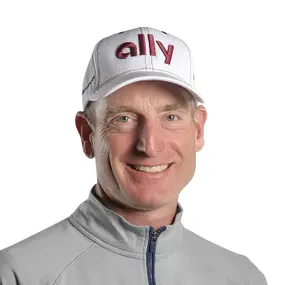
One of the PGA TOUR’s most recognizable and talented golfers, Jim Furyk was born on May 12, 1970 in West Chester, Pennsylvania. It seems like Furyk was born to play golf; his father Mike as an assistant pro at Edgmont Country club, and young Jim was raised into the game. Jim Furyk’s only golf instruction came from his father; and many note that might account for his unusual—yet effective—swing. In addition to Edgmont Country Club, Mike Furyk also served as head pro at Uniontown Country Club.
Jim Furyk took that homegrown golf talent to play at the University of Arizona in Tuscon, where he was an All-American twice. He also led the Wildcats to their first (and thus far only) NCAA title in 1992. That same year, Furyk turned professional and the rest, as they say, is history. He joined the PGA TOUR in 1994 and has won at least one tournament each year between 1998 and 2003.
His streak took a little bit of a hit in 2004 when Furyk missed three months due to surgery to repair cartilage damage in his wrist. He soon came back into top form finishing a career-high second on the money list in 2006. Furyk truly hit his stride in 2010, winning a career-best three tournaments on the PGA TOUR that year. The most notable victory was the season-ending Tour Championship. That victory earned him the 2010 FedEx Cup. His stellar performance in 2010 won him both the PGA Player of the Year and PGA TOUR Player of the year.