Lance Barrow - Part 1 (The Early Years)

 Apple Podcasts
 Spotify
 iHeartRadio
 PocketCasts
 Overcast
 Amazon Music
 RSS Feed
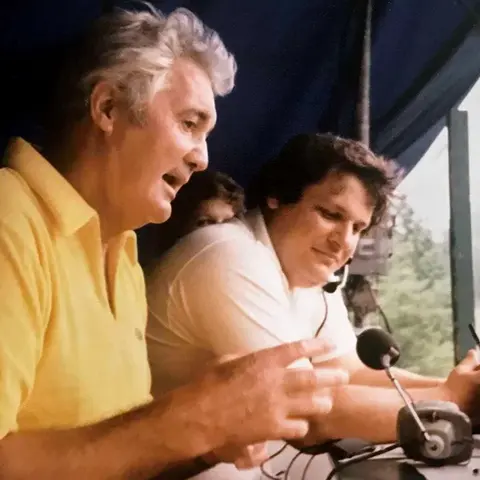
 In this first of four captivating episodes, FORE the Good of the Game welcomes legendary CBS Sports producer and 13-time Emmy Award winner Lance Barrow for a deep dive into his remarkable journey in sports broadcasting. While not a professional golfer himself, Barrow has arguably delivered more iconic moments to golf fans than anyone behind a camera—and his stories are as entertaining as the broadcasts he helped shape.
Hosts Bruce Devlin and Mike Gonzalez set the stage with Barrow’s roots in Fort Worth, Texas, where a childhood spent around the dairy farm and local courses like Diamond Oaks and Colonial Country Club sparked a lifelong passion for sports. Lance recounts how, as a wide-eyed high schooler, he hustled his way into a job with ABC Sports by bluffing his way through TV production lingo—and never looked back.
Barrow shares humorous and heartfelt memories of working with broadcasting greats like Pat Summerall and John Madden, painting a vivid picture of what it was like to ride the bus across the country with Madden and be mentored by giants of the industry. His stories shine a light on the people and values that shaped modern sports coverage—and his reflections on growing up in small-town Texas during the golden age of Friday night football are pure Americana.
This episode is more than just a look behind the scenes—it’s a celebration of storytelling, mentorship, and the enduring spirit of the game. Whether you’re a fan of golf, football, or television history, you won’t want to miss this intimate introduction to one of broadcasting’s true originals.
Subscribe now and join us as we begin an unforgettable four-part conversation with Lance Barrow—one of the great storytellers of sports.
Give Bruce & Mike some feedback via Text.
Follow our show and/or leave a review/rating on:
Our Website https://www.forethegoodofthegame.com/reviews/new/
Apple Podcasts https://podcasts.apple.com/us/podcast/fore-the-good-of-the-game/id1562581853
Spotify Podcasts https://open.spotify.com/show/0XSuVGjwQg6bm78COkIhZO?si=b4c9d47ea8b24b2d
About
"FORE the Good of the Game” is a golf podcast featuring interviews with World Golf Hall of Fame members, winners of major championships and other people of influence in and around the game of golf. Highlighting the positive aspects of the game, we aim to create and provide an engaging and timeless repository of content that listeners can enjoy now and forever. Co-hosted by PGA Tour star Bruce Devlin, our podcast focuses on telling their life stories, in their voices. Join Bruce and Mike Gonzalez “FORE the Good of the Game.”
Thanks so much for listening!
Straight down the middle. It went straight down the middle.
Mike GonzalezThen it started to Welcome to another edition of FORE the Good of the Game and Bruce Devlin. Our guest today, while not, I would say an accomplished golfer, he has brought us some of the most iconic golf moments in history. Maybe, maybe the greatest sports producer that has ever come on down the pike. A man that's won 13 Emmys, uh, been in the business for as a as a producer and associate producer with Frank Chirkinian for 35 years. And what a pleasure it is to have the great Lance Barrow with us today. Lance, thanks for joining us. We've been looking forward to this for a long time. You know that, don't you?
Lance BarrowWell, I I'm really honored to be here with Mike. I'm honored to be you be here. But you know, I hate to say this at times because I've reached that age now where I looked at people back when I was younger and say, man, those those guys are really old. But I hate to say this with the great Bruce Devlin, but I watched Bruce Devlin while I was growing up and was a big fan of Bruce Devlin all my life. And for him to even know my name, I kind of look around and think, who's he talking to?
Bruce DevlinWell, that's nice of you to say. Well, like I said, uh it's it's a it's a pleasure to have you uh with us today. And I know Mike and uh I'm gonna enjoy uh listening to you and listening to all your uh great uh information and help that you've done to the game of golf over the years. It's been fantastic.
Lance BarrowWell, thank you.
Mike GonzalezAnd Bruce hasn't changed a bit, has he?
Lance BarrowNo, he looks the same as he did when he was winning Colonel and one of the top golfers in the world and 60 years ago, right? Was bringing was bringing all those all those Australians, you know. I claim that he's responsible for Ian Baker Finch to bring to the world. And even even though Nobolo's a New Zealander, I I I claim he brought Nabolo too. So anybody can can blame Bruce Dublin for that. Okay.
Mike GonzalezWell, Lance, I I've I've I've got to say, your professional setup you've got there is befitting of your status as a as a Hall of Fame broadcaster.
Lance BarrowWell, it's it's really nice. It's a studio here in Fort Worth, Texas, that uh J.W. Wilson and Todd Fitzgerald uh they played football at TCU, and they along with their brother Jay Fitzgerald, they started a production company in their offices for everything TCU. And um you can subscribe to it and see everything you want to know about TCU, not only athletics, but the school. And uh they're in the oil business and they love the city of Fort Worth. They love the TCU, and actually Gary Patterson, the legendary Hall of Fame coach at TCU and I started uh a few months ago through their encouragement, uh, a podcast called It's Not About Me. And we've done five shows and we do it out of here, and this is a professional setup. Um I just hope I'm not ruining this set because of me sitting here.
Mike GonzalezWell, let's get going, uh, Lance. If if you've heard any of our uh uh previous 106 interviews now with all of uh golf's greats and those who have had an influence on the game, you know that uh we try to tell your entire life story, so we kind of got to go back to the very beginning. You mentioned at the top uh growing up in Fort Worth. So share some of your earliest recollections of uh growing up as a small kid in uh Fort Worth, Texas.
Lance BarrowWell, I grew up on a dairy farm almost where Dallas Fort Worth Airport is built, and um loved sports. Um my dad would get tickets when I was a young kid and for the colonial. My dad was not a golfer, uh never really played golf, but uh he would let myself and another older guy take me to the colonial on Wednesday afternoon and the pro am. And so, you know, I thought it was great because I just loved sports. I I was really a football and baseball player. Um, you know, I grew up around uh Doug Higgins Sr., who was a legendary pro at Diamond Oaks Country Club. He he uh was really uh mentor to his son, who's one of the great teachers now at Rivercrest Country Club here in Fort Worth. Doug Higgins Jr., Brad Higgins' other son. He taught Mark Brooks and a lot of other great young golfers who went on to be successful either in the professional ranks or as the amateur ranks. And so, you know, I was a football player and I hung out with these uh these golfers who were great golfers as juniors, and I just loved the game and loved watching golf. And I started reading an article about a uh young producer at ABC Sports named Terry Jastro when they would come to the Bayer Nelson in Dallas and Colonial in Fort Worth, and I thought, man alive, how do you get to do the job like that in television? And that's what got me down that road.
Mike GonzalezYeah. So tell us a little bit about uh the little town you grew up in. I understand Collieville, Texas, is that right? Does that even still exist anymore?
Lance BarrowOh, yeah, it's a b it it's a huge suburb now of Fort Worth. When I was there, we didn't have street signs. You would just tell people go down the road, see the big tree in the middle of the road, turn right. When you get to the next street, turn left. And and uh now it's a big, big suburb of Dallas Fort Worth, as as you know, the mayor of Fort Worth, Maddie Parker said a few weeks ago, uh Dallas Fort Worth in about a year will be the third largest metroplex in the United States, uh, taking over Chicago. Uh when I was growing up in Colleyville, it was out in the country and coming to downtown Fort Worth or going to downtown Dallas, which we never did. My dad was a Fort Worth guy, so we stayed on the west side of the area. Those were day-long trips. You know, you almost had to go rent a hotel room, but uh now I drive over to Colonial from my home, which is about 25 miles one way. Uh so now it's all blended together. But uh, you know, it's Collyville, it's Grapevine, it's Capel, it's South Lake, which are little suburbs are big suburbs of Dallas Fort Worth.
Mike GonzalezWell, you're about six years, I mean, uh six months older than I am, and so you just would have celebrated a milestone birthday. You know, back when we were kids, uh if your town was like my little small town, um baseball and football, that's about all we had.
Lance BarrowYeah, you know, that's what I you know, we had little league baseball, we had Pee-wee football, uh, I started playing organized football when I was in the fourth grade and went off to college and luckily was able to be a part of Abilene Christian University's football team and and baseball team and and um you know got to do that. And and but yeah, that was it. I mean, as as we all know about the book and the TV show and the movie Friday Night Lights, uh they could do that as anywhere in the state of Texas. They they did it in Odessa, Texas, with Odessa Permian High School with uh with Gary Gaines as the head coach. And I say that because Gary Gaines ended up being the head coach at Abilene Christian University a few years, but uh, you know, football was, as you know, is king in the state of Texas.
Mike GonzalezYeah, no question. I mean, baseball was probably king where I grew up in Southern Illinois, but that's about all we had. Uh we had a little nine-hole golf course, and uh at some point you probably found your way to the game as well.
Lance BarrowYeah, I I you know I love playing. Um, like I said earlier, Doug Higgins was a great teacher. He had a great junior program. He allowed all these, all us high school kids and junior high kids to hang out at Diamond Oaks and play golf on the, you know, hit balls on the range, play golf whenever we wanted to. I mean, it was like a uh my dad would drop me off, and it was like a daycare for my parents. They just were they were I guess they were paying dues, but they weren't paying for someone to babysit. But they they drop us off, and then I figured about five, five thirty, six o'clock, they'd come pick us up and go home. And so it was a it was a perfect childhood life. I mean, it was better than hanging out on the dairy farm.
Mike GonzalezYeah, it probably wouldn't surprise you to hear that we've heard the word that babysitting word more than once across all of our interviews with these kids that you know made life made golf their life, right?
Lance BarrowYeah, I mean, you know, uh if if you have someone who allowed kids to kind of hang around and, you know, we weren't getting in trouble. I mean, you know, the big deal was go get a slushie, and you sometimes got a hamburger and and you know, usually a hot dog, and as long as you didn't get in the way of the grown-ups playing golf, you were always welcomed.
Mike GonzalezYeah, yeah. Bruce, have you ever seen Lance uh swing a golf club?
Bruce DevlinNo, I have not seen him swing a golf club. I've uh I've listened to him and some of his great stories over the years, but no, have not seen him on the golf course.
Lance BarrowYeah, I you know, now I'm not much of it. Back in the day, I was probably got as low as an eight, but I always around 10 or 12, and um I always thought I was a little bit better than I was, as all golfers think. You know, all you have to do is have that one perfect shot, and you you go, I I think I got it.
Mike GonzalezYeah, yeah, for about a second till the next hole. So uh you golfed a little bit, you played baseball, you played football. Um this story about uh about Colonial and the connections there, you caddied a little bit there, didn't you?
Lance BarrowI did. I caddied um it really goes back to back to Diamond Oaks Country Club when um uh when I was growing up, we had a dear friend, Dr. Don Abbott, who was a really good golfer, probably in his heyday at Shady Oaks Country Club, another well-known club here in Fort Worth. He was probably one of the top two or three or four golfers there at the club. And Fort Worth at Diamond Oaks, when I was growing up, and this is like the late 60s, early 70s, they had a great member guest golf tournament that got a lot of play during the tournament in the middle of the summer called the Diamond Cup. And he would let me caddy for him. And because I was hanging around, and he would let me caddy for him. He was a dear friend. My mom's family were German immigrants and settled in Milwaukee, Wisconsin. So we would go up and spend the month, most of the month of July, with my mom's family in Milwaukee. And they were having the Milwaukee Open, and I was going into my sophomore year of high school, and you know, I thought I knew what I was doing caddying. So I went out to the Milwaukee Open and asked if I could caddy, and the guy said, Well, we got to let the local kids caddy before we let out-of-towners. And as Bruce knows, back in the late 70s or early 70s or so, probably the only top five or ten golfers on the tour had professional caddies. And um, and so I went out there, and that was back in the day when they had the Rabbits, the Monday qualifying. So I went out just Monday to go watch golf, and this kid was griping about he didn't really want a caddy, and he didn't want to really be here, and he didn't want to be this and that, and I don't know why, but I said to him, I said, Hey, if you don't want to do that, I'll be happy to take your bag. And he looked at me and goes, Yeah, okay. So he handed me his bag, and it ended up being a golfer that had moderate success on the PJ tour, who ended up working for NBC for many, many years, John Schroeder. Oh, sure. And so I caddied for John a couple times. I actually caddied for Hel Irwin a few times, and that kind of led me, you know, to seeing all these young people working for ABC Sports at the Colonial Golf Tournament. And I had read about Terry Jastro. So my senior year of high school, I was caddying at Colonial and the Colonial Invitational, and the guy I was caddying for missed the 36-0 cut. And Saturday morning I went out and asked ABC if I could work for him. And the guy, Andy Crawford, was his name. I don't I haven't talked to him and since that spring of 1973. He looked at me and he said, Have you ever worked for us before? And I went, Yeah, yeah, sure, yeah, I've done that. And um and I said, Have you and he looked at me and he said, Have you ever done lower third graphics? And I went, Yeah, yeah, sure, I've done lower third graphics. And he said, Okay, all right. And you know, I figured he was going to tell me what to do. I was hoping, and um, he let me work, and then afterwards he said, Um, hey, you did a great job. Anytime you want to work for us, give us a call. So I ended up actually for two summers caddying for Jim Simons, about six weeks on the PGA tour. Jim had a great amateur career, led the U.S. Open at Marion, going into the final round as an amateur, played at Wake Forest uh, you know, with Curtis Strange and Jay Haas and Laney Watkins and those guys. And um, and so I caddied for Jim and uh worked for ABC whenever I could. And after my junior year of college at Abilene Christian, I uh was working at the Byron Nelson tournament in Dallas for uh ABC, and a friend of mine said CBS is looking for people to work next week at Colonial. You should go by and see if they need anybody. So Monday morning I went by on Mockingbird Lane where CBS still parks all the trucks and everything for the Colonial Charles Schwab challenge and ask a gentleman who Bruce knew well, who was Frank Kinian's right-hand guy, Chuck Will, if I could work for him. Chuck was sunning himself, sitting in a golf cart, because I think he had drank too much the night before on Sunday night. He never opened his eyes, he just shook my hand and said, Come back Thursday, kid, and I'll give you something to do. So I walked in Thursday and he said, Hey, the guy that works for Pat Sumerall is a Canadian. He's getting ready for the Olympics in uh Montreal. So this was the spring of 1976, and he said, Uh, I'm gonna put you and you're gonna work in the 18th tower for Pat Sumerall. And he says, Arena, I'm doing this. Pat's a southerner, you're a southerner, Pat played football. I hear you play football in college, and you're a big guy, and the wind blows hard here in Fort Worth, you'll keep the 18th tower from blowing away. And I went, I'm gonna work for Pat Summerall. He goes, Yeah. I said, So what do you want me to do? And he goes, you know, it was you know, I went to Abilene Christian, so a lot of the words that Chuck Will would say to me over the years, and Frank Shekinian would say to me over the years, we didn't have classes at Abilene Christian that you learned those words. And he had a few words, he goes, I don't know, da da da what you're gonna do up there. You'll figure it out. Yeah, and that was my my lesson in TV sports, and I walked up to the tower, and here comes Pat Summerall, and he looked as as a giant. And one thing that Chuck did say to me, he said, Young man, you're not gonna meet a man like this in this business very often. And he was right about that. I mean, Pat Sumerall was the greatest. Jim Nance would would be right there with him in this day and age, and I know there's a lot of other men and women that are in our business that I could say the same, but Pat Summerall was an unbelievable human being. And uh he walks up on the tower, and I'm scared to death. And I realize sitting next to Pat will be the 1964 U.S. Open champion, Ken Venturi. And I get up and I said, Mr. Summerall, I'm Lance Barab. I'm gonna work for you this week. Any advice or anything you want to tell me? And his old football partner, Tom Brookshar, always said, If someone needed to tell me I was dying, I'd want Pat to tell me because it's gonna sound better coming out of his voice than anybody else's voice. And Pat looked at me and he said, No get excited, no call me Mr. Summerall, hand me a beer out of that cooler. And that was it, and I ended up traveling all over the world with Pat for six years.
Mike GonzalezYeah. Oh, what a treat and what a privilege.
Lance BarrowOh, it was unbelievable.
Mike GonzalezYou got to spend some time with uh John Madden, too, right, during that same period of time.
Lance BarrowWell, yeah, I spent a lot of time with John, rode a lot of buses with John around the country. Uh John became like a father to not only myself, but you know, he has a little group of young men and uh young women that he mentored and took, you know, made sure that we learned not only the business of television, but also how to deal with people. When you were around John Madden for any length of time, the way his personality was, and I've been fortunate to be around a lot of great coaches in my life, and you can tell why they're successful because the way they looked at things and where they dealt with people. And just watching, observing, you know, I I think about like the head of Fox NFL coverage is uh Richie Zionce. He was a John Madden, you know, disciple, I guess you could say. Pete Machesca, who who is now in charge of Fox's baseball. Uh Mike Frank, who is one of legendary feature producers slash uh directors, uh Mike Arnold, who for many, many years has been the top director at CBS Sports, NFL coverage and college basketball. And I could keep going on Joan, Joan Papin, Joan Vitrano, uh, who was one of the pioneers in production for for women, uh, was a John Madden disciple. And he was just great. He also would make you very angry at times, but boy, you you did a you did a lot of lot of things with him. And you know, I think about it, Bruce, bringing up John and talking about Pat Summerall. I wish they were still around because I'd love to be able to talk to them about certain things. And all you know, not only sports TV, but I'd love to talk to them. They were they they had great lessons in life. And uh they they were they were the really real deals.
Mike GonzalezI think for the average fan, just uh you know, looking at uh at Madden uh I don't remember anybody making football more fun to watch.
Lance BarrowWell, I I always say in my lifetime, there will never be three other announcers that came along. They they looked at life different than most people. John Madden, Gary McCord, and David Faraday. They looked at things different. Like I always said about John Madden. He could make a Gatorade bucket sound interesting because he looked at things differently. And uh just the way he would present himself and and he also had one of the greatest straight men of any walk of life sitting next to him in Pat Summerall. You know, I remember when the Telestrator came out, and John was the first guy that used the telestrator on TV, but they had this white board and he was drawing up this play and he was doing all these circles and all this stuff, and then he goes, and it was just a mess. And he looked at Pat and he goes, So that's how you do the play. And Pat goes, strangely enough, I understand everything you did there. You know, and that was just little things that that would help John be be that way. And John, you know, one of the great privileges and honors of my life was when Pat passed away. His family, his two sons, Jay and Kyle, and his daughter Susie, who has a pretty good job right now as chief of staff of the White House with President Trump, the first woman to ever hold that job in the history of our country. Um, they asked John and myself to speak at Pat's funeral. And I remember John was up there saying Pat would let me get way out on the edge, and somehow he'd pull me back, think back to reality. And that was what made them great. You know, obviously John worked a lot of years with Al Michaels, same kind of deal. But it was really Pat and John, they were unbelievable. And just the way John would look at football and life, just like you said, Mike, he made it interesting and he made it fun. Yeah.
Mike GonzalezYeah, you you mentioned the telestrator. I seem to remember him using the telestrator with the Thanksgiving turkey.
Lance BarrowYeah, well, that became like life in its own. Pat had a barbecue place in Dallas that he would go pick this turkey up, and they would keep adding turkey legs. So eventually it was like an eight-legged turkey. And then a guy out of nowhere in Louisiana sent him the turduckin, and um, and that became, and it's still to this day, they use the turducken as the all-madden player of the Thanksgiving. And I I think what Roger Goodell, the commissioner of the NFL, and the owners of the NFL have done to make Thanksgiving in honor of John Madden and doing the all-madden player of the game with the Turducen and and all that, you know, Mike Tariko uh with NBC doing the last game and CBS honoring John and and and uh Fox honoring John. I think that's that's really great because he, I mean, not to say he made Thanksgiving because they were playing Thanksgiving Day games way before John started doing foot started doing announcing, but he made it, you watched the wait to see, you know, Willie, the bus driver, bringing the turkey out to the field and the guys grabbing the turkey legs and eating it. Uh it it should be a national holiday. That's the way I look at it.
Mike GonzalezNo question. You you've you've worked with so many icons, and there's going to be other big names that'll come up. And before we go through the sort of the progression of your CBS career advancing from lower third graphics to some larger jobs, uh let's just go back to college days real quick because you mentioned playing football, playing baseball. You started at the University of Wisconsin. Yeah, was that just a year or so? A couple calls?
Lance BarrowI was there for a year and I came home and uh my mom said to me about two weeks into my summer, uh, your dad and I have decided you're not going back to school there. And her deal was I don't feel like we're a family anymore because you're too far away from home. Yeah. And she always had wanted me to go to Abilene Christian. I had gone all my from kindergarten through high school to a school in Fort Worth called Fort Worth Christian High School. It's a predominant Church of Christ school, Abilene Christian, like Pepperdine or Harding College and a few other colleges around the country, or predominant Church of Christ schools. Um she always wanted me to go to Aberne Christian anyway, and um so that's how I ended up at Abilene Christian. Luckily, coaches wanted me to come, and uh the only bad part about it, when I was a freshman at Wisconsin, Abilene Christian won the national championship in NIIA small college football. And then the year my eligibility was up, we won the national championship. So I missed having a national championship ring by by by bookends because uh you know in this day and age, we would have gone to the playoffs just like our other schools in our conference, because we always won. We just couldn't beat a school called Texas AI when I was in school, and they would win the national championship. So probably what would happen, we would end up playing them again in the national championship game. I'm I'm taking, but they only took one school back then. Now they take more schools. We had a little running back that became an all-pro in uh with the Philadelphia Eagles, a guy named Wilbert Montgomery, Clint Longley, um Clee Montgomery, Johnny Perkins, uh Jim Reese. Uh we had great players, Clint Owens, Gary Moore, Don Harrison. We had a great, great football program, and they still do at Abilene Christian.
Mike GonzalezYeah, uh Wally Bullington probably would have been the coach when you started there.
Lance BarrowCoach Bullington was there, a legendary high school coach, and then had played in the 50s on the only undefeated team that had been at Abilene Christian, along with Coach Ted Sitton, uh uh Don Smith, uh uh Jerry Wilson, K.Y. Owens. I mean, these were legendary, legendary coaches that Abilene Christian had. And, you know, on top of being great coaches, they were just great Christian men. And um, you know, Coach Bullington and Coach Smith and Coach Wilson and Coach Sitton and those guys were great friends of mine all the way till the day they passed away. And they loved playing golf. They loved to talk golf. Yeah, back, you know, every time I'd want to talk about something else. And when I'd started down the road at CBS, but there was there's a little golf course on I on I-20 going right before you get to Abilene and off to the left. Uh, I think it would be in Baird, Texas. They played a lot of golf there, and they played a lot of golf at Abilene Municipal Golf Course, which is a really fun golf course. And then Abilene Country Club, you'd go out and run into a guy named Charles Cootie every once in a while playing out there, and you know, he has his own course out there now. And obviously, Fairway Oaks, when I was in school, uh Fairway Oaks hosted a uh PJ Tour event for a few years and then a senior event, and um led by a company called Legette. And what I I got to know Mr. Cootie because when I worked for Pat, I would fly back home to go back to school and finish my degree at Abilene Christian. So it was Charles and it was Trevino and Don January and the voice of the Dallas Cowboys who did golf with us and did NFL with CBS Frank Lieber. And, you know, I was a 20, 21-year-old, 22-year-old kid hanging around with these three guys flying back to DFW in the old Braniff Airlines. And um, and that's how I got to know him. And Charles was nice enough, along with Terry Deal, who ended up becoming a great pro out at Lubbock, Texas, would let me every once in a while come out in the spring and play at Fairway Oaks. And uh Charles is still a dear friend to this day, and so was so is Lee Torino, and sadly both Frank and Don January has passed away.
Mike GonzalezWell, great memories from that. So uh uh you got to share your career batting average in uh college baseball.
Lance BarrowMy baseball career batting average was probably 220, 225. Uh you know, I wish I would have spent more time concentrating on baseball because I really enjoyed baseball as I did football. Sadly, when I was in school at Abilene Christian, baseball was not considered a major sport. And um actually I always said it was a God thing. I met Pat after my junior year of college. Abilene Christian had dropped baseball after my junior year of college, and so later that summer Pat asked me how many football games could I do, and Coach Bullington was nice enough to let me go and do cowboy games, and they did a lot of cowboy games back then in in the uh mid-70s, and uh and then Pat asked me how many golf tournaments I could do. Well, I didn't have baseball to do, and and uh I always thought if I if we'd have still been playing baseball, I would have probably gone back and played baseball, and who knows what would have happened. And I told Pat and I told Chuck Will and Frank Shakinian, I can do all the golf tournaments that you have. And so CBS started adding golf tournaments and kind of with the schedule that they have now. Um I would leave on on Thursday afternoon and fly to California and and work golf. You know, that was before cable, so we were only on the air an hour on Saturday and uh maybe two hours on Sunday. And um, and so you know, I'd go out to Phoenix or San Diego, or you know, back then we did Doral, we did Jackie Gleese's tournament at Inverary, you know, and then by by then we'd do the Masters and Hilton Head and have a few weeks off, and then by the time I got out of school, we were doing the Nelson and Colonial and Memorial and things like that.
Mike GonzalezThank you for listening to another episode of For the Good of the Game. And please, wherever you listen to your podcast on Apple and Spotify, if you like what you hear, please subscribe, spread the word, and tell your friends until we tee it up again for the good of the game. So long, everybody.
Outro musicIt went smack.
Golf Broadcaster
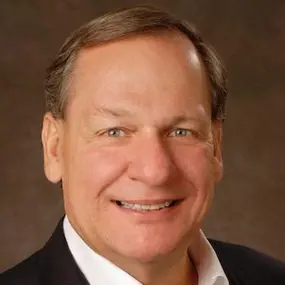
From the greens of Augusta National to the gridiron of Super Bowl Sunday, Lance Barrow has made an indelible impact on not only the legacy of CBS Sports but the entire sports-broadcasting industry. During more than 40 years at CBS Sports, he created some of the most memorable moments in sports-television history as coordinating/lead producer of CBS’s golf coverage and NFL coverage for two decades.
“Lance will go down in history as one of the most distinguished and accomplished producers in the annals of sports
television,” says CBS Sports lead announcer Jim Nantz. “It’s a massive achievement to be the leader of one network sports package. Amazingly, Lance was in charge of two: CBS Golf and the NFL on CBS. Since 1997, he choreographed our coverage of the Masters, the PGA Championship, and the Super Bowl. He did them all over and over again and won countless Emmys. A true testament to a legendary career.”
If Hall of Famer Frank Chirkinian is “the father of televised golf,” then Lance Barrow is the man who brought the sport into the 21st century. Taking over for his longtime mentor as coordinating producer for CBS Sports’ golf package in 1997, he became just the second man in history to produce the Masters for television and would continue that role until 2020. Simply put, televised golf would not be where it is today without the artistry and imagination of Lance Barrow.
But Barrow’s mastery extended far beyond the greens and fairways. He donned the hat of coordinating producer for the NFL on CBS and took the helm as lead game producer from 2004 … Read More