Lorena Ochoa - Part 3 (Early LPGA Wins)

 Apple Podcasts
 Spotify
 iHeartRadio
 PocketCasts
 Overcast
 Amazon Music
 RSS Feed
 In this third installment of our four-part series with World Golf Hall of Fame member and two-time major champion Lorena Ochoa, we dive into the defining moments that cemented her legacy as one of the greatest golfers of all time.
Lorena takes us back to her early years on the LPGA Tour, from the challenges of her rookie season to the pivotal mental and physical adjustments that led to her first victories. She shares the pressure of proving herself among the sport’s elite, including Annika Sörenstam, and how she overcame early heartbreaks to emerge as a dominant force.
We revisit her breakthrough win at the 2006 Samsung World Championship, a moment when Lorena finally realized she could beat the best on the biggest stage. She also reflects on her victories in Mexico and the immense pride she felt in bringing the LPGA Tour to her home country, inspiring a new generation of Mexican golfers.
Beyond her on-course triumphs, Lorena opens up about the personal commitments that guided her career, including the early promise she made to herself to step away from the game at her peak and her unwavering dedication to her foundation. She discusses the balance between competition and life outside of golf, the mental toll of professional sports, and the lessons learned from playing alongside legends like Juli Inkster and Betsy King.
Join us for another captivating episode as we explore Lorena Ochoa’s road to dominance, her mindset as a champion, and the sacrifices behind her success, "FORE the Good of the Game."
Give Bruce & Mike some feedback via Text.
Follow our show and/or leave a review/rating on:
Our Website https://www.forethegoodofthegame.com/reviews/new/
Apple Podcasts https://podcasts.apple.com/us/podcast/fore-the-good-of-the-game/id1562581853
Spotify Podcasts https://open.spotify.com/show/0XSuVGjwQg6bm78COkIhZO?si=b4c9d47ea8b24b2d
About
"FORE the Good of the Game” is a golf podcast featuring interviews with World Golf Hall of Fame members, winners of major championships and other people of influence in and around the game of golf. Highlighting the positive aspects of the game, we aim to create and provide an engaging and timeless repository of content that listeners can enjoy now and forever. Co-hosted by PGA Tour star Bruce Devlin, our podcast focuses on telling their life stories, in their voices. Join Bruce and Mike Gonzalez “FORE the Good of the Game.”
Thanks so much for listening!
Straight down the middle. It went straight down the middle.
Mike GonzalezThen it started to Welcome to another edition of For the Good of the Game and Bruce Devlin. First of all, for our viewers or listeners, I guess, they might not have seen this before, but we are recording uh myself from a new studio. But more importantly, we get a second chance with one of the greatest women golfers that has ever played. I mean, the more I look at her record, the more I'm convinced that you're gonna have to go, you're gonna have to work real hard to convince me that there was ever a better golfer, woman golfer on the planet.
Bruce DevlinThank you, Mike. 30 30 wins uh as a as a LPGA player, won 27 on the LPGA tour. And I, you know, like you said, Mike, from April 2007 to May 2010, this lady was number one in the world, or to put it in daytime, 1106 days as number one player in the world. Lorena Ochoa, thanks for joining us again. We're really looking forward to really cover your great career.
Lorena OchoaAh, thank you, Bruce. Thank you, Mike. Thank you for the invite, and I'm happy to continue this uh great talk. And hopefully my English is okay a little bit better this time.
Mike GonzalezThat's great. It is it is just fine. And Lorena, we've got so much to cover, so we're gonna get right into it. Of course, uh, for listeners that uh would have now listened to uh some of the previous episodes of your career, they would have heard about the early years and and uh and your early influences, your teachers and and uh your family and so forth. But uh I think we covered through your first win uh back on the futures tour. This would have been in 2002, having just turned professional uh after uh after coming out of school. And uh you got a few wins on that tour, and then uh uh I guess that would have won you or earned your right to come on to the LPGA tour. So let's get you on the LPGA tour, which would have been what, late 2002 or maybe early 2003 when you started there?
Lorena OchoaUh-huh, 2003. Yes, I was lucky enough to qualify through the Futures Tour at the time, that was the name. Uh I played only the summer and I did I did good. It was a great summer. I learned a lot playing as a professional and the competition and the living on traveling week by week, you know, and because when you play college golf, uh life is easy, you know. And then when you turn professional, then you get uh all these uh different um responsibilities, no. It was a great summer. I did one uh I think three events at the Futures Tour, and I earned my car to start playing the LPGA uh tour in 2003. So my rookie year was difficult. I I must say that it was more difficult than I thought. Actually, I have this story that I always uh tell when I give conferences that I like to share that I was exhausted more um mentally than physically, you know, because you're traveling. I played probably I want to say 33 events, and I traveled, you know, a couple of times to Asia, and then I did my days with my sponsors, and then I have a couple of days with my foundation, and and I did a few activities here in Mexico City. And it was very difficult. And when I arrived for my off season, that it was only five weeks, you know, you're really I told my parents, I give up, you know. I this is this is too much, you know. It was it was difficult. And um, I must say that when you are exhausted, you know, more mentally, uh it's difficult. I I remember having this talk with my parents and say, this is not the life that I want, you know, this is this is gonna be too difficult. And and so two things happened. Uh first, I woke up the next day, I changed, you know, my golf clothing, and and I went to practice because of course it's my passion and it's what I love to do. I just needed to take some some rest, you know, and some quiet time at home. And the second thing that happened is that I decided to start my foundation. I made a promise with myself. I said, well, if I'm gonna be traveling around the world, if I'm gonna be in a suitcase, if I'm gonna be by myself, you know, and lonely and all this competition and difficult life, I better do it for a bigger reason, you know. I better do it for something more important and I want to give back and just to be worth it, you know, to be traveling and to be um far away from home, you know, and and uh that's when I decided that I started the foundation. And every time I play, you know, I I I have this um you know image or this uh thing in my head that I play for the kids, that I play for the unprivileged kids, you know, that I played to help them receive the education, to help them, you know, um achieve their dreams. Um so it was it was something that really you know kept me going, you know, and and um it was a lot easier at the bad times. And also when it was good, I was just playing for all of them, and the more I win, the more I travel, the more I break records, the more I could help, you know. So it was a great motivation for me.
Mike GonzalezYeah, that would have been a great motivator, and of course, uh as we continue this morning, we'll learn more about your foundation, the the kind of work you've been able to do uh in education and in sport with young people in Mexico. Um and you'd mentioned last time a little bit about that uh that feeling you had after that first year of how difficult it was. And I think we'll we'll continue to revisit that with you every year. So as we go through your career, you know, even though you might have zipped through eight wins or seven wins, let's do a little end of your checkpoint and say, okay, what was in your head? Because at some point you probably were starting to see the finish line. And it would be interesting for our listeners to understand the thought process that was going through your mind as you as you went from 2004 getting that first win to 2010 and deciding to hang it up, okay?
Lorena OchoaYes, yes. Um I mean if if I understood the the question is uh it's something that I wanted to do so many it just more things outside the golf course. You know, continue with my foundation, you know, having a family. I, you know, my dream, you know, as much as I wanted to be the top player in the world, I also wanted to, you know, uh have a family, you know, and uh so that's why, you know, having that in my head, you know, I made a promise to myself when I find the right guy, you know, when I'm ready to move on, you know, when golf is not my priority, when traveling is not my priority, when I see that my my heart, you know, my soul changes, and I want to, you know, uh move out because I have you know different dreams or bigger dreams and becoming a mother and having you know all the activities outside the golf course here in Mexico City. And it was very clear to me, you know, in 2010, a little bit earlier, 2009, at the end of 2009, that I was 100% convinced that the right time was there. I was really exhausted. Uh, golf was not my priority anymore. My head was, you know, in another place. It was very difficult for me to wake up every day, to practice eight hours, to go to the gym, to and and and I decided, you know, I was just very uh honest with myself. I said this is this is the right time. I'm gonna be brave. I'm gonna make the decision and I'm gonna uh stop playing and and and really enjoy, you know, um the end of my career. So it was it was something, it was a process, but it was very clear to me that I wanted to move on and do other activities outside the golf course and catch up some of the time, you know, that I lost, if you want to put it that way. And now I'm enjoying this uh new uh chapter in my life a lot.
Mike GonzalezYeah, that's great. Well, we'll come back to that, but let's uh let's go back to the beginning of your LPGA tour. And uh Bruce, uh uh she was able to pick up her first win in 2004 on the LPGA tour.
Bruce DevlinAfter that uh tough time in 2003, actually two victories in 2004: Franklin American Mortgage, and then the Rukovia LPGA classic. So that you uh you jumped into 2004 and won a couple of times. That had to feel good.
Lorena OchoaYes, you know, 2003 was a learning lesson. Um and I was close a few times, and I continue making mistakes, you know, and I continue feeling uncomfortable with the pressure and my body, you know, and my rhythm, and I, you know, I keep breaking my routine. Uh I was anxious, you know, over the ball, especially at the end. And I keep telling myself, okay, when I'm going to learn, you know, I'm ready, why this continue, you know, to happen to me at the end, you know, the last stretch. And I was I was patient enough, I guess. In 2004, all of a sudden, all the puzzles, uh, pieces of the puzzles, you know, kind of like click, you know, they just kind of like match, and and I started getting this uh confidence in myself. And I won that first tournament. And I'm not sure if you know the story, but my brother climbed Mount Everest the same day that I won my first LPGA event.
Bruce DevlinI didn't know that.
Lorena OchoaYes, it was something special because my brother he helped me, he carried for me uh a few times and then carried for me at the futures tour. And then uh his dream, you know, he was a mountain climber, and his dream was to go to the top of the world, you know. And when we say goodbye, in in Mexico, we say like goodbye, you go, and and I promised him, when you return, you know, please get back home safe, you know, climb the Mount Everest, but get home safe, please. And I promise I will get my first uh victory on the LPGA. And it happened that same day. I mean, it was Saturday night, and I got this phone call from my parents and said, your brother just called from the satellite phone. They are starting their way up to the to the summit. It's going to be, you know, about 25-27 hours until we know. But they are strong, the the weather is good, you know. So I put my tournament in in second place. I mean, I was worried about my brother, you know, because you know how risky these uh uh adventures are. So I decided just to be calm at night, to breathe, to meditate, to put the all the good vibes to my brother, you know. And I didn't even think about my tournament. So then I arrived the next day at the golf course, and and I told um my caddy, you know, like my brother just climbed Mount Everest, you know. He's at the summit, you know, he was there for maybe six hours ago, and now we just need to pray for him to get down safety, you know. And um and it was it was great. And then I just went and played so easy because my head was in another place, I was just relaxed. It was like meant to be. It was something that God, you know, planned for me. And it was very special.
Mike GonzalezYes, very special. Was this just for the record? Was this Alejandro or uh Alejandro? Yes. Alejandro. We got to get his name in here. So a hundred years from now, when people listen to his stories, they still remember that Alejandro summited Mount Everest. That's pretty cool. Well, uh, that was a win at the Vanderbilt Legends Club, the Iron Horse Course in Tennessee by one over Wendy Ward. And uh, of course, it was hosted that tournament at the time, I think by Amy Grant and Vince Gills. There was probably some music, music going on. Did you get like a signed guitar or anything for that win?
Lorena OchoaI did, yes, of course. I have a beautiful guitar.
Mike GonzalezAh and do you play it?
Lorena OchoaI do play guitar pretty bad. Not that one. That one I have in a special place back in Guadajara at my parents' house.
Mike GonzalezOkay. All right. Well, it it didn't take you long to validate, and it's always important to validate.
Lorena OchoaYes. Right? I think that's yes, that's something important. I think uh that first wing, you know, anything can happen. You know, maybe somebody made a mistake. You just, you know, got some uh lucky bounces or feel comfortable and ended up winning. You you never know, you know. That first win is always important to put you at the right position, but there are many things out of your control. And then the second win is uh I believe is more important because then use kind of like a statement, you know, like you are able to win, yes, you are there, you know. You are giving yourself chances, you know, every weekend. You they know now they know that you are able to win, you know, so they start looking at you as a challenge. That's important. Because you have to get to the tour and respect other players, be patient, learn from them, um, you know, admire all the winners, and you know, when you get to play with Annika or practice with Julie Inster, or you know, and and then when you start playing good yourself and you start winning, they they look at you with different eyes, you know. And and I think that's important to get that respect when you get that second win is really a big statement. It's very important.
Mike GonzalezYeah, yeah. So you you go home at the end of 2004, hopefully feeling a little bit better about life on the road.
Lorena OchoaI remember what I told you, I already had my foundation, so I was very excited to get back home, to visit the school, to say hi to the kids, to to feel, you know, in my heart that it was worth it to go and and do uh crazy things and traveling every week. Uh so I was I was really excited. And then I must say that um in my in my third year, when I started playing my third year, you know, um I made a promise to myself and I said, I'm not going to be here forever. You know, um I start looking at other players, you know, and I have a lot of respect for each one of them. But I start looking at the players and I said, well, they are on their own, they don't have a family, you know, most of them don't have kids, you know, they don't have a partner, and they are lonely and they they like um maybe the traveling, maybe the respect, the money, you know, all the great things about the visiting different places in the world and the way they treat you and being an LPJ player. But then I I I promise myself I don't want to be here forever because it's very important to me to have another chapter in my life to be about the family, you know, and and me becoming a mother. And so I made a promise to myself that I would play no more than 10 years. And even if I was at the top of the world, or if I was winning a lot of money, of I was, you know, having a great life, to really stop, you know, and then really um continue, you know, with my other dream. So that was 2005 when I made that promise.
Bruce DevlinYeah. Uh one victory in 2005 at uh the Wakewind's Rochester LPJ. You won by four strokes over the whole of China.
Lorena OchoaI love that tournament. That was a beautiful, beautiful uh golf course. Yeah, you know, similar to the one I played here in Guadalajara in Mexico, kind of like uh Poana Greens, kind of like tight uh fairways with a lot of old old trees. Um I love that the that golf course really, and it was it was nice to get that a little bit of um distance, you know, from the second place. You you enjoy more of the last few holes, yeah.
Mike GonzalezYeah, you you you win by four, and as we talked about uh the first time we were together, we we gave you that statistic that your average win was by 3.74 shots. So you're getting a little closer to your average now.
Lorena OchoaThat's a nice average tool. I have no idea about that one. You know, now you you they measure everything, you know, all the little details, all the numbers, and yeah, it was very different from when I played.
Mike GonzalezWell, I I'd never done that for any of our guests. You know, we've now had 104 guests on the show, Lorena. I'd never made that calculation, but I was so impressed by your victory margins when I looked down, you know, your your 27 LPGA wins, and I said, I gotta put I gotta put a calculator to this. This looks unusual. And I don't know that I will find anybody else with a larger average winning margin. What was it like then walking down 18 with a four-shot lead? Or maybe it was a three-shot lead and you birdied the last hole.
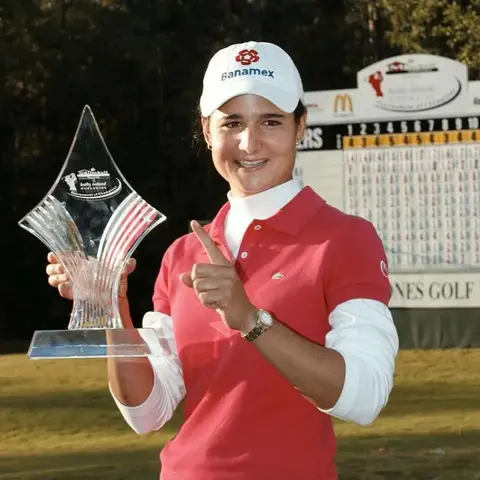
Lorena OchoaYou know, I I I can't remember. I mean, I I do remember lifting the trophy, um uh uh crystal trophy, and I remember I have this kind of like a pinkish uh shirt. Uh I was a little bit chubby, you know, I had my big cheeks. I always I had my big cheeks, you know. And I remember that that um that picture, you know. Um, but I cannot remember like every shot at the that's the stretch. No. Sorry.
Mike GonzalezWell, and and uh, you know, uh we'll excuse you for not remembering every detail of every 27 of your LPJ victories, but some people's minds work like that, all right? I mean we we've talked to some we've talked to some guests that they remember the guests they stayed with, the house, you know, the host they stayed with that week, but maybe not the shots that they played.
Lorena OchoaYes, that happened to me for sure a lot. Yes.
Mike GonzalezYeah.
Lorena OchoaActivities outside the golf course, like going hiking or fishing or spending a nice afternoon in a barbecue or meeting, you know, great friends that I'm still in contact with them. Yes, sometimes you catch different things uh from the experience.
Mike GonzalezAnd those are the important things, aren't they? Yes, for sure. Yeah, yeah. So just to remind our listeners back here, what's kind of taking them back now here to the to the um the mid-2000s, you know, Annika was already on the scene and Kari Webb was already on the scene. So you were doing battle with those two every week. But but some of the other top players, you know, back uh during your stretch, and you can add to this list, but Paula Creamer and Morgan Pressell, Grace Park came on the scene, Suzanne Patterson came on the scene, right? Uh Christy Kerr. Uh there were a lot of good players in your in your era coming on the scene when you were just getting started.
Lorena OchoaYes, um, yes, I mean they were great uh players, great ambassadors of the game because all of them really uh professionals, you know, and fine uh friends. Um I think uh I mean I remember for sure, you know, playing to me, uh playing with with Annika, it was very special. You know, I was uh you know blessed to be with her at the same time and kind of like with this transition on her being the top player in the world, and then and then the rest, all of us, you know, because she's 10 years ahead of me. So and then with Paula Kramer and Natalie and the younger players, we were all trying to get you know closer to the to the big names. Yeah, um and we're still friends today. I mean, I'm I'm still friends with them, and it's great to keep in touch, and we we become you know uh close. Um I I always you know, if I would like to recall maybe an experience, like I remember playing with Annika in uh Phoenix at the Super Titian Mountain. Um and I was winning the band, and all of a sudden she's right there, and we tied, and then we went to a hole, uh, an extra hole, you know, for a playoff. And I lost, you know, um it was a part five, I remember. I was very anxious. I was, you know, I had a lot of adrenaline. I hit my driver a little bit to the left. You know, I was very quick, you know. I rushed into the ball and and then I managed to put the ball in the fairway and then tried to put the ball, you know, my third shot close. I I missed that pot. And then Annika was you know inside me, she made the birdie. And I cried. First, she gave me a very nice hug and she told me, Lorena, don't worry, you are so close, you are going to win many events, just be patient, you know, you are a great player. And I remember those words, you know, she was super, super nice. And but I took that loss really hard on me because I thought I was ready, and maybe it was a little bit, you know, early. And um, and I remember crying and crying and just kind of like telling myself, you know, oh, I was so close, I was there, I was with Annika, I was on the 18, you know, in a playoff, and it was a perfect, you know, just a tournament for me with all my fans and my friends from Arizona, you know, and I cry and I cry. And um and then, you know, a few months later, I was able uh in October, if I'm correct, I was able to play an event which I was uh two shots uh back you know in the last round, and I got chap and I finished uh really good in the last few holes and I won. That was that was at the big horn in uh Pan Springs, the Samsung tournament, I remember. And um and and and and in that tournament I think things changed, you know, my way. I was I was able to to play good on the on the last day, I was able to handle the pressure, I was able not to get distracted, you know, with the Annika game or Annika, you know, shots, and I was able to be there with my routine and and And really have control of myself and feeling comfortable hitting beautiful shots with night rhythm. And um and I go to the stretch and I ended up winning that tournament. And for the first time I thought, okay, this is it. You know, this was like a like a breakthrough, you know, for me. Um I don't know how you say in English this, but it was a before and after, you know, after that event. And it gave me all the confidence then to, you know, convince myself that I was ready and I was ready to be the top player now, and I was ready to continue with that the you know winning many more tournaments.
Mike GonzalezYeah. Well, that's interesting. I was gonna ask you about sort of physically, mentally, you know, how you were coming into 06, and you jumped to win number five of six that year in defining sort of when that breakthrough moment came. So, you know, you started uh you started the year uh uh quite well in 2006, uh uh winning the uh the uh LPG classic in Las Vegas, and then uh you win the Cybase uh Classic in New York, you win the Wendy's Championship for Children, uh then the Corona Mariella Championship in Mexico, which would have been probably pretty important for you, right?
Lorena OchoaI think if I um yes, I mean talking about uh just uh a feeling of um it's difficult to exp explain in English, but you know, about the top top of of my career, um and one of my biggest um you know achievements was to bring the LPJ to Mexico, you know, because uh for all of the fans, you know, for my sponsors, for my friends, you know, and my team, um being able to see, you know, first you know, rope uh rider, all the top players in the world, it was it was very special. And then from that moment, I could see you know the growth of the game in my country. It was really uh an experience that changed the perspective of the game. My sponsors were very supportive. We got new sponsors, it was in a nice development in Morelia. And um, you know, and when you say which one is your biggest uh victory, you know, everybody thinks okay, the Nabisco or the British Open, you know, and yes, of course, I mean they're huge. But to me, you know, in my heart, Morelia, it was very, very special. Uh just walking, you know, the 18 holes, uh feeling all the love, you know, all the uh cheering, you know, and it it was it was something very, very special, you know, and then I get to do that memory, you know, walking to the 18th green and then having there, you know, all the fans. It was very, very special.
Mike GonzalezYeah, it's it's it's one thing to bring all your friends down and play a tour event uh in Mexico. It's quite another to then beat them all in front of your home fans. True.
Lorena OchoaWell, and you know, I was I I had the just a beautiful day, you know, things just went right, and I mean I don't want to lie, but maybe I did like five or six hundred on the back nine, just very, very, very, very, you know. It was a nice feeling. I get mixed the years, but I was able to, you know, I won, I think a couple times in Morelia, and maybe even three, I don't know, two or three times. And um and it was beautiful, yes. Thank you.
Mike GonzalezUh that was that was win number four that year. You had two more coming, including that breakthrough win. So you mentioned the 2006 Samsung World Championships at Bighorn. It was by two over Annika, as you mentioned, as sort of the breakthrough. And and uh uh was it uh just proving to yourself that hey, I can beat the best in the world and have full command of my game?
Lorena OchoaWell, yeah, I mean, of course, Annika, you know, she's always been my role model, you know. When I uh was playing junior golf in Mexico, then I heard this story that a great player from Sweden went to Arizona and I said, Well, I want to do the same, you know. And and then I started, you know, uh working really hard to get my way to play uh college golf at Arizona, at the University of Arizona. And then she turned professional. And when I was there and I was playing really good in college, and then I thought, okay, I want to be like Anica, you know, I want to turn professional and go to the tour. I actually called Anica and she was super, super nice to me. I have this small phone, and I call Anica, hi, this is Lorena, I'm about to turn professional. Could you please give me some advice?
SPEAKER_01That's crazy.
Lorena OchoaShe was very nice to answer, and she was very nice to have a nice talk to me and give me some advice about the sponsors and how many events and how you do it. And um, and then when she won, for example, the Player of the Year in 2003, you know, I won Rookie of the Year. And I get up there at the award ceremony, and I and I read this uh beautiful letter, you know, handwrite that I did probably the night before. And I was there, you know, Anica, I want to say thank you for everything, for all the inspiration, for the you know, things I learned from you, all of us, you know, we learn from you, and it's admirable the way you work and how professional you are. And and I was saying all these great things and congratulating her for her um you know recognition, the player of the year. But then and then I said, and then when um you know you are ready, you know, to finish, this Mexican really wants to be at the top of the game, you know? I I remember just reading that, you know, with with all my heart, you know, and she was there, she was laughing, and she was very nice, you know, and gave me a nice uh hug. And um so it was very special when I won in like like I mentioned, you know, at the bighorn tournament in Palm Spring. It was almost like that moment, you know, that that that she she told me, okay, you know, now's your time, you know, you are ready. And then from there I start winning and winning and and dominating more, you know, the next few years.
Mike GonzalezYeah, well, ready to win you were. I mean, having won uh five times through the Samsung, you got a sixth win that year, late late in the year over uh the it was only by 10 over Paula Kramer and Julie Inkster at the Mitchell Company Tournament of Champions.
Lorena OchoaWow, that was a nice event. You know, and um I I do remember because playing with Julie, I mean being with Julie and just she's amazing, you know, and I admire her a lot. Uh we are in contact, we are good friends, she always gave me advice. Actually, when I talked to her that I was ready to retire, she couldn't believe it. She told me, she she told me, Lorena, I'm not sure. I mean, I don't I'm not sure if you are gonna be able to keep this promise that you are going to finish, you know. I said, No, Julie, I'm ready. You know, she couldn't believe it. And then uh she appeared in Morelia just to be there for me the last day at the 18th green, and and and she gave me a beautiful uh hug and saying, you know, congratulations for your career. She's always been very important to me. And I mean at that time, you don't realize how big you know she was. I was just playing and enjoying and making birdies. I think I was so young, and my career happened so fast, just so quick, you know, like it was just that uh sometimes it's even hard to realize, you know, what I did, you know, what I achieved, especially for Mexicans because they didn't know much about golf at that time.
Mike GonzalezYeah, that's true. Yeah, yeah, that's a great point, which you know um interesting you bring up that you at age 28, you don't really have that perspective yet, do you? That you do of you know a woman your age now looking back and saying, Oh, you know what? I was pretty good.
Lorena OchoaWell, yes. Um, you know, I must say that the now that we have few Mexicans playing, well, first they play on the PGA, now they are playing at the leaf, but uh they won two or three events and and they are doing great, you know, they they are top players. But then they look at me and they say, Lorena, you know, how you won 27 times on tour, you know, like and it's the first time that the media or the fans, you know, or anybody here in Mexico, they are able to compare my career with somebody else, you know. Gabby Lopez, she's a top player, you know, here in Mexico and we're good friends, you know, but she only won a few times. So so um it's the first time that they could actually I don't like have a comparison with somebody else, my career, and then and then to realize that what I did it was it was good. It was difficult.
Mike GonzalezWell, so so we we go home now at the end of 2006, uh having banked six more wins. Uh of course you banked a few pesos, you're able to do more with the foundation. Uh that that that off season must have been quite nice for you.
Lorena OchoaYes, you know, at that time I was um I had uh figured out my my my off-season. Uh I wanted to spend time with my family, I wanted to go to the beach to spend a couple times with my friends and just relax, and then I needed to get back to really have a be there uh practicing, you know, all day. I needed to take care of my neck, you know, and I had, you know, like everybody's a few, you know, um injures, you know, that you have to take care of them. And then having I work a lot with my sports psychology with Federico because it was not only the life of because we all know that the practicing, being in a beautiful place, and being there, you know, from Tuesday to Sunday and giving yourself a chance to win a tournament on Sunday is beautiful. I mean, you know, that's what we love, and it's so easy, it's natural, and you feel comfortable in there. But all the activities outside the golf course, you know, that you must um be there and be professional and attend them, all of them with a nice face, and and it's very difficult. And then you get kind of like you get tired, you know, overwhelmed, you you are, you know, you sometimes you get frustrated because they change you the time or or the activities, and and there are things that you cannot control but you have to do as a professional, and especially because we all want to help the LPGA and the family, and um and then you you get really tired, you know. So I was exhausted. I was exhausted, and I learned to really notice that in myself, in my body, you know, and to sometimes, you know, try to anticipate just um to be okay with. But the the off-season it was very important just to kind of like get away, you know, relax, um, do other activities and talk to your friends and and laugh about things, and and then once you get back to the golf course, same story, you know, practice all day and get ready for the next season.
Mike GonzalezYeah, so you talked about wanting to do it your way at some point, you know, seeing what others had done, just trying to play too much and doing too much with sponsors. How many events were you playing as you come into uh that great year of 2007?
Lorena Ochoa27.
Bruce Devlin27.
unknownAll right.
Lorena Ochoa27 LPJ. I I of course I played a few exhibitions and I played tournaments for my foundation, maybe 10 tournaments from my foundation. Um, and as well as you know, the days with my sponsors, you know, they were maybe at the beginning they were like 30 days with my sponsors, and then I went down to 15 and I told them I cannot do it, you know, it's too much. And then I start getting this uh balance, you know, with my life and all the activities. But to me, uh playing three tournaments in a row, one week off, or uh four tournaments in a row and two weeks off, it was perfect.
SPEAKER_01Yeah.
Mike GonzalezThank you for listening to another episode of For the Good of the Game. And please, wherever you listen to your podcast on Apple and Spotify, if you like what you hear, please subscribe, spread the word, and tell your friends until we tee it up again for the good of the game. So long, everybody.
Intro MusicWhack down the fairway. It went smack down the fairway. And it started to slice, just smit offline. My caddy says as long as you're still in the state, you're okay.
Golf Professional
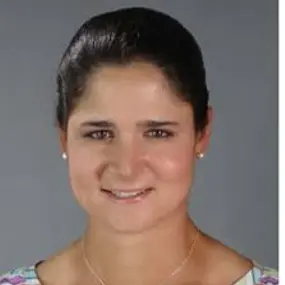
Lorena Ochoa Reyes burst on the women’s professional golfing scene in 2002 after enjoying an outstanding junior golfing career with five Junior World Championship titles and an impressive collegiate career, being named NCAA Player of the Year in 2001 and 2002.
In her first full season on the LPGA Tour she had eight top-10 finishes and finished ninth on the Tour’s money list. She was named Rookie of the Year. Ochoa would go on to win 27 victories on the LPGA Tour, including two Major Championships (Women’s British Open 2007 and the ANA Inspiration in 2008).
Though Ochoa Reyes’ career lasted only seven years, she dominated the women’s tour and was ranked World Number One in the Official World Rankings for 158 consecutive weeks (2007-2010). In a three-year stretch (2006-2008), she won 21 tournaments, including the two Majors and in 2008, she dominated with wins by as many as 11 strokes on more than one occasion.
Ochoa Reyes always knew what she wanted to accomplish and quit the tour on her terms. She retired at the very top of the women’s game. She said that she always felt that she was competing against herself, and not anybody else.
Lorena Ochoa Reyes is the first Mexican-born golfer to find her richly deserved place among the greats of the game in the World Golf Hall of Fame.