Peter Dawson - Part 2 (Business Career and Joining the R&A)


 Apple Podcasts
 Spotify
 iHeartRadio
 PocketCasts
 Overcast
 Amazon Music
 RSS Feed
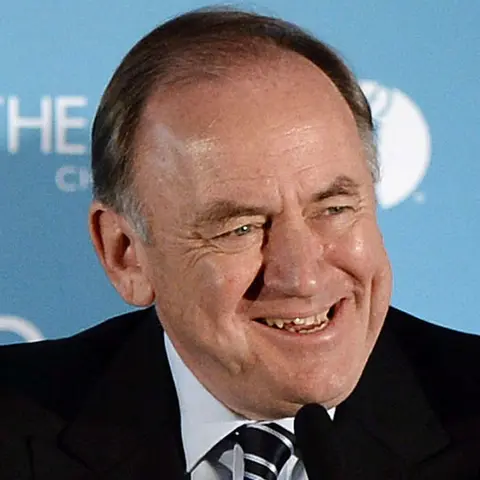
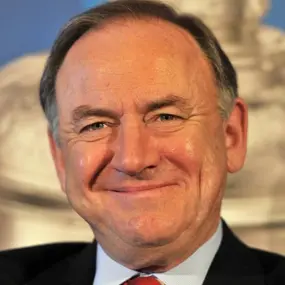
 Peter Dawson, long-serving Secretary of the R&A who played an instrumental role in the return of golf to the Olympic Games, recounts his days in the commercial world in various leadership positions with industrial companies. Becoming a member of the R&A in 1994, Peter soon became involved with the Rules of Golf Committee, serving as an official in several major championships. He share a few of his favorite (and frightful) experiences on the golf course. When Michael Bonallack planned to step down from the Secretary's role at the R&A, Peter was convinced by friends to apply for the position. Listen in as he remembers the rigors of the selection process and his joy in ultimately being the last man standing. Peter Dawson begins his life of service to Golf, "FORE the Good of the Game."
Give Bruce & Mike some feedback via Text.
Follow our show and/or leave a review/rating on:
Our Website https://www.forethegoodofthegame.com/reviews/new/
Apple Podcasts https://podcasts.apple.com/us/podcast/fore-the-good-of-the-game/id1562581853
Spotify Podcasts https://open.spotify.com/show/0XSuVGjwQg6bm78COkIhZO?si=b4c9d47ea8b24b2d
About
"FORE the Good of the Game” is a golf podcast featuring interviews with World Golf Hall of Fame members, winners of major championships and other people of influence in and around the game of golf. Highlighting the positive aspects of the game, we aim to create and provide an engaging and timeless repository of content that listeners can enjoy now and forever. Co-hosted by PGA Tour star Bruce Devlin, our podcast focuses on telling their life stories, in their voices. Join Bruce and Mike Gonzalez “FORE the Good of the Game.”
Thanks so much for listening!
13:51 - [Ad] The Top 100 in 10 Golf Podcast
14:34 - (Cont.) Peter Dawson - Part 2 (Business Career and Joining the R&A)
Straight down the middle. It went straight down the middle.
Mike GonzalezThen it started to So how did you go about finding that first real job?
Peter DawsonWell, there's a thing uh I I guess it still happens called the Milk Round at university where employers come round and meet graduates and uh uh aspiring uh to aspire to some careers in their industry, and uh I joined a company called Delarue, which uh was most most famous for banknote printing. But uh the subsidiary of Delarue that I worked for was a company called Potterton's, which made domestic heating boilers. So I was in in engineering manufacturing straight away, and uh I I worked in a little town called Warwick and Levington Spa in Warwickshire, which is where my my Warwickshire County Golf started. I uh I joined Coventry Golf Club, um, which was a couple of a few miles from where we lived, and uh a few years, two years later I I moved companies and worked up in the Birmingham area and moved to uh Cockheath Golf Club, which was uh was more handy in just in Solihull, just on the edge of Birmingham. Yeah. Um I remember no amateur had ever won the Warwickshire Open. And I'm in I'm in the clubhouse with two 71s, which amazingly was leading with one group to come in. And there was a None Eaton Golf Club. It's amazing that 71s could actually win a tournament in those days. You'd come last now. Uh a schoolboy had a 40-footer to tie, at which it hit the back of the hole, went in the air, and boom in.
unknownOh.
Peter DawsonAnd that was Peter McAvoy, who went on to win the British Amateur a couple of times and captain the Walker Cup team. But he was a member at Cockheath as well, and we played a lot of golf together. Needless to say, three weeks later he won the playoff. I didn't. So uh that was that, and Peter's been a lifelong friend uh since those days.
Mike GonzalezYeah, yeah. So uh you you take your first jobs. When did you start your family?
Peter DawsonWell, let's think now. Uh Claire, my daughter, was born in December of 72. Okay. And my son James was January 75. So they're both 50-ish now.
Bruce DevlinYeah.
Peter DawsonAnd um they both carved out their own careers in in London and have their own families. We have my daughter has two girls, my son has two boys, and uh they're all in the south of England.
Mike GonzalezThat's great. Did uh either one of them take up golf as children?
Peter DawsonJames, my son, plays, but not not regularly. He's high single figures, uh handicap. Um Claire never did play, really. Um But uh one of James' boys is very good at sport, uh cricket, football, and rugby. So uh we may switch him to golf when the time's right, but he he's exceptionally talented, which is good to see.
Mike GonzalezSounds like a plan. So uh tell us more about some of your early business career and uh the kinds of jobs you were doing.
Peter DawsonWell, I uh I really started my life very much in manufacturing. Um first of all in domestic boilers, and then later in domestic hardware and DIY products. And uh in a time when uh trade unionism was at its peak really in the UK, and uh much of my early career I was spent in trade union meetings. You know, you couldn't uh after an hour you couldn't see who you were talking to for the cigarette smoke in the room and all that kind of thing. Uh and and so on. And uh yeah, it was it was it was a good experience. But I I moved into construction machinery um in the late 70s and stayed working broadly in that sector uh until much later when the the R ⁇ A thing came along. So uh all of my life was it was in manufacturing and and uh the and the commercial side is manufacturing as well as the operation side. Most my longest time was uh for an American company called Grove, which manufactured hydraulic cranes in in Shady Grove, Pennsylvania. And I ran uh Europe, Africa, Middle East for them.
Bruce DevlinYeah.
Peter DawsonThose were good years, very good years.
Bruce DevlinYeah.
Peter DawsonUh great, great son. Uh not too much time for golf, very busy, full-on jobs, you know, and uh young family. But uh I carried on playing and then still enjoyed the game, although uh the decline set in, which has continued ever since.
Mike GonzalezIf you were like most of us, you you probably did uh, you know, you might not say got away from the game, but uh uh to play at the standard you played at, you would have had to play a lot more than probably work and family allowed.
Peter DawsonYeah, I would say that was true. Um and and something of a frustration, obviously. But uh always stayed interested in the game and stayed current with what was going on uh throughout the sport, and uh still do that to this day. But uh yeah, busy, busy times, and uh in many ways, great preparation for uh for you know later years as well. And uh because the RNA uh is not just about golf, it's about business too. Um you need to have both sides of it to do the job.
Mike GonzalezSo speaking of the RNA, uh might be hard for you to believe, but it's been 30 years ago that you became a member. How'd you uh get introduced to the RNA?
Peter DawsonWell, the m the membership system at the RNA is such that you need uh someone to propose you for membership, and if you live with in the UK, you need two seconders, and some friends of mine who were members did that. And uh it was quite a long waiting list, and I'd almost forgotten about it when I got the letter saying uh congratulations, you've become whatever it said, you become a member. And that that came through in 94 when they had quite a big intake of members to, I think, reduce waiting lists and things at that time. And yeah, it was a great privilege. Um I was very fortunate to very quickly be asked to join the Rules of Golf Committee, you know, within the first three or four years of my membership, and um enjoyed that hugely. It sudden, suddenly realized what hard-work beer committee member of the RNA is. You know, on the Rules Committee, you've got to do a lot of homework, you've got to pass exams, and you've got to be available to officiate at championships. And uh that's a lot of days out of the year, which I was at a time in life where I could afford to do that. And uh did it very willingly. And then in late, let me get this right now, in nine latter half of 1998, Michael Panaleck's retirement uh as secretary was was announced that he was going to go in 1999 and that a search process would start. And a number of people said to me, you know, you you should apply for this. And I said, don't be ridiculous. I've I've never worked in golf. But nonetheless, I did uh I did put an application in. I think it's the the drop dead date for applications was New Year's Eve, and I think I got mine in by fax that shows how long ago it was. Um on the 31st of December. We were very happily living in the northeast of England, and uh my son James said to my wife, Juliet, oh let him apply, he'll never get it, don't worry, Mum. Mum was very happy down there. And uh when I got to the last 10 or so, James, this isn't going quite right. Oh, don't worry, Mum, he'll never get it. And then the last six, and then when I did get it, he wanted to know if the job was hereditary. So I didn't disillusion him about that. But uh yeah, no one more surprised than me to come out to the end of what was quite uh an intense uh interview and process. Um and I guess they were looking for someone who knew a bit about golf and and a bit about the business and commercial world, and uh there I was. I think I think being a Scots maybe helped a bit as well at that time.
Mike GonzalezWellowed me to. Not many people know this. Uh Bruce, I don't even think I've told you, but I too put my name in the hat for this role. Oh, I didn't know that. I look back on it and I'm thinking, what in the heck was I thinking? You know, I mean, uh I didn't I didn't know that.
Peter DawsonI understand there were about 150. Yeah, I just you know I don't know who they were.
Mike GonzalezYeah, I saw the advert and I thought, what the heck? You know, I'm I'm on the Chicago District Golf Association board. I I officiate rules, I teach rules, you know, club experience. I I played, but not at a real high standard. But I just thought, oh boy, that sounds like it'd be a fun job. Well, you learn something every day, don't you? You know, what in the world would they do some stupid American over here to do this deal? There's no way that's gonna happen.
Peter DawsonWell, just think how much better the RNA would have been if they got if they got their selection right.
Mike GonzalezI don't think so. But but I think they got it right in my I I look in a little folder I keep from back then. I still have a copy of my RNA uh club rules from 1997, which they sent out to all the candidates to as part of the package. Wow.
Peter DawsonWell, listen. No, I did not know that. That's that's great to hear.
Mike GonzalezAgain, not not many people do, but but uh I've heard you relate this before. I mean, it was quite a process, and uh you know, you as you say, you you kind of they they cut you at 10, they cut you at six, and so you turn up at the Balmoral Hotel in Edinburgh for the final six interviews, and you you weren't really feeling at the top of your game, as I remember reading.
Peter DawsonWell, that's right. There was there were six people being uh processed at that time, Monday, Tuesday, Wednesday, morning afternoon, morning afternoon, morning afternoon. So that was the six. And I had the worst cold I think I've ever had. I was sneezing and coughing and blowing my nose constantly. And I was the last on on that uh Wednesday afternoon. And um the morning people had lunch with the interview panel, and the afternoon people had dinner as well. And um part of the interview was to give uh a presentation on the future of amateur golf. I remember having to do that uh based on not very much information. And yeah, uh two or three days later, I was driving along in the northeast of England when I got a message that Ian Webb, who was then the chairman of the RNA, um, was in Michael Banalek's office and was looking to speak to me. And I was in an area with no mobile phone signal at all. I just couldn't get back to him, which was dreadful. And eventually I did, and we agreed not to talk about it then, but to speak. This was on a Friday, on the following Monday. And I remember going over to Belfast, where Ian lived and worked, to meet him and talk about the job and the terms and so on. And uh a number was mentioned, and I said to him, Is that what I pay you or you pay me because I'm taking a job rental? And uh going back to never having a plan, I didn't have a plan, but boy, did I want that job. And uh I I actually uh hired a friend of mine who was a uh uh sort of coach on presentations to help me get the the presentation together. So I worked at the interview and uh I guess it came off. Yeah, yeah. So then I went into a handover with Michael Van Aleck, uh who was to become captain of the club. I I started on the payroll in on the first of June uh 1999. And Michael was uh I had just have three three months of Michael and he was to become captain of the club in in September. And I actually um my first week on the payroll was at the amateur championship at Count Royal County Down. And uh so we had really heavy rain one night and um very early in the week. And I don't know if you know County Down, and the the ninth fairway drops down dramatically to a fairway below, and we Michael and I were in a cart, Michael driving, and he gets to the top of this hill, looks down, and he says, I think I can go down here. And I said, Well, halfway down, he lost the back end completely, and the cart pirouettes down the hill, and I'm thinking to myself, should I jump out or stay in the cart? What happens if I jump out and the cart lands on me? What happens if I jump out and banalic lands on me? We got to the bottom and he drove off as if nothing had happened, never even mentioned it. Typical Benalek uh matter-of-fact sort of thing. It was very funny. And so that was that was a great week to start start the career. And of course, we we went to the the very controversial open at Carnoosty and the uh Vandervelde uh incident, Paul Laurie's great win, and so on. So yeah, it was a pretty intense uh handover period with a quite a few things happening.
Mike GonzalezYeah. Well, let's let's we'll come back to your your secretary days, but before that, I want to go back to a couple things. First of all, and it relates to your your committee experience with the Rules of Golf Committee. Um, you know, you you sign on as a member of the RNA, and what most people don't realize is that comes with a lot of responsibility, doesn't it?
Peter DawsonWell, I think a lot of members feel that you need to be prepared to put something back into the game. Um, because it's it's quite a privilege to be a member in many ways, in golfing terms. And not everyone feels like that, but certainly enough people do to fill all the committee roles that are that the RNA has, be it on championships, finance, golf development, you know, there's many, many, many committees. And um the membership is is so strong and powerful that the these committees are are populated by a lot of very, very able people who've had great success in other walks of life. Right. And you know, the many the boards of many companies, or many companies would give their eye teeth to boards of directors, you know, as strong as these people are. And uh yeah, the the membership and their willingness to give back to the game and and and be involved is is the uh well one of the RNA's greatest strengths for sure.
Mike GonzalezYeah. And I think that that'll relate to some things we'll talk about later as as you get into your uh secretarieship and you start talking about a complete restructure of the RNA for a number of uh valid reasons. And and uh you know, the way I think you oversaw things is as a member, you recognize the depth of talent you had around you with fellow members. And of course, back before the RNA companies was formed in 2004, it fell on the membership to fill a lot of these functions that you mentioned, uh relating to championships, uh uh rules of golf, uh the equipment, uh, rules of amateur status, golf development. Uh, but you were clever enough to recognize that talent base that you were able to tap into, uh, all free of charge to you, by the way.
Peter DawsonOh, absolutely. Uh yeah, all free of charge. But the the the use of RNA members for important roles continued after the restructure as well. That was still still one of the strengths that we had. And uh, I mean, I can't take all credit for the restructure. There was uh the then head of finance, uh Fred Gibson, uh sadly passed away. It was his idea, I must be honest. Uh yeah, we implemented it, but it was his idea and his thought process that got us to the restructure. And it was done for two or three reasons. One, a private member's club tends to want to keep certain things confidential. Golf, um, the RNA as the governing body of the name wanted to be open and transparent about everything it did. And that doesn't always quite jive with the private members' clubs. But it when you put those external activities into a corporate structure, then you have to be transparent, which was was a good thing. And it also removed personal liability from members for God re you know, God save some potential disaster with an accident or something at a championship that we didn't want. So, and and you know, things could happen that the members had no control over. So getting that personal liability away, I think, was only fair and and important. And it yeah, it's now been what 20 20 years and uh it's working.
Mike Gonzalez20 years. Yeah, yeah. Yeah. Uh we'll we'll come back and touch on that. I the other thing I wanted you to talk about a little bit was uh uh your experience with rules officiating, because uh uh that's not an easy job. First of all, you gotta study a lot, you gotta know a lot, but then uh the the actual process of officiating an event, while it seems glamorous, it's pretty boring, isn't it?
Peter DawsonWell, it it it's boredom uh interspersed with various bouts of panic when something actually does happen. And uh the open championship at uh Royal Birkdale, which Marco Mira won, um was my first open as a as a walking rules official in '98. And I was out with Ian Woosnum's game. And on the 14th hole, par three, he hooked his iron shot left of the green, and he has a pitch over a bunker uh to the flint, to the pin. And well, well, the group in front who'd been in the bunker had not had it raked. Oh so Ian is to play over this unraked bunker and tells the bunker raker who walks with each group to go in and rake the bunker before he plays the shot, which of course is contrary to the rules of golf. So I've got the bunker raker by the neck stopping him going in the bunker and placating Ian Woosdom, who eventually did play it over the bunker and onto the green without mishap. But the the young 17-year-old bunker raker from the group ahead came out on the last and apologized, so all was well in the end. But suddenly you you've got to be so alert and awake for these things that uh and of course we we had the uh well no, this was later in my my secretary thing. Yeah, I had a few incidents on the course, I must say. And uh it's uh you've got to you've got you've got to be awake, or or you can make some dreadful mistakes.
Mike GonzalezI think what's nice though is you always have a fallback because you always got that radio with somebody above you you can probably call on if you ever are doubtful.
Peter DawsonYes, yes. My my favorite rover story, which is uh was a Sevy one where he'd hooked his ball left of the tenth at Augusta and was in the trees and was trying to persuade the rules official that he his lie merited a free drop. And the rules official was having none of it. And uh Sevi asked for a second opinion. So the rules official called in, and a few minutes later, over the brow of the hill comes Michael Van Alec in his cart, and Sevi looked up the hill and said, Oh, I'll play it as it likes.
SPEAKER_01He knew Michael was gonna have never had it. He knew quite well, but it never got it past Ben Alec.
Mike GonzalezSo speaking of Augusta, something happened when you were uh standing near the uh uh, as the players look at it, the left side of 16 green.
Peter DawsonThat was in one of my favorite uh dining out stories in 2005, I think this was. Um it was when Tiger chipped in on 16 um for a two from the left, and uh it was quite a crucial point in the championship. I think he was vying with Chris DeMarco, wasn't he, for uh for the the lead and so on. And this was in the final round. And I was sitting on my chair, and his t-shirt I suddenly realized was coming straight at me. So I moved my chair and the ball landed, and um by a miracle, in it went, and the Nike swoosh just falls into the hole, and uh best bit of free advertising in the history of sport, I would think. And so he has a big picture, big picture behind his desk, Tiger, the whole world going crazy, and one person, me, dead pan, nothing happened. He sent me a copy of this picture saying, get a little excitement in your life. Amazingly, he's told that story at press conferences at Augusta twice in quite recent years. It's obviously lingered with him, and it has with me, and uh yeah, great moment to be part of. If you when they go back and show that on television, as they do quite often, you can get some very good shots of my feet. Of your feet. But one or two at the angle change, you do get the full Peter Dawson, but most of them are just the feet.
Mike GonzalezYeah. Yeah, one of the most memorable shots in golf, just as you said, the way it played out, it almost was like in slow motion, those loudest few tumbles of the ball.
Peter DawsonYeah, it almost stopped, and then and he knew he knew it was going in, there was no question. In this line that he knew. And then, interestingly, at the first time I'd ever seen it, Tiger lost concentration and bogeyed the last two holes. And only won that Masters in a playoff. I think I'm right in there.
Mike GonzalezInteresting. Yeah. So uh in terms of rules, uh you have to have your least favorite rules of golf.
Peter DawsonWell, I think in modern times, my least favorite is dropping the ball from knee height. It's not my best look squatting down to knee height to drop it. I'd much rather do it from shoulder height, I must be honest. But uh the thought of your ball then plugging in the sand, I suppose, is is not so good, but uh but that one uh I never thought was fair. I had a I did give a wrong ruling once, I remember, in the players' championship. Um at the is it the thirteenth hole, I think, with the 13-14. Yeah, it's the 14th. And um I think it was I think it was Paul Stankowski. Is that was that his name in those days? I had hooked his t-shirt into the water. Right. And um he he called me over and he said, uh, do I have to take complete relief? And I said, What do you mean, Paul? And he said, Well, can I still be standing in the hazard after I've dropped the ball? You know, ball dropped out of the hazard. Can my feet still be in it? And I said, Yeah, that's okay. And then he said, Um, because there was a bunker very close within the two club places, yeah. Can I drop the ball in the bunker? And I said, Yep, you can do that. And then he said, What happens if I drop the ball outside of the bunker and it rolls in? Now I could not believe, because I thought about this, that the rules of golf would allow him to drop it in the bunker, but not allow the ball to roll into the bunker. And I do find, well, that's what it said, but it was so illogical I couldn't bring myself to say it. So I said, Oh, that would be all right too. But fortunately, he took the first option and didn't drop it in the bunker.
Mike GonzalezThank goodness.
Peter DawsonNot a great place to make a mistake, the player's championship.
Mike GonzalezYeah, I'd have made the same one. You talk about the drop change. You may recall there was a short period of time before they locked it in where they talked about dropping the ball, just hovering over the ground. In other words, you could see somebody getting down on their knees uh a millimeter away and doing a drop like that. And at the time I'm thinking to myself, well, if you're gonna do that, why don't you just let people place the ball? Place it, yeah.
Peter DawsonYes.
Mike GonzalezYeah. That's gonna get a little goofy with everybody's gonna get morning dew on their beautiful trouser knees.
Peter DawsonWell, that too. But I've always thought that dropping the ball should simulate a ball arriving from a shot. Yeah, and I I've never been very keen on this idea that you can clear the area of all loose impediments before you drop it. I think you should do that afterwards. Personal view. Yeah. But uh that one didn't get any traction in the rules committee at the time.
Mike GonzalezYeah. Well the other the other thing they went through, uh, as you know, because I think uh might have happened uh close to your time, uh, and that was the the rewrite of the of the rules of golf uh to simplify them, make the language a little bit more modern, etc. And uh, you know, uh as you know, particularly in the in in the UK, I would think the traditionalists would say, wait a minute, what happened? What's wrong with all square, for example, right? Well, absolutely.
Peter DawsonI've I um we still use all square, my friends and I, when we play. Uh what's the score? All square. No one says tied.
Mike GonzalezNo, no, and we you know, so we were we were talking to Tom Watson, I think was it I don't know, it was sometime after the change and uh on on this program and and um and uh he he said I think he said something about you know uh yeah, and then then what then I hit it in the hazard uh and I said, you know, you mean penalty area. He says, Don't get me started.
Peter DawsonWell, I I share, I share that view. That review was started in my time, but finished just after I retired, and uh a lot of good work was done, to be fair. And uh but there, yeah, but there are there are always contentious matters in the rules because they have to cover so many different situations and still things people have never thought about, I guess. Uh yeah. The one letter that we did get was from uh a club in England who who told the story of how the players hit off the tee and walked up the fairway, and one of the players couldn't find his ball. So he went back to the tee to hit another one and found his original ball still on its tea peg and he'd forgotten to hit it. And so the question the question was uh uh can a ball never be put into play be considered lost? Um and uh what was the other one?
Mike GonzalezUh I sure hope not.
Peter DawsonYeah, should a slow pay play penalty be applied, etc. etc. And that that's a real after dinner speech one now. Yeah, but a big great line. You can just imagine people chatting away and walking off, and the last guy forgot to hit his ball.
Mike GonzalezSee, I would I would presume alcohol would have been involved in that in that incident.
Peter DawsonI think that's probably something to do with it.
Mike GonzalezThank you for listening to another episode of 4 The Good of the Game. And please, wherever you listen to your podcast on Apple and Spotify, if you like what you hear, please subscribe, spread the word, and tell your friends until we tee it up again for the good of the game. So long, everybody.
Intro MusicIt went smack down the fairway. When it's the minute just mid. Mac and it as long as you're still in the stage, okay.
Golf Administrator