Peter Dawson - Part 3 (R&A Secretary & Golf in the Olympics)

 Apple Podcasts
 Spotify
 iHeartRadio
 PocketCasts
 Overcast
 Amazon Music
 RSS Feed
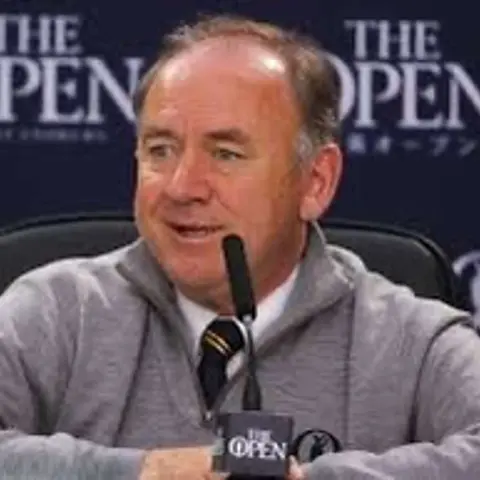
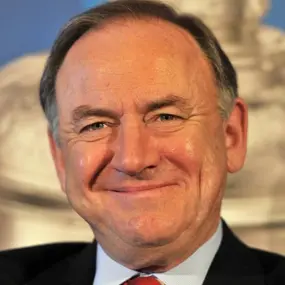
 In this third of a four-part interview with Peter Dawson, listen in as he recounts his early days as Secretary of the R&A. Peter gives us insights into the private club that is the Royal & Ancient Golf Club of St. Andrews and how it differs in purpose and mission from the R&A Companies, formed in 2004, as the world-wide counterpoint to the USGA, which governs golf in the United States and Mexico. He remembers the significant accomplishments of his term including spearheading golf's return to the Olympic Games, overseeing the 250th anniversary celebrations of the Club, the re-write of the Rules of Golf, the commercial growth of the Open Championship and the welcoming of women members into the R&A. We conclude with a review of Open Championship history as Peter Dawson continues his life story, "FORE the Good of the Game."
Give Bruce & Mike some feedback via Text.
Follow our show and/or leave a review/rating on:
Our Website https://www.forethegoodofthegame.com/reviews/new/
Apple Podcasts https://podcasts.apple.com/us/podcast/fore-the-good-of-the-game/id1562581853
Spotify Podcasts https://open.spotify.com/show/0XSuVGjwQg6bm78COkIhZO?si=b4c9d47ea8b24b2d
About
"FORE the Good of the Game” is a golf podcast featuring interviews with World Golf Hall of Fame members, winners of major championships and other people of influence in and around the game of golf. Highlighting the positive aspects of the game, we aim to create and provide an engaging and timeless repository of content that listeners can enjoy now and forever. Co-hosted by PGA Tour star Bruce Devlin, our podcast focuses on telling their life stories, in their voices. Join Bruce and Mike Gonzalez “FORE the Good of the Game.”
Thanks so much for listening!
11:15 - [Ad] The Top 100 in 10 Golf Podcast
11:58 - (Cont.) Peter Dawson - Part 3 (R&A Secretary & Golf in the Olympics)
All right, so let's come back now. Your your newly minted secretary of the RNA, you had just succeeded uh uh Sir Michael Benelek, and uh I think this is education time for our listeners because a lot of people don't really know much about the RNA and its structure. So uh while it was different when you took over and changed in 2004, let's just go ahead and jump ahead and assume that we had this bifurcation between the private club and the RNA group of companies. Why don't you explain both to our listeners what its mission is and how they operate?
Peter DawsonOkay, well, the the private club um dates back to 1754. In fact, in my time in 2004, we had the club's 250th anniversary, and that was a huge uh huge number of celebrations over a two-week period. Oh man. And as one of the very early clubs um in in Great Britain and Ireland, uh as time went by, it began to be regarded, I think, as the senior club in the land and a natural place for to be asked to run the open championship and and uh administer the rules of golf. Prior to that, other clubs had been party to running the open, Prestwick, for example, honourable company at Muirfield, and so on. Um and other companies and other clubs had their own rules of golf, as as Muirfield had and and so on. But eventually it began to be realized as as the railway system developed and people were traveling around the country more, that you know, the same rules of golf needed to be applied as as far as possible, and the open championship was growing and needed a body to run it on a regular basis, and the RNA was was asked to do that. Um and at that time this was the members' club, but later uh a corporate structure was set up to conduct all those external activities of running championships, administering the rules of play, the rules of equipment, the rules of amateur status, giving money away for golf development around the world, and so on. So conducting everywhere in the world other than the United States and Mexico the same thing that the United States Golf Association does in America and Mexico. So that's the role of the USGA there. But everywhere else in the world, uh the national governing bodies, as it were, report into the RNA for rules of golf matters and so on. And the RNA runs the one of the men's majors, and now one of the women's majors, the women's British. Right. Um and um that that's the history. But all that took 250 odd years to to develop uh over time. But it's been it's been the situation now for the best part of a hundred years.
Mike GonzalezYeah. So in in 2004, when when they did do the split, uh, as you said, there was for a lot of good reasons, uh, one of which uh uh limiting member personal responsibility. And of course, some of that was an outgrowth of the litigation that had happened in golf over square grooves with uh Karsten Solheim and the Ping Company uh coming after not just entities but individuals.
Peter DawsonYes, absolutely right. And in the RNA's case, the the the case was dismissed very quickly on jurisdictional grounds, so it never really uh hit the RNA in the way it was it was doing in the in the United States. But there's always that danger, and I think um it's right, isn't it, that these weighty matters are um dealt with by professional bodies with with professional staffs who can draw on the member experience, which is the way the RNA works, um, because the these matters are like every other sport, move on, don't they? And they become more and more complex, more and more important, more and more money around, and therefore there's that influence as well. Um and uh yeah, they need to be handled very carefully.
Mike GonzalezSo, you know, as as we mentioned, uh things like equipment uh changes and so forth, maybe have you weigh in quickly on uh on sort of your views. If you look back now over the last uh 20, 30 years and and and what's happened with uh golf, particularly distance, um if if you if you were able to magically go back 30 years and and you were now king of golf and and wanted to make one or two changes that might have uh altered the trajectory of the distance uh uh issue, uh is there something you would have done?
Peter DawsonI I'm something of a uh a dove on this rather than a hawk, but I I do have some unshakable views, I think. First of all, uh I'm absolutely a non-bifurcator. I think it's a central strength and pillar of the game that we all play with the same equipment and the same rules. I really I really do think that, because you can't you just can't compare yourself with the next level of play if you're playing with different equipment and so on. And I I think that's stood the test of 600 years of playing the game. And so if if you believe that, the the distance issue becomes rather more difficult because at the one end you're trying to do what's right for some not very good players, and on the other end, you're trying to do what's right for the game and not be spoilt by um by the very best. Now, the very, very best players in the world are terrifically good, and they're getting better year by year by year, and it's not just distance, it's it's every aspect of the game they're getting better at, and I I respect them for it. Um I think if I had my my way, I would prefer the game to be played um at lesser distance than it is, and that's because of maintaining the relevance of some wonderful golf courses which can lose their relevance at the top end, absolutely, and also to test the top players a little bit more through the bag, and not quite so many wedge second shots and so on, although they're fantastic wedge players. I wish I could hit wedge shots, I think. So there's a lot of uh, of course, um vested interest in these things. There's players to think about, there's manufacturers to think about, there's employment in the game to think about, um, fans and so on. And uh the game needs a consensus on it. If I if I had full power, I'd be throttling it back a bit. And uh the RNA and USGA have, have they not, announced that the the ball is to be throttled back? Um maybe it's about five percent. Um but I'm not sure that they've got full agreement on that yet, and there's a bit of water to flow under that bridge. Yeah. I wish them all well.
Mike GonzalezYeah, you know, you think about some of your boyhood sports you mentioned rugby, football, cricket, I think of basketball, baseball, all the key equipment elements of those sports really haven't changed appreciably over the years, uh which is very unlike golf. Very unlike it.
Peter DawsonYes, uh, equipment development, of course, is a wonderful thing in many ways. It's uh and you and you can't halt it. I mean, uh, man has always wanted better stuff to use, whatever field he's using it. And uh, you know, if a driver comes out that that's better than an old one, well and good. But although there are good limits on the ball and driver now, and I think most of the increases in distance in most recent years have actually come from players rather than the equipment. There was a period when it was equipment, but that that equipment maxed out under the rules some time ago. But the players now are better coached, they're working harder, they're bigger, they're stronger. And uh boy. I think Gary Player started it by doing all these exercises instead of going to the bar after play.
Bruce DevlinThere you go.
Peter DawsonIt's all his fault.
Mike GonzalezAnd he credits Frank, he fra he credits Frank Stranah for showing him that because uh Frank used to travel with dumbbells in his in his suitcase when he went out, you know.
Peter DawsonBut the the golfers today, or at least most of them, are really you know athletic guys and girls.
Mike GonzalezYeah. Uh you know, as you look back at at some of the major things that happened on your watch, of course, you mentioned the 250th uh anniversary. Uh I mean you could just say that in passing, but I'm sure there was a lot of work, thought, and preparation that went into that event.
Peter DawsonOh, huge. We had an enormous marquee uh between the RA Clubhouse and the C there and uh double tier, and there were, I think, over 14 days, seven or eight major events, evening events, dinners, and so on, with over a thousand people at each of them. And uh it was a you know, there was a a championships night, there was a governance night, there was a commercial partners night. So you know it just went on and on. And uh yeah, huge amount of work. And uh it it's it it passed off pretty successfully, I have to say. Um it was conducted in the at the same time as the amateur championship was being played on the old course, um, won by Stuart Wilson, as I recall, in those days. And uh so that that that added a bit to the to the occasion as well, more than a bit.
Mike GonzalezSo we've talked a couple of times about the the the change that was made to the structure in 2004. As that happened and you implemented that, did did did your world change much uh in terms of how you your way of working?
Peter DawsonA bit. Um, yeah, what there had to be boards created of the companies and and different meeting structures and so on. And my uh objective through all that was to make the differences between the new and the old as little as possible, because we were still trying to do good things for golf and and and get that done. We didn't want it bogged down in any kind of bureaucracy uh or anything like that, and it's it's it's worked pretty well, I think. So but yeah, I think in terms of corporate governance and structure of meetings and things, that's where the changes were. But to the outside world, maybe you wouldn't see very much.
Mike GonzalezYeah. I mean, you probably didn't get it all right day one.
Peter DawsonOh no, no, no. Day two we were fine, but yeah.
Mike GonzalezWas there anything that comes to mind that you really had to say? I don't know what we were thinking. We gotta we gotta we gotta do this a little differently.
Peter DawsonUm not too much, I must be honest. I remember our lawyers did change their advice at the last minute on a rather important point about lease of properties, so we had a mad scramble to to come up with a new structure for that. But uh no, it generally went generally went together pretty well. And and the key to it was using the same people who were in the committees of the club, for example, the general committee of the club became the top board of the companies, so that ensured continuity and you know all the cross-pollination that you you'd want to see.
Mike GonzalezYeah, yeah. Um we we talked about uh the rewrite of the rules of golf, which was a very, very major deal uh uh across across both the USGA and the RNA. Um and I think you know, one thing that uh people probably don't fully appreciate if if they don't uh get uh underneath the covers and see the numbers is is the tremendous commercial growth that the Open experienced during your watch.
Peter DawsonYes, one one of the things I I noticed very early on in my time was that the Championship Committee was not just responsible for running the championships, it was also responsible for all the commercial aspects of the championship as well. And it really was too much for one group to handle properly. So we created a new commercial group, a new commercial committee and commercial staff. And that concentration on commercial matters uh wreaked many early benefits in terms of of uh increasing the financial success of the open. And of course, it's that financial success that that's the engine for everything else that the RNA does. It it pays for everything. Sure. Um and it it uh allows the RNA to distribute uh uh large funding to golf development projects around the world. So it's it's it's very important that the open um continues the traditions of the championship. It's openness, it's linked golf connections, and all those things. But it's equally important that it's commercially successful. And so, you know, television, patrons programs, uh, merchandise, all those kinds of things were developed quite heavily in that period. And I have to say, since my retirement, have been further developed very successfully, and that's very good to see.
Mike GonzalezYeah, you know, Bruce and I, over the course of many podcasts have had a chance to talk, particularly to the old timers. And uh I wouldn't I don't know if it's fair to say they're envious, but they wouldn't mind playing for some of the money these people are playing for these days.
Peter DawsonWell, I I often wonder how that those I think there were eight players in the first open. I wonder how they would view what happens today. Uh I hope as I've said once or twice in the past, I hope they'd be pleased, and I I I think they would be all, but it's quite a thing that they started.
unknownYeah.
Mike GonzalezWell, it would pay for a lot of memberships at Lothianburn, let's put it that way.
Peter DawsonOh, yeah, that's for sure.
Mike GonzalezNow there were some issues that uh uh you also had to uh sort of navigate through during your time. I think uh one was just inclusivity in in golf and in club membership, and of course that uh I think uh uh came came about uh as a result of some of the private club policies and and wanting to be more in step with the world uh as it related to some of the open venues. So take us a little bit through uh uh what was going on during those days.
Peter DawsonWell, first of all, no one really understood in the wider world the structure in St. Andrews, where the links, the links of St. Andrews, the old course, the new course, the Jubilee course, and all the rest of them, are public. They're not private. Anyone can play them uh who can get a tea time. So that there is no issue of men only on the golf courses at all.
Bruce DevlinRight.
Peter DawsonAnd there essentially were five private clubs situated around the links who shared the courses with visitors to the town and so on. And those private clubs, of those private clubs, three were all male and two were all female. And the clubs interacted perfectly happily and harmoniously, and there was no discrimination really about anything. Uh, yet the the media and so on wouldn't put up with this and so on. But it's it's absolutely clear that because of the RNA's governance role in the world of golf, that that situation, although it worked really quite well, there was no question that it that it could last and it had to be changed. And uh we took the view that um after one or two false starts internally, that it was time to make the change. And so uh a vote was held of the membership, and uh I think it was an 85% vote in favor. And uh, I think in 2014, I think it was, the the club um admitted women members for the first time. And the general committee had the the dispensation from the members as part of the rule change to fast track. I think it was 15 women members into the club very, very quickly, and it's grown on since then, and I think we're we're now way up 50, 60, 70 uh women members and growing. So uh yeah, it's gone in very smoothly, which is it always would.
Mike GonzalezYeah, and uh Muirfield Golf Club, of course, followed suit. I I guess to be fair though, uh the ladies' Himalayan uh golf uh putting club, uh do they allow men members?
Peter DawsonWell, the ladies the ladies' uh putting clubs, the St. Andrews Ladies Putting Club, I think is the oldest women's golf club in the world. And no, no, they don't. And uh the ladies' golf clubs in St. Andrews are still all ladies, and uh that's fine. If their members want to do that, I see little wrong with it. Yeah, as long as it's a minority in the sport. I mean, we don't want the whole sport to be like that, but uh it's a broad church and so on. Yeah, of course, the the another, and we'll come on to this, I'm sure, uh, pressure on this was was getting golf into the Olympic Games.
Mike GonzalezSure, yeah.
Peter DawsonUm which were on which this subject had something of a bearing. Uh but uh that's a that's a whole other story.
Mike GonzalezUm let's talk a little bit about that, because that was a big, big deal, and of course you were right in the middle of that uh uh I guess in an in a subsequent role uh in getting golf introduced back into the Olympics when it was uh Yes.
Peter DawsonWell it wasn't a subsequent role, actually. It was in my RA role initially that we we started doing this. And um the reason we did it was that so many of the smaller countries in golfing terms would say to us, if golf was an Olympic sport, we would get far more recognition of the sport in our country, we'd get far more uh exposure, we'd get far more government funding. It would be a great thing for golf in our little country if golf was an Olympic sport. And there were so many of these countries that it began to be something that you couldn't ignore. Although, you know, the very strong argument that golf has its majors and so on, doesn't need to be in the Olympics was was being voiced at the time. But we decided to go ahead with it, and we did have a false start, a bit of a failure back in about 2004, I think it was. But in 2009, at the IOC session in Copenhagen, um we presented Golf's case to the IOC members and we were voted in. We took with us um Podrig Harrington, Matteo Manasero, who was the young amateur champion at the time, Michelle Wee, and Suzanne Peterson to help us make the case. And I and Ty Votor, who was a with the PJ too at the time, were the were I suppose leading the charge. And uh I don't I remember the night before we were to make the presentation in the morning, the consultant that was advising us on how to do this said, you know, he said, uh, I really think we should do the first part of this in French, which is an official Olympic language. Well, Ty Voto was due to do this part. You couldn't see him for dust, he'd gone down the corridor. We never thought we'd get that part. So I get the job of doing of doing the French part, and uh it was quite funny. My phonetic schoolboy French stumbled through it. And yeah, we were voted on at the same time as rugby was, rugby sevens, and uh they'd been at it for years trying to get on and and got a bigger vote than we did, but they they deserved it, I think, for all the effort they'd put in. But nonetheless, we were in uh for Rio de Janeiro in 2016. The IOC always worked seven years ahead.
SPEAKER_02Yeah.
Peter DawsonAnd uh it wasn't in for the first time because golf had been in the games before in 1900 and 1904. Right. And uh just why it fell away in 08, no one is very clear about, but uh it happened, and then we got back in. And suddenly uh we had a situation where Rio, three days earlier, had been awarded the 2016 games, not knowing that they had they were gonna have golf and rugby, because that vote was taken three days later. Slightly bizarre, I thought.
Mike GonzalezWhere are we gonna play?
Peter DawsonAnd of course, there wasn't really a golf course in Rio that was up to the modern professional, and so we had to build one. And uh we went through a process of architect selection and so on, and they all pitched up to make their case. And uh I was the only person on the selection panel who'd ever been on a golf course before. And the others were from Rio's organizing committee or Rio Town Council or something. Anyway, we we got Gil Hams to do the job, and he did a wonderful job. And that golf course is still operational, I understand.
Mike GonzalezWhich is Yeah, we we heard a little bit about that selection process from his partner on that project, Amy Alcott.
Peter DawsonOh, right, yes, indeed. Amy was there doing the presentation with Gil, and uh that was good. And Gil was prepared to move himself and his family down to Rio for the construction, and uh we didn't hear that from anyone else. Else, and that's really what got him the job, I think. Although in the end it it there were so many uh setbacks along the way that it it didn't go all that smoothly. But in the end we got a really good golf course going and the and the players enjoyed it and we had very good medal podiums, you know. Uh Justin Rose and uh Matt Kucher and uh Henrik Stenson, wasn't it? Not not in that order, Henrik got the silver on the men's side, and uh yeah, really good. Uh I I I must say I th it was one of the the more uh satisfying things that I I managed to achieve in my time at the RA. And I became uh president of the International Golf Federation, which was the body um that that administered golf in the Olympic Games and still does.
Bruce DevlinI thought it was great that that golf finally got back in after what a 112 years? That's a long that's a long gap. Yeah, it's a long gap.
Peter DawsonAnd very interestingly, in those early Olympics, uh golf had a women's event. It was one of the only only five sports that that had a women's event and a women's gold medal. It is rumored that the ladies who played in it and won it didn't know they were playing in the Olympics, but they had a medal. And I think that might be true, having read some of the accounts of it.
Mike GonzalezBut anyway, there we are. Uh was one of those two Olympics in St. Louis?
Peter DawsonYes. Yes. Fat that that course at Glen, was it Glen Echo?
Mike GonzalezGlen Echo. That that's that is a golf course.
Peter DawsonYeah, yeah. Um was the oldest Olympic venue still in daily use? Is that right? Yeah, when we were doing the presentation, we made a big point of that, I remember.
Mike GonzalezWell, let's, if we can now, let's turn our attention to talking about the straw that stirs the drink, that being the open championship and uh and what it brings, because as you mentioned, what the RA generates from that championship allows it to do many other things around the world of golf.
Peter DawsonAbsolutely. And uh it is the engine that drives the whole thing, really. Um and and the RNA has tried to to uh make use of those generated funds in absolutely the right way. Um there's no there's been no great profit taken at the RA. It's tried to give as much back to golf as it possibly can.
Mike GonzalezYeah. So let's uh let's take our listeners back to uh 1860 when a handful of, I'm sure, colorful characters uh were at Prestwick Golf Club in Ayrshire to contest the first uh what was to become the open championship. Uh no trophy. They came up with uh something a little different, didn't they, for the winner?
Peter DawsonWell, they had a uh wasn't it a Moroccan leather belt, a red red belt uh with a silver crest on the front, and that that was the open trophy for the early years of the championship. And young Tom Morris, old Tom's son, won the championship three times in a row and got to keep the belt.
SPEAKER_02Yeah.
Peter DawsonSo that in I think it was 1871, there was actually no trophy, because there was no belt, and the claret jug had not been thought about or produced. And in 1871, there was no open because there was no trophy. And in 18, I think I hope I'm right in this. In 1872, the claret jug was was uh was ready, and uh that became the the open championship trophy from from then on. And yeah, has a wonderful a wonderful series of names on it, sure it is.
Mike GonzalezUh Prestwick Prestwick uh recently celebrated an anniversary of of that, and uh this was last uh fall, I think, and was able to set up the original 12-hole layout, which relates to something you said, because at the time uh with people traveling along the railway, uh it was desired to have a a codified set of rules and maybe a set of standards in terms of how many holes is around, right? Yes. It varied across those first three open championship venues, didn't it?
Peter DawsonYeah, well, very interestingly, uh Peter Lewis, who ran the golf museum in St. Andrews, wrote a book uh entitled Why Eighteen Holes? And for many, many years there was no thought of eighteen being the number of holes a golf course had to have. You would just lay out the best number of holes that the piece of land you had would would uh would have. And interest even more interestingly, it wasn't until something like 1929 or 30 that 18 holes became the majority of courses in Britain.
Mike GonzalezInteresting.
Peter DawsonPrior to that it was nine or twelve or fourteen, and eighteen became the majority of courses as late as that, which is extraordinary. St Andrews went from twenty-two to eighteen um in in the the great relay out. And one would think, wouldn't one, that eighteen would then have become the norm, but it was another hundred years before another eighteen-hole course was built, and that was Westward Ho in the southwest of England.
Bruce DevlinSure.
Peter DawsonSo the this number of holes history is is is is interesting.
SPEAKER_02Yeah.
Peter DawsonAnd I can imagine, you know, uh 14 great holes might be a bit better than 18 mediocre ones. You know, if you had that that acreage that was appropriate, I suppose. Yeah, absolutely. But you know, that that that's uh that bird's long flown. So yeah.
Mike GonzalezWell, we we we talked about Prestwick, and Prestwick, of course, back then the originally was it was a 12-hole layout that we reconstructed for this uh this anniversary. And so, you know, you go you go through the the 1860s, you get to 71, as you say, they're in a bit of a predicament because the belt has been now given permanently to young Tom, having won three times. No trophy, no open. I think you played one more uh open championship at Prestwick, and then it was time to to travel around. And so you know, the options were the the Leith uh Society and and the honorable company and what was going on in and around uh East Lothian and Edinburgh, and then of course uh St. Andrews being another center of golf, and so you kind of got those three bodies together to think about okay, what do we do to for a trophy? Who's gonna donate what? Yes. They had to sort of pass the hat and come up with something, didn't they?
Peter DawsonYes. And the number of clubs involved grew slowly. And I I don't think it was until the 1920s, was it, until the RA actually got the role of the of running the open. As prior to that, it was it was all the clubs that were involved. Yeah. And yeah, that's that's all part of the history, very, very different from today.
Mike GonzalezUh nine holes at the old race course links at Musselboro, where they they went, I think, in in maybe 1873. And then uh starting then going through, I think, 91 is when they just rotated amongst the old course, the the race course and Prestwick, uh, before they then started, I guess, branching out beyond, and uh Musselboro was dropped as a venue.
Peter DawsonYeah, another uh old thing as well, is it quite late on before the open championship went into the weekend? You know, it used to finish on a Friday, and that's because the pros had to go back to their clubs for the weekend with their members.
Mike GonzalezRight.
Peter DawsonAnd uh all that kind of stuff. Uh hard to believe now.
Mike GonzalezBut uh Yeah, Bruce, wouldn't wouldn't you sometimes finish on a Saturday with some of your opens? Absolutely.
Bruce DevlinThirty-six holes on Saturday, for sure. In the early days, yeah.
Peter DawsonAnd prior to that, even finish on a Friday. Yeah. Um so yeah, far from it now. It's uh it's it's supposed to be a Sunday. You don't want to run into Monday too often. That's for sure. That's right.
Mike GonzalezThank you for listening to another episode of For the Good of the Game. And please, wherever you listen to your podcast on Apple and Spotify, if you like what you hear, please subscribe, spread the word, and tell your friends. Until we tee it up again for the good of the game, it's along everybody.
Golf Administrator