Steve Jones - Part 1 (The Early Years)

 Apple Podcasts
 Spotify
 iHeartRadio
 PocketCasts
 Overcast
 Amazon Music
 RSS Feed
 Join us for this first of our four-part interview with 1996 U.S. Open Champion Steve Jones. After settling in to live in Yuma, Colorado at age 11 with his five brothers Steve was quickly introduced to golf by his father. The entire family enjoyed their $100 a year membership at Indian Hills Golf Club and this bunker-less nine-hole layout is where a future champion's game was born. A multi-sport athlete, Steve eventually focused on golf and played his collegiate golf at the University of Colorado under coach Mark Simpson. Listen in as Steve talks about his early influencers, lessons from some of the game's greats and losing a playoff to a beer-swigging Dave Hill in the Colorado Open. You'll enjoy some terrific stories as Steve Jones reflects on his early years, "FORE the Good of the Game."
Give Bruce & Mike some feedback via Text.
Follow our show and/or leave a review/rating on:
Our Website https://www.forethegoodofthegame.com/reviews/new/
Apple Podcasts https://podcasts.apple.com/us/podcast/fore-the-good-of-the-game/id1562581853
Spotify Podcasts https://open.spotify.com/show/0XSuVGjwQg6bm78COkIhZO?si=b4c9d47ea8b24b2d
About
"FORE the Good of the Game” is a golf podcast featuring interviews with World Golf Hall of Fame members, winners of major championships and other people of influence in and around the game of golf. Highlighting the positive aspects of the game, we aim to create and provide an engaging and timeless repository of content that listeners can enjoy now and forever. Co-hosted by PGA Tour star Bruce Devlin, our podcast focuses on telling their life stories, in their voices. Join Bruce and Mike Gonzalez “FORE the Good of the Game.”
Thanks so much for listening!
Straight down the middle. It went straight down the middle.
Mike GonzalezThen it started to welcome to another edition of FORE the Good of the Game and Bruce Devlin. We got a U.S. Open winner this morning with us.
Bruce DevlinWe sure do. Not only is he a U.S. Open winner, but he he uh took care of that monster up in Oakland Hills uh back in 1996. And it is a pleasure to have with us this morning Steve Jones. Steve, thanks for joining us. And uh uh aside aside from your open victory, of course, you won eight times on the tour. And we're glad to have you. So we look forward to listening to your story.
Steve JonesWell, thanks, Bruce. Mike, it uh definitely is a pleasure to be number 90 in your repertoire.
Mike GonzalezThat's right. There you go. That's a good memory. Uh just what Steve's talking about for our listeners. Uh Steve represents the 90th interview that Bruce and I have done since starting this uh little golf history project only almost three years ago. And uh that 90 represents primarily World Golf Hall of Fame members and winners of major championships, both men and women. And uh uh we're delighted to have the opportunity here. I guess we ought to let the record show that you are recovering right now.
Steve JonesYeah, I had uh a little meniscus surgery on my left knee five days ago, and I've got it propped up here on the table, and uh, but I can still talk. There you go. There you go.
Mike GonzalezProcedures, medical procedures are nothing new to you, as we'll find out, right?
Steve JonesYeah, I've had a had a few of them. Had my right one done five years ago. Uh, but yeah, this one it I don't know, it just doesn't seem like they get any easier.
Mike GonzalezNot as we get older, that's for sure. Hey, yeah, here's something that we we typically don't do. We we'd like to jump right into your story, but occasionally uh we will witness golf history. And I think yesterday we witnessed a little bit of history. Uh, you guys can so fully appreciate it because we had a young man, 20-year-old amateur, uh, a sophomore at the University of Alabama, and he wins a golf tournament as an amateur. Uh and essentially it was a golf tournament, both of you guys won. Because uh, you know, you guys both won the Bob Hope out there years ago. That's right.
Steve JonesYeah, that was fun to watch. He was uh he was really on fire. Um and uh very impressive, these kids of young days, you know. They jump right in on a tour and play well.
Bruce DevlinIt'll be interesting to see what happens with him, whether he's gonna turn pro, which I think he probably will. Uh, you know, when he would when he does it, I don't know. But you know, now might be an appropriate time for him to do that, seeing that he's got all the exemptions.
Steve JonesYeah, it'd be hard not to. He might finish out the spring, uh, but other than that, I would think that uh unless he wants to become an engineer or a lawyer and has to go to school, maybe he can do what uh Rose Zhang is doing, and she's finishing up her school while on the LPGA. Right. Yep. Good point.
Mike GonzalezYep. So, Bruce, if we were to take the winning checks from each of your 40 some odd worldwide wins uh during your career, do you think they'd add up to the million five that young Mr. Dunlap had to forego?
Bruce DevlinUh well, unfortunately, I don't think they would, to be quite honest with you.
Mike GonzalezWell, anyway, uh certainly uh certainly a milestone victory was the first win by an amateur in a PGA event since Phil Mickelson did it back in the 1991 Tucson Open. So hats off to Nick Dunlap, but uh let's get to the Steve Jones story. Steve, born in uh New Mexico, uh, eventually made your way to Colorado, where you probably spent most of your formative years. But we always like to explore your childhood. Tell us a little bit about your family, where you grew up, uh, what you did as a kid even before you learned about golf.
Steve JonesYeah, well, both my parents were oakies, so they had uh their parents were oakies and grandparents were oakies. Uh I don't know much more other than that, but uh in uh we moved to uh uh Hagerman, Hagerman, Air, Hagerman, New Mexico in 19, I guess it was 1954 after my oldest brother was born. And then I was born in 1958, and then we didn't leave Arizona for Arizona until 1968. I was 10, and it was a quick year and a half there, and then 1970, that's when we moved to uh Colorado. So there were six boys and my mom and dad, so there's eight of us.
Mike GonzalezOh, so we went where you might have gotten your competitive juices, yeah. Five brothers.
Bruce DevlinAny fights? Were there any fights?
Steve JonesYeah, yeah, I had a few fights. Uh thankfully I wasn't the youngest, but uh did have did have a sister. She she died at uh one week old, so it kind of broke my mom's heart a little bit, but you know, she had six boys and she loved that, and um it was it was pretty cool that that we end up having a girl and a boy as uh my kids, and then my daughter has a boy and a girl, a grand grandkids, so yeah, got a few girls thrown in there.
Mike GonzalezYeah, so where did you fall in the pecking order uh along with the five with the six boys there?
Steve JonesYeah, I was I was number three, so it wasn't wasn't too bad. My mom had a I think she was twenty-three when she had me, that was the third one. You know, back then that's they had them one right after another. Yeah. And had them early too.
Mike GonzalezYeah. So tell us about your folks. Were they athletic uh sports people? Uh did they were they both golfers at all?
Steve JonesSo my dad uh was definitely athletic. He played a lot of basketball. Uh a really small town in Braggs, Oklahoma. Uh they didn't have much of a team, but he did play, uh he ended up playing college ball and went to Teachers College in Texas there. And um and then uh he actually started playing golf and he was really good at it. And my mom is really athletic, actually. She was really good at all the sports that the girls were allowed to play back then in the 50s and 60s, and then um I think I've got most of my brothers, we all have a lot of that talent from my my parents for sure. Um, but I didn't start playing golf until we moved to Yuma, Colorado in 1970, where we got a golf membership for $100 for all eight of us. I think that lasted probably 15 or 20 years until they bumped it up to $200.
Bruce DevlinIsn't that crazy?
Mike GonzalezThat is crazy. Uh uh we'll come back to that uh little nine-holder that you grew up on. Uh uh, but uh, you know, growing up with six brothers, I mean, seriously, that that had to shape you in a certain way, whether it was competitive-wise or just you know, uh getting your share of your parents' attention, whether it was athletics or schoolwork. Uh tell us a little bit about how you think that impacted you.
Steve JonesMy parents were amazing. They helped us in any way they could, didn't have a lot of money, but um they were totally supportive of us. And the main thing that they always said was, do the best you can. They didn't harp on us if we messed up, which obviously everybody's gonna mess up. And I think that was the best thing about my parents, is they just were always on our side, and if there was something that they could teach us, they would. My dad being a uh basketball coach and a teacher up until we moved to Colorado in 1970. So for 15 years, he was a teacher and a coach. So he was very level-headed, and with six boys he had to be, and they uh both were very supportive of everybody and uh gave us a lot of encouragement um throughout all of our careers, and it really stuck with me my whole life.
Mike GonzalezYeah, that's great. So you must have played uh a few other sports then before you found golf, I would assume you would have I mean, like back in my day, it was basketball and little league and you know anything with the ball pretty much.
Steve JonesYeah, basically uh when we moved to our fifth house in Hagerman, Colorado, which is only about 600 people, by because we kept the family kept getting bigger. So when I was born in 58, I was number three, and then by the time we got to the number four, five, six, we had to move to this uh other house down the road, and uh we had a basketball court. My dad built that, and so we had a lot of good matches out there at an early age. You know, you think four, five, six years old, you think you could do anything, and uh probably end up crying most of the time when the bigger guy, bigger brother would knock you down. But um, we definitely learned a lot about about basketball mostly growing up and just kind of went all over. We we lived right on the edge of town, so we we were able to go down the dirt road and uh get in trouble in the bushes and getting stung by bees and different things and playing ditches, and farmers had to you know shoe us out of there sometimes. But uh it's amazing all six of us, you know, nobody died. Stuff we did.
Mike GonzalezYou know, I I've said that often. You look back at our childhoods, all you I mean, both of you guys can relate to this. I mean, think about the the way uh kids are parented today. But uh, you know, Steve, if you were like me, uh you you went out early in the especially in the summertime. You're out early in the morning, you make it home for supper, your parents don't worry about you.
Steve JonesYeah, we my mom had a really good whistle, and you could hear that thing from a long ways away. Uh anything close to supper time, you knew you had to be at least a couple hundred yards away from the house, but uh she could whistle, and and once you heard that, you knew you better get in there.
Mike GonzalezUh well, let's talk about uh uh your first experience with golf. Uh did you caddy?
Steve JonesSo when we moved to Colorado, we actually moved in March of 1970, and um I uh to my knowledge I'd never hit a golf ball, but we did play a lot of baseball. Actually, my mom was a baseball coach when I was five and six. She coached Little League too, so she was really good that way, and she could pretty much do anything, very athletic, and um we played a lot of games with her, uh, so that's where we got a lot of the baseball skills, and I think maybe that translated a little bit into golf. So when we moved to March of 1970, moved to uh Colorado, Yuma, Colorado. My dad got into the farming business. He was always doing farming stuff in the summertime to add a little money to the household because as a teacher, obviously you had three months off in the summer. Yeah, so he worked on the farm quite a bit, fertilizing and different things. So he got into that farming. That's what moved us out to Colorado in 1970, and then uh he was a golfer. He's I'm not sure when he started golfing, probably not until college, but uh he started playing a little bit more, I think he maybe once a week, once a month, sometimes, and in Roswell up at the at the uh the air base there in Roswell. And um we never did get to go. So Colorado, we got the uh for a hundred dollars, we got a family membership on our nine-hole golf course that was just grassed. Uh just had a grass golf course built the year before in 1969, so it was pretty good for uh eight of us, but I took to it probably more than anybody, and I did all the sports, but golf in the summertime. I mean, we just went round and round and round four or five, six times, sometimes nine holes, and putting and practicing, chipping, whatever, just all day long. And then uh a lot of times we'd walk out to the golf course, it was a mile away out in the country, so I might ride my bike or walk across the field, different things like that. But uh nobody ever had to force me to practice playing golf.
Mike GonzalezYeah, that's great. You have a driving range.
Steve JonesWe had a driving range, but we couldn't use the top part because it was so small that we would you know take too many divots and chew it up. So we kind of went down on, yeah, we went down on the side, and it was a down slope, actually. Uh I think that's how I got a lot of my swing where I kind of went ahead of it because of my weight was always going forward. Yeah. Uh I don't know if that was good or bad, but um, I'd have to pick up my own balls. I never got to hit range balls, we didn't really have them. Uh, so we picked up our own balls if you hit them, so that's why we played so much. Sometimes I'd go out and hit a bag full of uh wedges or eight irons, but I didn't want to hit them too far because then you got to walk further. So just hit a lot of irons, and then I I think my short game got honed really well because I missed a lot of greens, and uh as you got stronger going through high school, uh you start hitting it farther, and uh you could reach the par fives finally in two, and even some of the par fours that were long back then, you couldn't reach them until I was about 14 to 15. Uh, but yeah, it was a big uh trans uh I guess a movement from when I started when I was 12. I could really see every year I was getting closer to a green, finally got to that green when I was 13 or 14 on a car four. Yeah, it was it was a crazy time back then with hitting hitting those ballada balls and woods and the wind blowing, wind always blew in northeast Colorado, and it just magnified everything you did if you were going the right way with the wind, as you know, Bruce.
Bruce DevlinYeah, did uh did you did you get to play on any teams in high school or they didn't have teams back then.
Steve JonesYeah, so I played Yeah, yeah, basically in uh in junior high I did uh track wrestling, football, and basketball. Did all four of those sports. And then when I got to be a freshman in high school, uh I was freshman quarterback and then uh uh wide receiver uh when I was uh going to be a sophomore, and I was gonna be a quarterback too, depends on who was starting. But our sophomore year, a couple of our um seniors the year before had petitioned to get a golf team and they said no. But my sophomore year, uh we got a golf team. Uh-huh. So it really saved me, saved my knees, saved my body quite a bit. Um, can't imagine three more years of you know high school football, what that would have done being a quarterback, might not have made it, maybe never would have played golf again. I don't know. Yeah. Um, but thankful to those guys. Uh Dave Hoke, he was the main instrument that got that golf team started. And um his dad ended up being one of my first sponsors of about four people in Yuma.
Mike GonzalezAh, great. So your little nine-hole track, do you have bunkers?
Steve JonesWe didn't have any bunkers. Um boy, what'd we have? I guess uh we had a little lake that never came into play unless you were really sliced it on number seven and nine. But uh, and then about I think around 1975 or 76, uh one of our friends had a backhoe and he went out there and actually on the first hole on the right side, he dug a little bunker. I remember going out there and helping. We dug that bunker and uh just threw some sand in there, and it it lasted quite a few years. I think they got rid of it 10 or 15 years ago, maybe 20.
Mike GonzalezYeah, yeah. And how about a golf professional? Did you have a golf professional back then?
Steve JonesStill don't have a golf professional. Yeah, I've never had one. Just nope, you just basically go up and there's a little box, it's about three by three, and it's got a slot in there, and you put your ten or twenty dollars in for the green fee. You know, I think it was 15 for nine and twenty-five for all day. Yeah, something like that, uh, back in the late 70s, but it wasn't maybe not that much, but uh yeah, you just kind of on the honor system and uh now you just have a little, they actually do have a little pro shop on the side where you can buy some balls and uh register. Uh but but definitely we there's no no pro, nobody giving lessons, just buddies giving lessons to each other. Yeah.
Mike GonzalezYou you probably had the little tube at the first T then that you put your ball in to determine who gets who gets to play next.
Steve JonesNo, we never had that many people, so you just kind of yeah, we never had tea times before. Yeah, yeah, they still don't have tea time. You just kind of uh fit in where you fit in, and sometimes you might you could start on seven or three if you wanted to get ahead of somebody and then just play around. And I've done that before, but yeah, you can pretty much do what you want out there. We we always just played in you know, little shorts and no shirt, no hat. We just got fried in the summertime.
Mike GonzalezYeah, that your your experience parallels mine so much. Uh nine hole track, no bunkers, no watering system, no driving range, had to have your own shag bag. Uh, maybe you'd play 36, and then we had a pool, so you'd go take a dip for a half an hour to cool off, then you go right back out there again. That sound familiar?
Steve JonesNice. I wish we had had a pool. Sometimes we'd kind of run through the sprinklers if they ran were running at the time. Uh, we did have an irrigation system and uh the trees that they planted back in the 70s, you should see it now. I mean, they took out half of them, and it's I mean, it is we have probably 25 to 26 yard wide fairways, and then the trees are about 35 to 40 yards in between the trees. Yeah, so it's it's really tight, and I just laugh. I get on the first T and see these rows of trees and how tight it is, and um thankful we didn't have those trees when I grew up because they were only about two feet tall.
Mike GonzalezYeah, uh, Bruce, do you remember the line from uh Karen Stupples last week when she first played the uh Arkansas State golf course? How tight it was? Remember what she said? I do remember that, yeah. She said you had to lose some weight to play that golf course. That's right.
Steve JonesYou fit down the fairways, huh?
Bruce DevlinPretty tight. Yeah, go ahead, Bruce. So, Steve, when uh when high school was over, we you headed off to the uh University of Colorado, is that correct?
Steve JonesYeah, my my dad, since we're kind of from New Mexico, my dad knew the AD down at New Mexico State in Las Cruces. So I I was kind of headed that direction because the University of Colorado, they they could only give me $4,000. They couldn't give me $5,000 for a full ride. So I said I I can't afford $1,000, so I I've got to go to New Mexico State. And um evidently uh end up being a pretty good friend of mine. He came up with $1,000 a year and he would pay for my scholarship, donated it, one of the alumni, and and that's why I went to Colorado. It was closer, it was only three hours from home, Boulder. Yeah, and uh I think it worked out worked out pretty good. And I was uh our coach at the time was Mark Simpson. I was his really his first recruit in 1977, and and he was a great coach for 25 years until he uh died about 10 or 12 years ago.
Mike GonzalezSo bridge the gap uh for us then from just learning the game on this uh limited facility, no bunkers, to gonna play NCAA golf. Uh a lot happened between then and and going to college in terms of how your game developed. No pro. How did that all happen?
Steve JonesYeah, it was uh you know, I was I would I guess you could say I was pretty raw, but I was very teachable. I soaked in any tip. Anybody gave me. That's how I learned. I read golf magazines. I tried them the next day. I might try two, three, four tips, and if it didn't feel like it worked, I wouldn't use it anymore. And I kind of lived from uh tip to tip even through uh even through college. I would just live tip to tip. You know, keep your head back on this shot, or uh you know, uh play it closer to your body with this shot, play it back, do this, chip here, you know, use the putter if this happens. And it was just uh you know balance and weight and just so many different types of tips, into the wind, downwind, do this, and uh that's kind of how I played. And then I remember my freshman year because even when I played in the last group uh in 1977, I played in the state stroke play in the last group, uh, so I was in second place. When I got in a bunker, I would I would pick the ball out of the bunker. I didn't know how to blast it. I mean, I hit it in probably like four bunkers, and the farthest putt I had was probably 20 feet. And I I thought I did pretty good if I could get it within 10 or 15 feet because you just had to pick the ball. I never didn't know how to blast it.
Intro MusicYeah.
Steve JonesSo I had a pretty good touch because it was we had a lot of dirt at our golf course growing up in clumps, so the grass were clumps, and they're in between the ball would get in between, so I'd always hit the uh hit the ball first. So that translated over to picking it out of the bunker. And then uh the golf pro at Flat Irons, there in Boulder, uh, he said, Hey, took me out to the back, put me in a bunker, and he gave me a bag of balls, a bucket of balls actually, and he said, Look, he drew a line, he says, I want you to open your club face, swing this way, a little across it, and hit an inch behind it. And you hit this whole bucket, and if you haven't got it yet, then hit a bucket, another bucket. So he showed me that and I started doing it, and I mean, literally within five shots, I kind of blasted out, and I went, Oh, that's not so bad. It's a little easier from then on out. Yeah, it was a lot easier, and uh I uh end up doing pretty well, and and actually I remember uh back around 1980 I was struggling with my bunker shots, and I I've had $100 and I went to Paul Runyon at Green Gables in Denver, and Paul was you know obviously an expert short game guy, sure and he gave me a bunker lesson, and then the next week I played at the Air Force Academy in Colorado Springs, and I was on the ninth hole. I'll never forget it. My golf coach was standard, he was just shaking his head like he's got a 70-foot bunker shot. This could he's gonna make triple. There's no way, huh? Yeah, and and I hold it. So I was like, that was worth the hundred dollars that I gave for my lesson. But that was that was an exciting time to be able to uh make a bunker shot.
Bruce DevlinSo, Stevie, all these things you used to read, was there any one particular book or person that that really stuck in your mind that helped you the most?
Steve JonesBoy, I just uh the funny thing is a lot of people don't remember this guy, and I could get his name wrong, but his name is Paul Trevillion, and he'd made a thousand four footers in a row. So it was about, I think I looked it up once, I thought it was around 1972 or so, and so I mimicked his putting style. I had a bullseye, and I put a leather wrap all the way down about a foot from the bottom, and I had three spots. I had the four foot and under spot all the way down, I'd reach all the way down, and then about halfway up the putter, it was four to twelve feet, and then I was about this far apart on the 12 foot and over. And basically I would hinge my left elbow, left arm, I'd hinge it against my body, kind of like how they're doing it these these days. And I used that a whole I did that a whole summer, but because I was pretty tall, uh I was probably getting close to six foot in eighth grade, it just I just didn't see anybody doing it on tour, so I quit doing it. But I was lethal, and I was really good at it. Um, but anyway, that was a guy that influenced that putting in the beginning, and then uh I had different guys with the short game. But you know, obviously, I probably got tips from you, Bruce, and I if I look back at it. Um I'm not sure about that. There was there was a lot of guys. I mean, obviously, I still had uh two years ago when my mom moved out of the house on my back of my um closet. I had cut out. I I I remember I had Johnny Miller, Jack Nicholas, Fuzzy, uh I had uh Jim Dent, longest driver on tour, you know, from the 70s, and Wieskopf was probably the main guy I watched and really. He was so tall, he was 6'4, just like me. And but I just could not I could not mimic that swing. I had a a big loopy Bruce Litzkey swing. Uh everything was a slice. I mean, it was a slice, it wasn't a cut, it was a slice. And uh as I got stronger and older, I I minimized that loop. And when I went to college, it was actually a pretty good little cut shot. Everything was a cut shot. And the approach showed me how to hook it. So then I started hooking it and slicing it. I didn't know where it was going. And then it wasn't until 1919, yeah, 1982 when I got with Paul Pertzer in Arizona, and he he kept me a little flat at the top, and I uh used used him for about 16, 17 years and was drawing the ball, and uh I was with him for all my wins. Good.
Mike GonzalezWhat do you remember about the first sticks she played?
Steve JonesWell, uh what was that? Wow, that's a good question. I I do remember all hand-me-downs from my dad. Never had never had golf cleats. Um, my first pair of cleats, I was a size nine, and my dad had an old pair he wasn't using, they were 13. So I would wear those because I was just like, I've got a pair of cleats. Yeah. I mean, I look like a clown out there. I had a pair of cleats. Um, but the Steve, I think it was Steve Reed.
Bruce DevlinYeah.
Steve JonesHad a line of clubs. Do you remember that name, Bruce?
Bruce DevlinI don't, yeah, absolutely. Yeah.
Steve JonesI yeah, Steve Reed and had those clubs. I might be saying the last name wrong. I thought it was Steve Reed, but I remember one day I I uh hit one of the irons and it flew off. So I said, Well, I can't use that iron anymore. I didn't I didn't know you could glue them. Yeah, but without that iron, yeah, I didn't use that one anymore.
Mike GonzalezSo when did you get your first real uh full set then? There weren't hand-me-downs.
Steve JonesUh that wasn't until my senior year, March of 77. I got a uh my mom took me as graduation present, took me to Denver to a place called Capitol Golf, and there was a pro in there, his name was Bill Bisdorf, and he would ran the ran it, and he said, Here you want these uh Wilson staff. It was it was the first one of the first years of the Wilson staff that kind of a muscle back a little bit, and I'll never forget what he told me. He said, He said, I was hitting balls in a net and I really liked them, and he said, You have a really good downswing. That's all he said. And I was so impressed. I was like, I have a good downswing. And ever since then, especially as I've become a pro, I try to tell people, I pick one thing about them and say, Hey, you have a really good putting stroke, keep doing that, or you have a good, you chip really well, or you that's a nice draw, keep hitting that draw, whatever it is, and it will stick with kids for the rest of their life. It is amazing. It stuck with me, and uh that's something I learned.
Mike GonzalezInteresting, interesting. So you're you're back in college now, you're you're you're playing for Coach Mark Simpson. Um you had some success, obviously, uh second team All-American 1980-81. Um there was another famous golfers I recall from the University of Colorado.
Steve JonesYeah, Hale Irwin and also Dale Douglas before him. Dale Douglas had a couple good mentors.
Mike GonzalezYeah. Yep, yep, couple, couple real fine players that uh Bruce uh would have competed with back in the day, huh, Bruce? Yeah. Both of them tough.
Bruce DevlinI can assure you of that. Yeah. Hale Irwin. You know, I mean what a record he had. It's just uh had an outstanding career. They were very close to one another through their entire life, too, Steve. They stayed very, very close friends.
Steve JonesYeah.
Mike GonzalezYeah.
Steve JonesYeah, right to the end.
Mike GonzalezYeah. Yep, you're right. I can recall uh first time we visited with Hale, uh uh we we we we were under a time constraint because he was gonna go out and and uh see his buddy, see his buddy Dale, who was probably in the final stages of life, I would guess.
Bruce DevlinYeah.
Steve JonesYeah, just uh a couple years ago.
Mike GonzalezSo uh tell us about the college experience. How did your game develop? Uh kind of guys you competed at, the kinds of uh things you learned in terms of getting exposed to different courses, different grasses, and so forth.
Steve JonesYeah, it was it was pretty nice to be able to get to an 18-hole course I could play pretty much every day and hit hit all the balls I wanted to hit without having to go pick them up. Yeah. I mean, that was a thrill. That just really increased your practice time, so I felt like I could get better a lot quicker. And uh we had a we had a pretty good team, especially our last couple years there in uh 80 and 81. Uh but Rick Kramer, he he was one year below me, he was out of Fort Collins, and uh he was pretty good. We always putted as some of the other guys we putted for for nickels mostly, nickels or dimes. Depends on how much money we had in our bag. Uh, but I remember a lot of times winning you know, 40, 50, 60 cents, and so that meant you know, you whooped up on them pretty good if you could beat them eight or nine times for 40 cents. Yeah. So that was good practice, you know. That's what you needed to do. And yeah, and like I said, nobody had to coach never told me to practice. I was there on Saturday mornings and um I'd practice all day, Saturday and Sunday, and I just love to practice. I I never got enough of practice. I still like to practice, but my body doesn't hold out like it used to. Yeah. Um, but I just think you can't you almost can't practice too much, especially putting. I tell kids all the time, if you if you hit balls for an hour, you better putt and chip for two hours. So you better double it. And that was my recipe. Yeah, yeah, because as you know, Bruce, you have to you have to have that short game. And we you see it every weekend on tour. Sure. Guys with that short game, it's they got their feel going. They're usually gonna be right up at the top there.
Mike GonzalezSteve, like uh most of your peers that uh Bruce and I have talked to over these past few years, you were a multi-sport athlete and uh quite successful, as I understand it, basketball, all-state or basketball. But you gravitated to golf. Looking back, uh, what was the attraction?
Steve JonesWell, I wasn't good enough in basketball. I uh I remember in the summer of 77 at the all-state game, I went and played and uh we scrimmaged against the triple A team. We were double A, right in the middle in Colorado, so triple A was uh the biggest league, and uh we'd scrimmage against these guys, and uh there was this guy called Tom Chambers, and he was about 6'11 at the time, I think. And I said, there's no way I'm so glad I chose golf, you know. Yeah, and uh it was just something I loved to do, and uh I could literally play every day and never got tired of it. And of course, a lot of frustrations you learn a lot, but I just my my whole career from the time I was 12 years old uh till probably the mid-2000s, I just was like a a stair step, a ladder, just kept getting better and better every year, just a little bit. And that's what people told me look, try to get better, a little bit better every year, get better at chipping, get better at putting, hitting, straighter, whatever it is. And that was what I wanted to do is just try to get better every year. And I never maybe sometimes to my demise, I didn't turn down a lesson. I was always listening to see what people were saying. Um, but if it didn't work, I'd let it go. So if something worked, I mean, my I'll never forget it. My senior year at Brigham Young, I asked my uh teammate Rick Kramer, the one from uh Fort Collins, and I said, I just can't, something's not right. And he says, You don't have a follow-through. He says, Give me a high follow-through, put it way back behind your head. So I held that follow-through every time, and I ended up winning the tournament. I beat him by one. So it was he wasn't really happy about getting beat by one with that that tip, and then the next week I went to Arizona State and I won the Arizona State tournament. So those are the only two college tournaments I won, but from that tip.
Mike GonzalezYeah, so uh you talk about the steady progression of uh of improvement year on year. At what point, and perhaps it was in your college career, but what at what point did you wake up one morning and and thought, seriously, hey, I may want to do this for a living?
Steve JonesOh boy. Uh I I wanted to do it when I was 12 years old. I literally, when I was 12, I we moved to Colorado, and it was still a little snowy in March, and uh watched some tournaments on TV, and I think it was in Florida at the time in March, and I said, wow, that's what I want to do. And then, of course, in January there in Hawaii when I was 13, I said, that is exactly what I want to do, is play um play golf where it's warm and not be here in Colorado. Yeah. Uh so that was a big uh motivator in my life.
Mike GonzalezWell, if if you were 12 years old, you were probably watching Bruce win the Bob Hope in 1970.
Steve JonesYeah, that was actually I I might have missed him because we didn't move till March of 70, um, unless we watched it in Arizona, which is a very possibility because of the Phoenix Open and everything. Yeah. Uh I just remember seeing palm trees and warm weather as as a 12-year-old, and I said, that's what I want to do.
Bruce DevlinThat was very appealing. Well, in 1980 at uh Colorado Golf Association, you won the match play title, and then in 81 the stroke play title. So that was sort of cementing your idea of maybe turning pro.
Steve JonesOh, oh yeah, definitely. I had my eyes on being a pro for forever, like I said, and um I was just trying to finish, especially in 1981. I remember saying for tour school, you know, I need I need to be in the top 10. It was actually top 17, but I wanted to be top 10. So my senior year in college, I said, I want to be top 10 in every tournament this year till tour school. And to my knowledge, I was pretty close to that for a whole year, even in the summertime. Uh was really close. And then when I got to tour school, even though I had a broken thumb in 1981, uh, I went out, I finished seventh and got my tour card, but ended up in '82. My rookie had to drop off because my thumb was broken.
Bruce DevlinYeah, isn't that crazy?
Steve JonesSo I couldn't couldn't play.
Mike GonzalezSo you did uh you did decide to give it a go then uh back then as you talk about uh coming on the tour. Uh of course, you had played in the Colorado Open and were runner-up to uh one of the Hills brothers.
Steve JonesYeah. That's that's a sore subject. Um what a great learning experience. I really wanted to win as an amateur. I uh um I remember had a a huge lead with nine holes to go, actually with eight holes to go. And I the funniest thing happened, which um didn't realize at the time what happened, but a person had come up to me after after the tenth T and just got right in my face and said, You're gonna win. And I was like, Oh, it kind of shocked me and it got me out of my zone, I guess. And the next hole I hit a driver and hit a tree and went out of bounds and made double, and then I ended up getting in a playoff. I had like a three or four shot lead at the time. Uh, but anyway, got on the got on the playoff and uh went to the first hole, and I'm standing there waiting for Dave Hill to come up, and it was called the Coors Colorado Open. So, of course, Dave Hill walks up on the first team. He's got a coors. Okay, let's go. I'm like, I mean, I did drink Coors back then, but I'm like, I never drank on the golf course. I said, uh oh. And I bogeied the first hole and he won.
Bruce DevlinYeah. Uh Bruce, does that sound like Dave Hill? Oh, yeah. Dave Hill. He's a beauty, wasn't he? Good player, though. What a great terrific golf swing, I thought. Just very, very talented player.
Mike GonzalezI mean, our listeners would remember when uh he finished second uh at the cow pasture, Hazel Teen uh National to Tony Jackal in the U.S. Open. Uh he's probably more famous for that than being, as you guys said, a pretty fine player. Yeah.
Steve JonesYeah, he was he was just, you know, all the I call him the old guys, as guys before 1970 uh and in the 70s. They just like a John Mahaffey and Bruce, and you know, you had to control the ball. It was it was a spinny ball. Nobody used the top flight. It was you had that was yeah, that was for against the wind, and it was hard, and you couldn't you couldn't finagle it, but you that soft balotta, you could really spin it, and in the wind, you had to learn how to knock it down with a three-wood or two-iron, one iron. We used one iron. I mean, I used to hit a one iron, now I hit a five-iron about as high as my old days, my one iron.
Intro MusicYeah, so it's funny.
Steve JonesDefinitely, I mean, you could get a spin on it. Yeah, and you could hit driver, a wood, you know, six-degree driver off the off the ground and hit as high as five woods these guys hit them these days.
Mike GonzalezThank you for listening to another episode of 4 The Good of the Game. And please, wherever you listen to your podcast on Apple and Spotify, if you like what you hear, please subscribe, spread the word, and tell your friends until we teat up again for the good of the game, so long, everybody.
Intro MusicIt went smack down the fair way.
Golf Professional
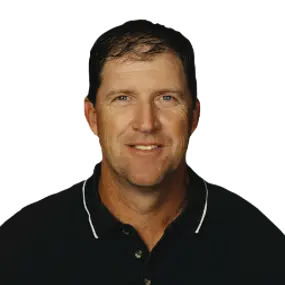
Steven Glen Jones (born December 27, 1958) is an American professional golfer, best known for winning the U.S. Open in 1996.
Early life and education
Jones was born in Artesia, New Mexico.[2] He was a semi-finalist at the U.S. Junior Amateur in 1976. He attended the University of Colorado and turned professional in 1981.[2]
Golf career
Early years
In the early years of his professional career, Jones did not have much success. He played the PGA Tour in 1982, but only made three cuts. His first top-10 finish came at the Texas Open in September 1985, and in 1986 he was medalist at the PGA Tour Qualifying Tournament, allowing him to retain his card for the following year.
1987–1994
Jones won on the PGA Tour for the first time at the AT&T Pebble Beach National Pro-Am in 1988. The following year, 1989, was the winningest of his career with three PGA Tour wins. In January, he opened the season with a win in the MONY Tournament of Champions. He won again the next week, in a playoff over Paul Azinger and Sandy Lyle in the Bob Hope Chrysler Classic. In June he captured the Canadian Open with a two-stroke win over Mark Calcavecchia, Mike Hulbert and Clark Burroughs. He finished the season a career-best eighth on the money list.
In November 1991, Jones suffered ligament and joint damage to his left ring finger in a dirtbike accident, and he missed almost three years of play as a professional. He played in only two events in 1994.
Comeback and U.S. Open win
Jones began his comeback in earnest in 1995, when he had two top-10 … Read More