Hale Irwin - Part 3 (1968 - 1976)

 Apple Podcasts
 Spotify
 iHeartRadio
 PocketCasts
 Overcast
 Amazon Music
 RSS Feed
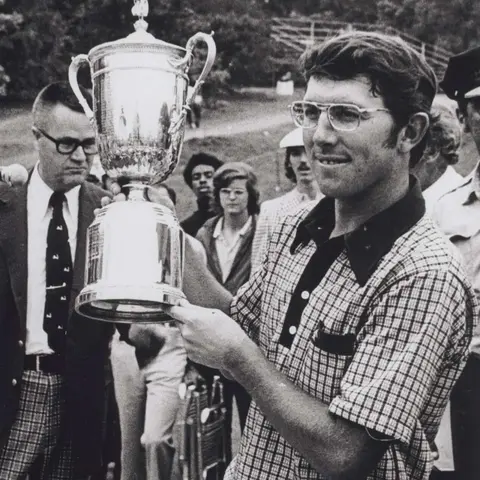
 20-time winner on the PGA Tour, Hale Irwin takes us back to his early days on Tour and shares the lessons he learned from mentors like Bruce Devlin and Dale Douglas. Surviving the pressures of being a "Monday qualifier", Hale finally closed the deal in his fifth year on Tour, prevailing at the 1973 Sea Pines Heritage Classic. Confidence from that first victory propelled him to success the following year at the U.S. Open at Winged Foot and at the Piccadilly Match Play at Wentworth GC. Listen in as he recounts his 1975 successes which included another Piccadilly win and leading the U.S. side with 4 1/2 points in his first Ryder Cup with Arnold Palmer as the captain at Laurel Valley. We conclude this episode with Hale remembering his improbable comeback win at the 1976 Citrus Open and the life lesson from his father to always finish what you started. Hale Irwin recalls his early professional years, "FORE the Good of the Game."
Give Bruce & Mike some feedback via Text.
Follow our show and/or leave a review/rating on:
Our Website https://www.forethegoodofthegame.com/reviews/new/
Apple Podcasts https://podcasts.apple.com/us/podcast/fore-the-good-of-the-game/id1562581853
Spotify Podcasts https://open.spotify.com/show/0XSuVGjwQg6bm78COkIhZO?si=b4c9d47ea8b24b2d
About
"FORE the Good of the Game” is a golf podcast featuring interviews with World Golf Hall of Fame members, winners of major championships and other people of influence in and around the game of golf. Highlighting the positive aspects of the game, we aim to create and provide an engaging and timeless repository of content that listeners can enjoy now and forever. Co-hosted by PGA Tour star Bruce Devlin, our podcast focuses on telling their life stories, in their voices. Join Bruce and Mike Gonzalez “FORE the Good of the Game.”
Thanks so much for listening!
10:37 - [Ad] The Top 100 in 10 Golf Podcast
11:20 - (Cont.) Hale Irwin - Part 3 (1968 - 1976)
Welcome to another edition of For the Good of the Game and Bruce Dublin. It's always a pleasure for me to have another Cardinal fan on the podcast.
Bruce DevlinWell, I tell you, this one of the great gentlemen that ever played the game. We've got again today. Uh 83 victories on the tour. And then, of course, up until uh Bernhard Langer came along and and and bested his 45 victories on the senior tour. Hale Uhrman uh was a name that lots of people have seen and admired, uh, not only as a player but as a person. And it's great to have him with us again this morning. Hale, thanks for joining us.
Hale IrwinWell, uh to the two of you, thank you for what you're doing for the game. I think it's uh terrific, and it's a pleasure to be just a small part of that and the the history and the traditions that uh your podcast has brought out uh that through others, and hopefully I can add a little something to that. It's uh it's a dynamic operation, what you're doing, and I think the results are showing that uh people are really enjoying it.
Mike GonzalezThat's great. Well, thanks for that, Hale. And uh it's it's wonderful to have you back with us. Of course, uh just to remind our listeners, the first time we got together, we talked about Hay Lerwin the early years. So we got you on tour at least and talked about you growing up, learning the game and so forth. And uh that was one of our most popular episodes. And then we decided to focus with the time we had uh remaining with your U.S. Open record. As we talked about your three U.S. Open wins in 74, 79, and 1990. And for listeners that are interested in in hearing about his three major wins, they can go back and listen to what we called Hale Irwin episode two. So today, let's see what we can get through. But we certainly want to go back to the beginning in terms of the uh the tour years. And I do remember that when we started our episode two, you talked a little bit about that first win on tour back in 1971. Having turned professional in 68 at age 23, you got that first win at Harvardtown, but uh probably always got to take you back before that first win. We always liked to hear about what life was like just coming on tour as a rookie and trying to learn where to stay, where to play, how to get to the golf course, you know, what where to eat, all that stuff. What was that like for you?
Hale IrwinWell, fortunately, uh Bruce's good friend and mine, Dale Douglas, was from Colorado, and and Dale really kind of was uh a big brother to me. Oh, there everyone was, uh, and I'm not excluding anyone, but I think because of the proximity of Dale living in Fort Morgan and I was in Boulder, and we both went to the University of Colorado, there was a kinship there. And and he helped me in the sense of not necessarily with my golf game, but your your life on tour is predicated on, at least in the past, is predicated upon your relationships, friendships with others, because there was no real hospitality. You you found out how to get from point A to point B, from one tournament to the next by, hey, where do you where do you how do you that's the best way to go? Where do you stay? Where's the golf course? Which side of town is it on? Those kinds of things. And then you kind of go from there. And that's where these gentlemen that went ahead of me were so instrumental in that I didn't have a clue. Uh, but you learn pretty quickly the ropes, but if if you don't have some somebody out there that's going to help you, and it's not necessarily that I go to Bruce, for instance, say, hey, how do I grip the club? Uh I that wasn't it, but I could go to him and say, hey, where's a good place to stay? And he'd give that to me. And that's very important. And now I'm more comfortable going to the golf course. I can I can now work on my game and I have to work on my life for that one week I'm in a strange town.
Mike GonzalezYeah. And you know, that came up a lot across our 99 interviews. Hale is uh Bruce would spot, let's say, uh a hold in a record somewhere where some world golf hall of famer went five years and didn't win. And his first question was, well, what was going on? Well, life outside the ropes was going on. Yeah.
Hale IrwinRight.
unknownYeah.
Hale IrwinYeah, it happens. And uh, and I I think we've seen the label way too many times of people that uh can't miss, they're going to be the next Arnold Palmer, the next Jack Nicholas, or the next great player. And they don't live up to that because there's too much hype. Uh, they're not grounded as well as they should be. And I think a lot of the players of yesteryear started on the ground. They were at ground zero. And I look at many of the players, international players. So take Bruce, for example. How does he get from Australia to the United States and become a successful player? I mean, that that to me just blows my mind how these guys can literally leave home. They're not gone just for a week. They're gone for months at a time, if not years, and have to maybe establish a residency in another country. And you that that goes far beyond uh what I can even imagine. How that affects your golf game? Uh untold misery, as far as I'm concerned, and trying to learn how to play golf and live at the same time.
Mike GonzalezWell, Bruce, you went broke at least once, didn't you? No, twice.
Bruce DevlinWell, I went broke twice. 62 and 63. Yeah. Ran out of money both times.
Hale IrwinYeah, and and and to whom do you turn? Uh, you're your folks are back in Australia.
unknownYeah.
Hale IrwinAnd the only people you really know are the ones on the tour, and they're probably broke too. Back in those days, there wasn't a whole lot of money to go around.
Bruce DevlinThat's right. Wasn't that around open?
Hale IrwinYeah, I I think uh uh and I mentioned this to Mike earlier is that I a suggestion that I had long ago was I think each player that before he gets on the tour ought to volunteer a week of his time to a tournament of his choice and understand what goes on to put on these magnificent events to play for all this money? What what is the process by which these people come together, buy these volunteers, friends, buy their own ticket, buy their outfits, donate all their time for for what? Well, it's for the good of the game.
Mike GonzalezYeah, yeah. That's a good point. So how many starts uh maybe you remember this? How many starts did you have before you picked up that first win on tour?
Hale IrwinOh I I don't know. All I know is that I was a Monday qualifier and I started in May of 1968, and uh through 68, 69, 70, uh I was I finally made the top, what was in the top 60. Yeah uh after uh so I was exempt going into 1971. Uh I had lost a playoff to Billy Casper at uh uh Rancho Fanta Santa Fe. You remember that, Bruce? I do.
Bruce DevlinYeah.
Hale IrwinThere in LA. I lost a playoff, I had a two-shot lead with four to play and gave it away, and Billy beat me. But by virtue of that, I did learn. Uh and in those those years that I was a money qualifier, I missed qualifying three times. And that is an empty week feeling, believe me. That's not one that you you want to have. So um, but when you when you do miss and you realize that you now you have no money and you're not making any money this week, uh, that you you have to improve. You have to find a way and to get yourself to the finish line. And I think that's a learning curve that uh hit me pretty hard when I missed that very first one. Uh the effort that you have to put in, the the tenacity, the concentration, the focus, all those things. Uh the the blossom is not there unless you go find it. It's not going to be presented to you. You have to go find it. And that's when I really kind of took notice of what's around me. I wasn't I wasn't a um a dare in the headlights anymore. When I saw Bruce Stablin, oh there's Bruce. And before it was, oh my gosh, there goes Bruce Stablin. He's weird. He's he doesn't look like a kangaroo, but he's weird. But you know, those those kinds of things you have to get over that. And uh so that I don't know how many tournaments in which I played, but I played just about all that I could as a Monday qualifier. You didn't have a choice, you you played. Yeah, and uh so that's what I did.
Mike GonzalezHow big a deal was it to make top 60 and be able to plan your life a little bit more?
Hale IrwinWell, that that's exactly right. You hit the nail ahead. Now you can have a plan that you can say, okay, I at least now I can I can play in these tournaments and maybe I take a little time off. Uh you can maybe start thinking about having a family. You can start doing things that constitute a life and not just uh that singular on tour, on tour, onto her, put your stuff in the trunk of the car, drive to the next site, find it, drive to the next site, trunk in the car, unload it. That that gets old real quickly. And that's we all pretty much drove then, I think. Bruce, you you and uh where you probably drove a lot too, didn't you?
Bruce DevlinSo absolutely.
Hale IrwinWe all were on the on the road. Uh we were road warriors as much as anything else. And boy, it's nice to put some of that behind you. Say, you know, maybe I'll fly this week. Maybe uh I can spend a little money and fly.
Bruce DevlinYeah, yeah, it's quite a different.
Mike GonzalezYou guys were road warriors long before GPS, too. Oh yeah.
Bruce DevlinWe sure were. Yeah, it was the hard that was that's probably the hardest part, I think, was you know, when you when you don't make a big check and then you gotta load up, you know, get in the car, drive 300 miles or whatever it might be, and then start all over again next week. It was not easy.
Hale IrwinWell, I'll I'll tell you the the hardest trip I ever made and why I did it, I don't know. We had played the Phoenix Open, then the next term was at Durral, and my wife and I, she's pregnant, and I drove that entire length because she couldn't drive, she was tired, she slept the whole time. And I drove across, we stayed the first night just outside, just on the still in Arizona. That next night I drove from there across all into Mexico, hit El Paso, drove all the way across the breadth of Texas to spent the next night in Lake Charles, Louisiana.
Bruce DevlinOh my god.
Hale IrwinAnd I don't know how far that was, but the thought of doing that now in in three days' time worries me out. I did it in one day, and now you gotta go from there on down to oh yeah. I just but that's what you had to do. There there were no choices.
Mike GonzalezYeah, it's not like Durell was in the panhandle either. Well, let's uh just remind our listeners of that first win when Hale broke through in 1971 at uh at uh the Seapines Heritage Classic at Harbor Town. He he won by one over over Bob Lunn. And uh uh and then it was uh it was gonna be an another couple of years before you got win number two. How good was it to validate that first win two years later at the same place where you won your first one?
Hale IrwinWell, uh Harbortown, when we first played there in uh it was 1969, I believe, uh was probably one of the harder golf courses that I had, and I hadn't played that many in my time, but I think all players would probably agree that it was probably the one of the hardest courses we had. Very narrow, wasn't extremely long, but again, different equipment in those days, it was uh had representative length, certainly. But it was very very hard. Uh very precise. You had to hit uh the ball in between the the trees, the the oaks, and you and Pete die and and Jack was involved with their with that. Uh you you had to hit precise shots. And I found that for me that really brought out things that I uh that were paramount in my game was that precision. You didn't have to I I was better off with tighter courses, tighter targets than I was open. For instance, uh a Lynx course. I I I used I never could quite focus on the target there, but courses like Harbor Town for me were uh up my alley. And that was over Thanksgiving. So it was a bit cool, but I did I did get there. I remember hitting a five-iron to the last hole. Uh and I knew it was well well hit, but my playing partner, Mac McClendon, I remember at the time, uh, saying, get up, get up, thinking it's going to hit in the front bunker, but I'm thinking, here, I've got this good feeling. I hear this get up, and I'm thinking, oh no, what have I done? But it got up on the green, but that uh, oh, I suppose I had maybe a 10 or 12-inch tap in.
Mike GonzalezOh my.
Hale IrwinAnd I thought that when I hit the putt, I thought the ball had stuck to the putter. Like it I had bubblegum on my putter. I couldn't shake the thing off there fast enough. But to get that first win uh is I think uh Bruce can speak to this too. You get that first win wherever it is, and it it's such a proud moment, and I think it establishes another standard, another bar by which you you might judge yourself, and uh then you have to move on. But I I learned so much from that, and yes, it it took me another almost two years because the the second one came in September, a little different conditions at Harvard Town. Um, but it helped me understand what it takes to win, and that doesn't come every week. It's it's it's hard to win. There's some very accomplished players, and sometimes you might play the best golf you can play and and you don't win. Other times you play pretty rotten and you do win.
Mike GonzalezYep.
Hale IrwinSo you have to learn there's more to it than just hitting the ball, it's managing everything else.
Mike GonzalezWell, it was a pretty comfortable win by five over Jerry Heard and Greer Jones. And uh, you know, of course, you both played there, you both uh placed well at Harvard Town. You know how tight the lines were that you had to play back 50 years ago. Can you imagine? I mean, if you haven't played it lately, how tight it must be now.
Hale IrwinWell, at the time, the first time we played, uh there there was no development on the golf course. It was just raw. You had your your oak trees and your swamps and your alligators and and there's fairway, and then there was sand and leaves and uh palmettos and you name it, it was out there. And as the years progressed, they got more and more development. Uh and those lawns that were now planted in the fairways, they started coming together. Uh, so you didn't have that rough, and those they wanted the views through to the golf course. And so uh Bruce knows as well as I when you're designing golf courses and you have the component of golf and the other component of uh housing, you have to have view quarters. And people living, they don't want to look at a tree, they want to look at the golf course, and so things open up, and uh so it it be it became I won't say easier, it became a different course. Some of the branches that were hanging out over the fairways or over the grains were cut because now you had people playing it as members, and it was just too difficult. So it's a different golf course now than it was. I'm not saying it's worse, it's just different, and and you have to adapt to that.
Mike GonzalezYeah. Well, you you come out of that uh second win in 1973, and and uh in 74, of course, in our first get together, we talked about your U.S. Open win at Wingfoot. But you also had a chance, uh, probably at the end of the year, I would guess, to compete in uh what then was called the Piccadilly Match Play. Why don't you tell our listeners a little bit about that event?
Hale IrwinOh, the Piccadilly World Match Play. Uh played in London at Wentworth Golf Club. Um I suppose it was at the time there weren't that many tournaments around the world. Bruce, you can help me out here, but I know there were some down in in Australia. Uh there were some in in the Far East, you know, in Japan. Uh, there were some in Europe, but at the end of the year, you're you're kind of limited to where you go. If you don't go down to the Southern Hemisphere, you're kind of limited to where you can go. But I think the Piccadilly was one of those, it was an eight-man tournament. Uh and I think as a US Open champion, you have that automatic invitation to go just about anywhere you want to, regardless of who you are. Uh that title will kind of leverage you into wherever you want to go. And so I went. Um you stop and think, okay, what what's it gonna what do I have to spend and what am I gonna make? So the the guarantee if you you've made the first round and you lost, you got five thousand dollars. Well that that's hardly pocket money for many of these guys today even think about. Yeah, right. Um but that was uh the open wind sort of validated, at least in my mind, that I am now capable of playing on the international stage. So uh that was that was the one that I went to play in. It was great to it was a fun event. Uh there were 36 old matches, there were only eight players. So you played the first day and your morning and afternoon match, and second day it was morning and afternoon, third day, morning and afternoon. So it where it wasn't only eight players, but they were thirty-six whole matches, and you you might be short of that, you might be long, but you know, it was a pretty grinding time. Yeah, um you gotta be fit. But I found for me uh match play kind of fit my psyche. Um I felt like on a 36 holes uh I could I could grind that out. I was in good shape with my college career, and I think I'd kept myself in good shape, and I I wasn't uh afraid of that, if you wish, but you you do get into some interesting situations in match play that you might not have metal play.
Mike GonzalezYeah. So was this the time when they were still giving you Bentley to drive for the week?
Hale IrwinOh, they gave you a Bentley with a driver. You got the back seat. Yeah. Yeah.
Bruce DevlinAnd if you were uh chauffeured around.
Hale IrwinIf you were a good boy, you you you I think if you're the winner, you got the Rolls Royce maybe the next year. So um if they gave you a uh a place to stay and and they it was staffed, you got the driver. I mean it was uh pampered big time. I had never been pampered like that in my life, and it was we had a lot of fun. It was very, very well done. And um, you know, knock on wood, and I I won that that year, and so the following year you get invited back as defending champion, and I won that year, and then you get invited back. So uh the third year I did lose to to a fellow Aussie who lost to Graham Marsh in a at 36 38 holes. That was it Graham? No.
Mike GonzalezNo, it was David Graham.
Hale IrwinDavid Graham to the dog. And later on I lost to uh Graham Marsh. Yeah.
Mike GonzalezYeah, I think that uh that third time, this night 1976, where probably would have been unprecedented to win three in a row, and you you guys had to go to extra holes, didn't you?
Hale IrwinWe did. Uh the dog made uh an up and down at the last hole, which is extraordinary. He had it's a par five. I'd I had the one-up lead, so I laid up my second shot short of the bunker at the green. He put his in the bunker uh in front of the green. He had a long bunker shot, kind of up tight with a high lip. And uh so I was pretty conservative with my third shot. I didn't, there's no way he's gonna get up and down. Oh, I'll be damned if he didn't hit uh one heck of a shot out of there about six feet from the hole and made it to to win the hole, and then he beat me uh on the second hole. Um But that's that's with match play. You you you you have to play your game. I think I played a little too conservatively, even though I thought I knew how to play match play. You have to go ahead and be aggressive because these guys can all play. They can hit shots uh that you don't suspect they can hit, but they can hit them.
Bruce DevlinYeah. And you should be expecting them to do it too. That's the that's the thing. You know, you say, well, I'll just I'll be I'm safe, he won't get it up and down, but you really the you should be thinking the other way. You know, I'm gonna have to make four. He will get it up and down. Yeah. Anyhow. Exactly. Great time. Things that learn along the way. Yeah.
Mike GonzalezWell well, that's right. Yeah. Bruce, let's go back to nineteen seventy five. Uh and his uh couple of wins there.
Bruce DevlinAtlanta Country Club, where you won uh by four over Tom Watson. That had to be pretty nice. And then uh then you go up to Butner Nashville and win the Western Open by one over Bobby Cole. So that was a nice year.
Hale IrwinOh it it uh certainly was I I remember in 75 um we were living in St. Louis my wife's from St. Louis and I had taken a few weeks off prior and I'd gone out into our yard there and we had some persimmon trees and now I now I know why persimmon was used as a driver head because I took I took I took an axe out and I'm gonna get rid of these trees this will be good training you know kind of work on my you know delivery of the golf club hit the axe well I first chop on that wow this tree is tough and my axe is not sharp anyway now old Mr. Stubborn here he's not gonna give up so he went down a couple trees but now I've got blood blisters under my calluses my hands are so sore that when I get to Atlanta I mean my hands they look like a boxer's hands they've got so much tape on them. But what the good part was and here again I I I learned again hey you don't do that kind of stupidity but then when I got there I couldn't grip the club real hard and I couldn't swing real hard. So the the hands went on pretty softly and the swing was very manageable. Did I miss a fairway the whole week? I don't think so because I couldn't hit it very far but I found it in every fairway. Now did I add at least a club to every shot? Yeah but okay just put it in the middle of the green and look what happened you win by a big margin just because you kept it simple you put it in a fairway and you put it in the middle of the green you didn't you couldn't take chances because your hands hurt too badly and I thought well you know that's the way you got to play at least for me that's that made a lot of sense on how to how to play a game like Atlanta Country Club anyway it's got a lot of hills and uh awkward lies but for me it was uh that's the way to play. Yeah 17 under uh tournament record that was pretty fancy well again you you put it on if you put on 72 greens not obviously it wasn't 72 but if you put on 72 greens in the middle of every green you're probably gonna make very few bogeys and you're probably gonna have multiple birdie opportunities which are if you can put a lick you're gonna make some putts so you're gonna end up under par.
Mike GonzalezYeah yeah yeah yeah well how'd you like Butler National?
Hale IrwinOh boy talking about hard courses Bruce I you played there didn't you Bruce I did I was there I was uh standing on the 14th T when those boys got whacked oh yeah yeah that was uh Sally and I were in the hotel and when that lightning hit I I remember Turner said if that doesn't get him off the golf course nothing will um oh boy so it's terrible but anyway uh I as I remember it was uh we we played uh was the weather was not the best as as we've alluded to but uh I remember all those Hawthorne trees uh they were everywhere if you hit a ball anywhere near one of those things you might as well hit it into a hazard because you couldn't get under that tree and hit it you couldn't be anywhere near the tree and swing because you got these big old one to two inch thorns sticking you everywhere um and then we were playing out of the grass which no one really liked because you hit flyers out of this grass all the time so here you are hitting on a difficult course a new course to us we had not played there before uh a strange course with some flyer lies and these hawthorn trees I thought it was one of the hardest courses I'd ever played but uh that that 14th hole that you mentioned uh that was the dog leg left I think over the lake correct and I I hit it in the right right hand bunker and uh I knew I had a one-shot lead and I've got a five iron of my hands trying to hit it over this out of this bunker on over the lake onto the green I thought well this is now or never and uh knock on wood the now came and knocked it on the green and it parred my win and beat uh Bobby by one shot.
Mike GonzalezYeah there was uh quite a bit of weather around uh I think you you you guys were at the U.S. Open at Medina the previous week when Lou Graham won there was weather issues there and then uh I think you had a 36 hole finish in this event on Monday.
Hale IrwinWe uh we played a long time yes it was uh but again it's you do what you have to do and you you learn along the way that you can't always expect you should expect the unexpected so you're not surprised. You know kind of open up your the filter and let some of these other things in but when you're playing and and Bruce knows this as well as anybody when you're playing you got to close that filter. Yeah but you know in preparation you have to keep it open so you're not surprised but when you're playing you close it down and just think of that that shot and that shot only for the for a few seconds.
Mike GonzalezYeah yeah so uh later that year in 75 you talked about your second consecutive win at the Piccadilly and then uh of course we had your first Ryder Cup in 1975. What do you what do you remember about that?
Hale IrwinOh boy that was uh I was so so excited and and uh delighted I made the team arnie was the captain we were playing at Laurel Valley and you those of us that knew Arnie and and Bruce knew him very very well he was not a man of a lot of words more action than words and uh the one thing I can remember is again in the team room uh again this is my first time so I'm I'm looking to see what's going on and about the only thing Arnie said was I don't want them to win a point I everybody I don't want them to win a point and that was that was Arnie okay here you are playing at Laurel Valley in his backyard and the captain Arnold Palmer says you don't want a point well you go out pretty charged but he put me uh in my first match with Gene Littler and it for me it was probably the ideal pairing I'm playing with an experienced player he's uh a major championship winner a really nice guy uh and his game and my game really were very very similar we hit the ball about the same distance we thought about shots very similar uh preparation uh what club to hit so for me it was a very relaxing exciting but very stabilizing time to go out and play and I we won our match quite handily. Now on the flip side of that I went out that afternoon with Billy Casper and another really nice guy but Billy and Gene were two different their games were totally different. And now I'm playing alternate shot with Billy. Well I I when you're playing alternate shots you kind of have to know what to expect. With Billy you never knew quite what you were going to get I remember the eighth hole par three for then a relatively long hole Billy I I think he chunked it or topped it about 50 yards off the T. And you don't expect that you're gonna have you know over 150 yards second shot to a par three but fortunately we went on to win that but uh I I had a a great learning experience and what I did learn and maybe more importantly is that other team they were trying just as hard as we and I respected that. I didn't want to belittle them because I found that they were trying just as hard and at least in those years early years of my Ryder Cup days we had probably you know 10 to 12 really good players. They had probably six to eight so we we could outnumber them. That doesn't mean we're automatically going to win but that's how we won as comfortably as we did because it just became a number scheme. Yeah. And uh then when they brought in Europe into the equation now you're bringing in the biosteros the the Pineros the uh the longers and people like that that are very strong from the continent that turned the balance of power quickly.
Mike GonzalezYeah yeah as uh you're right as a reminder to our listeners uh we're back in uh in 1975 at the Ryder Cup at Laurel Valley and and uh this was GB and I only uh Euros were yet to to come on the scene that was going to happen pretty soon but uh Hale Irwin leads the team as a rookie with four and a half points uh not a bad start to your writer cup career and as I look at that roster you played with Hale I'm counting no fewer than nine Hall of Famers on that U.S.
Hale Irwinroster that year yeah it's uh like I say it it was a pretty stout team uh and I I think one of the things I remember is Brian Barnes who was uh from Scotland one a really really nice guy a different kind of a guy uh he and I shared the same birthday so uh Barnesy we just kind of had a good time together but he smoked the pipe he he didn't and you knew him well Bruce uh yeah I did and I was quite a character I think he was a character he loved to fish but he Jack Nicholas drew Brian um in one of the morning matches and and Brian beat Jack and Jack said I want to I want to go back out to play Brian this afternoon. Well he did and he lost again so I just for whatever reason that just showed that even though you're Jack Nicholas and Brian Barnes who's Brian Barnes you know no one really knew Brian Barnes but you can't discount the talent level on the other side it could anything can happen.
Mike GonzalezYeah that was of course Sunday singles when uh Brian Barnes went back to back against Jack after Jack asked to have him right afternoon.
Hale IrwinSo be careful what you ask for well I think it's just a good point to to understand the psyche of the other team too they are just as proud of their team and their presence on that team in their country as we are. Yeah and sometimes we get ourselves so encapsulated in our own little world that we forget that there's other people out there that share those same values and those same beliefs that might wear a different flag. Right. And it's important to remember that.
Mike GonzalezSo you mentioned smoking Brian Barnes which reminds me of a story we heard from Jack Nicholas on the show last week uh which we'll get to because we're talking about uh 1976 and you go out and you win the Glenn Campbell LA Open at Riviera by two over Tom Watson and why don't you give us recollections of that victory and then we'll we'll come back to the the smoking story. Well you know LA with all of its glitter and its glamour it uh Riviera Country Club was uh uh an excellent golf course I think it uh sure is it was one of those one of those courses that you you had to play very carefully you could make some pretty big scores um but for me it was a a time to to move on i yes I had won an open I'd won some tournaments at 75 but now you've got the Glenn Campbell you kind of got the spotlight going and I just felt like I was really starting to get into my a winning stride and uh not that you you know you're gonna win each week you don't but I I felt very good going into that week I felt like it was uh this is the kind of golf course I like you have to hit different kinds of shots you kind of have to think your way around it it's not just a pounding there are holes you can pound it and holes that you have to be careful um but it was the the kind of course that I felt like if I played my game I I could win and you know once I got into that mindset uh uh I I had a very very good week yeah so uh little story from Jack Nicholas uh Bruce you remember at uh Jack's playing in the uh uh somewhere in Europe maybe at the open championship I don't know do you remember Bruce where they were playing when uh Len Campbell uh asked about uh getting a ride back on his jet uh I think I think I thought he said it was at the uh I'm not sure I thought he said it was at Andrews but maybe it maybe it wasn't anyway long story short Jack's got his plane and and and Glenn's there and and and he goes sure Glenn you can you can hit your ride come on and and so off they go and uh they're they're mid flight and and Glenn asked Jack uh Jack do you mind if I smoke? And and we had just with Jack we were just talking about smoking on tour and how he and Arnie used to go back behind the green to glory to bum a cigarette back in the early days you know sneak in the trees so nobody could see them on TV or anything. And uh so he brings this story up and so Glenn asked if he could smoke on a plane. And of course that was very common back then as you know and uh Jack says sure no problem. Yeah imagine he pulls up lights up a joint on the trip back home so here he is smoking wacky on Jack's plane Jack says put that out as a matter of fact he says I want you to eat that you eat all of it because I'm not gonna get my plane confiscated when we stop the thing of a story. Oh my well anyway uh moving on uh uh later that later that stretch you probably go from California to Florida I would guess uh to play uh down uh in the Citrus Open in 1976 at Rio Panar Country Club was that back when you guys were still occasionally using local caddies uh yeah I we hadn't really gone to yeah I think there was not everybody had a Tour caddy at the time correct um I by then I was using my a caddy a tour caddy but uh I think they were still interspersed with some some local caddies yes uh but the the thing that that I remember about that that week is and it's a lesson I I hand out to every young person that I can is after I shot at opening 74 I went to Wade Cagle and Bruce knows who Wade he was one of our tour officials and I said I'd played some I was tired I wanted to go home I wanted to go see my family I was out I'd had it 74 said how do you withdraw and he said well you informed me so that's good so I go into the locker room I start cleaning out my locker and I felt the presence of my father who had told me as a young man don't start something you can't finish now I've got this thing on my shoulder telling me don't start something you can't finish and it felt odd taking all my gear out and I thought to myself okay put it back play tomorrow then go.
Hale IrwinSo I go back to the hotel I like make new airplane reservations I I tell the hotel I'm checking out the next day I pack up I go the golf course and I shoot 64 now I make the cut okay now I'm gonna spend two more days so I go back to the hotel I unpack I make new airplane reservations for Sunday I follow up that 66 with or 64 with a 66 on Saturday and a 66 on Sunday. Now I'm tied with Kermit Zarley for the lead and uh we end up now I've got to change all those reservations again. Sure so we go we play two holes pretty much in the dark and we have to come back on Monday. And change reservations again okay yeah yeah that's exactly right so I'm thinking here's this here's the hole we're gonna play I'm gonna I want to hit my drive here I want the second shot to be under the hole because it's a steep and I probably went out and hit that drive within five feet of where I wanted to and I hit the iron just exactly where I wanted to left myself with a little well maybe 12 or 15 foot or up the hill. Kermit hits his past the hole maybe 25 or 30 feet downhill and I'm thinking I'm looking pretty good here. And uh anyway Kurt hits this putt it goes down hits the low side of the hole curls around sits on the top for seems like 15 minutes and then falls in. So I mean he makes a hell of a putt. Now I have to make it to tie. And I get over the putt and never in my life has this happened I thought I was having a heart attack my heart was beating so hard I had to back away I went over to the side of the green and kind of walked around a little bit what in the world is going on here I went back over it and it starts up again. Ba boom ba boom ba boom I said you gotta hit it trust it hit it went right in the center of the hole so anyway shorten the story a bit I win three holes later so I I went from withdrawing to winning the tournament yeah because I followed my father's advice I finished it and I finished it well but I didn't quit I tried to but he wouldn't let me so I I try to tell that to a lot of young people even when you think it's bad hang in there it can turn around gotta keep going great story.
Mike GonzalezWell then later you get an opportunity to play in your third uh consecutive uh Piccadilly and and this is the one you lost to David Graham in a playoff uh but uh by that time was it did they ever go to 16 players? Because this was sort of a Mark McCormick initiated event right concepted with bringing the top players in from around the world I I believe so Bruce was maybe when when did they play prior to that?
Bruce DevlinI I can't remember when it started uh maybe the early 70s I'd say no you know yeah it could have even been the yeah I think it was the early 70s.
Hale IrwinI know I got to go there one time which was a lot of fun like you said you know different different sort of golf tournament but yeah I believe it was part of the McCormick uh deal back in those days he he had his finger in a lot of things didn't he oh yeah yeah uh but I I I think it was uh they did expand the field because I think they felt like the popularity of the of the tournament required more players and uh the more they brought in then uh the more the the fans were going to see and it was rightly so I think it was uh yeah good enough established itself as an eight man event but later on it it it certainly carried the day with uh double the field yeah particularly when you're in match play you lose your half the field every day so I think the players on television wanted to see more more golf yeah then it's thank you for listening to another episode of for the good of the game that's when McKay and please wherever you listen to your podcast on Apple and Spotify if you like what you hear please subscribe spread the word and tell your friends until we teat up again for the good of the game so long everybody
Professional Golfer
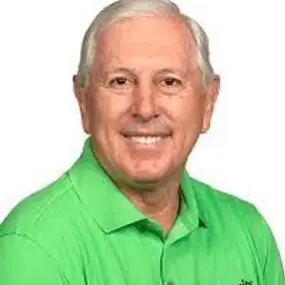
When it comes to the toughest competitors and most analytical course managers ever to play, Hale Irwin is near the top of the list.
Irwin’s distinction was excelling when the conditions were toughest, and his three victories in the U.S. Open attest to a sharp mind, a solid game and an iron will. It was never more apparent than at the 1974 U.S. Open, when Irwin persevered to win the so-called “Massacre at Winged Foot” with a score of seven-over-par 287. In perhaps the most difficult conditions a U.S. Open has ever been played under, Irwin shot rounds of 73-70-71-73 to win by two strokes.
Five years later at Inverness, on another punishing U.S. Open layout, Irwin shot even par to win by two. The scenario was quite different in 1990 at Medinah Country Club. Irwin was 45 and had not won on the PGA TOUR in five years. He received a special exemption to get into the championship. Lurking, but never in the thick of it until the final nine holes, Irwin made a 50-foot birdie putt on the final green that tied Mike Donald. The next day he fell behind but drew even when Donald bogeyed the 18th. Then, in the first sudden-death finish ever in the U.S. Open, Irwin birdied the 19th hole to win. Irwin became the oldest winner of the championship.
“When I got onto the tour, I relished the harder courses because I just felt I was going to try harder.”
From 1971 to 1994, Irwin won 20 events on the PGA TOUR, on such difficult courses as Harbour Town – where his first, second and, at age 48, final PGA TOUR victories came – Butler National, Muirfield Village, Rivier… Read More