Hale Irwin - Part 6 (The Other Majors)

 Apple Podcasts
 Spotify
 iHeartRadio
 PocketCasts
 Overcast
 Amazon Music
 RSS Feed
 In this sixth installment of our eight-part conversation with World Golf Hall of Fame member Hale Irwin, we dive deep into the heart of major championship golf and reflect on the enduring lessons of a remarkable career. Hale, always thoughtful and candid, revisits his storied experiences at Augusta National, sharing his personal connection to the Masters and what it meant to walk its hallowed grounds—both as a competitor and a steward of the game’s history.
With insight only a three-time U.S. Open champion can provide, Hale opens up about how his game fit—or didn’t fit—the iconic venues of each major. He offers a behind-the-scenes look at the mental and physical toll of playing The Open Championship, revealing why family time, the grind of travel, and those rainy days with fogged-up glasses sometimes outweighed teeing it up across the pond.
From the roars of Augusta to the winds of Royal Lytham & St. Annes, Hale reflects on the challenges, triumphs, and close calls—like his proud 64 at the Masters and duels with legends like Seve Ballesteros and Tom Watson. We also touch on the PGA Championship, and Hale’s personal choices around scheduling, family priorities, and staying true to his own rhythm, even in the face of major championship expectations.
With humor, humility, and unmatched perspective, Hale Irwin shares stories that remind us that greatness isn’t only measured in trophies, but also in the values that guide a life in golf. Join us for another timeless chapter in the life and legacy of one of the game’s true champions.
Subscribe and follow FORE the Good of the Game for the next two episodes as we continue the journey with Hale Irwin.
Give Bruce & Mike some feedback via Text.
Follow our show and/or leave a review/rating on:
Our Website https://www.forethegoodofthegame.com/reviews/new/
Apple Podcasts https://podcasts.apple.com/us/podcast/fore-the-good-of-the-game/id1562581853
Spotify Podcasts https://open.spotify.com/show/0XSuVGjwQg6bm78COkIhZO?si=b4c9d47ea8b24b2d
About
"FORE the Good of the Game” is a golf podcast featuring interviews with World Golf Hall of Fame members, winners of major championships and other people of influence in and around the game of golf. Highlighting the positive aspects of the game, we aim to create and provide an engaging and timeless repository of content that listeners can enjoy now and forever. Co-hosted by PGA Tour star Bruce Devlin, our podcast focuses on telling their life stories, in their voices. Join Bruce and Mike Gonzalez “FORE the Good of the Game.”
Thanks so much for listening!
08:25 - [Ad] Don't stress! Get him a Volleybird golf gift box.
09:11 - (Cont.) Hale Irwin - Part 6 (The Other Majors)
Straight down the middle. It went straight down the middle. Then it started to flow.
Mike GonzalezWelcome to another edition of For the Good of the Game and Bruce Devlin, our Hall of Fame guest today. While he's certainly known for his record in the major championships, he may be better known as uh a guy that likes to just play three rounds. That's something you old guys kind of got used to, wasn't it?
Bruce DevlinYeah, well, yeah, he did he did uh pump in a few uh four-round uh victories there with his majors on the senior tour. But uh it's great to have Hale Irwin back with us again. 45 victories on the senior tour, second only to the uh gentleman that I thought would never break your record. Anybody would ever break your record, but uh Bernhard Langer holds the title now at 47. Did you think you yours would last?
Hale IrwinUh well, Bruce, I I don't know. I I I never really gave it much thought, honestly. Uh I think you go out and as you well know, when you're competing, you don't think about is this going to be number 22, or is it going to be number 13? Is it going to be you don't think of those numbers? And and in the end, somebody might tell you how many you've won. You think, well, that was good, but you know, if I'd have just done this, I could have won that. If I'd have done that, I could have won this. And I don't I don't like to get into that going backwards. To me, that's sort of negative thinking. Yeah. I I much prefer to say, okay, let's keep going forward. And um when I when I left, uh just a quick correction, you know, shows you your age, Bruce. You keep calling it a senior tour. You know, it's PGA tour championship. I know it's the champions tour.
Bruce DevlinI know that. I still call it the senior tour.
Hale IrwinMy last official event was uh oh, probably what three and a half, four years ago. And uh and at the time I was uh I'm 79, so I would have been 75-ish, I guess. And just thought, how how long am I going to continue this? You know, packing that suitcase and going to airports and you know, all of that, as we all know, that can get tedious after a while. And and my heart was kind of not in it the way it once was. And when that focus leaves, yeah, uh, when it has any kind of doubt attached to it, that's when your game suffers. And yes, you can go hit the shots, but you don't you don't have that that undefinable to get it up and down or to make that putt for something. You don't have that feeling of I need to do it. The feeling becomes I want to do it. Yeah. And that's a totally, entirely different uh concept that that I had been accustomed to after all those years of playing. So uh when I decided that it's time to pack it up, it was, I think for the next year or so was really kind of difficult. Uh I found it hard to hang around any tournament, whether let's say go to a regular tour event, go to the Masters, for instance, or go to U.S. Open or go to any event, particularly a champions tour event. Uh it was really difficult not to want to jump back into the fray. And uh I just kept telling myself, uh, I made that decision. I'm not gonna go back on it for the very same reasons I'm I'm doubting myself now. I was doubting myself then. Yeah, and I found that it was probably the best thing for me to do at the time. Plus, you know, how many years do you have to finish off that, you know, that proverbial bucket list? I don't have a bucket, I have a barrel. I gotta get into that barrel and do the things that uh maybe you've put off for years and years and years and get around to doing before you can't do it anymore. Gotcha.
Mike GonzalezWell, Hale, uh, welcome back to round three. That's kind of why I alluded to you guys liking uh three rounds. We appreciate you coming back to us to kind of put a bow on your life story. And as our listeners know who have listened to parts one through five of Hale Irwin's story, uh we've covered a lot, but there's still uh a bit to cover, including what you've talked about, the uh the champions tour. We thought before we got to that, we'd just touch briefly on the other three majors we really haven't spent a lot of time talking about. One you just alluded to, and that's the masters. And uh we thought we'd just kind of uh get your sense of uh what Augusta National meant to you, what the Masters meant to you. Was it suited to your game? What was that experience like over the years?
Hale IrwinWell, I I don't think there's very many uh professionals or for that many golfers alive that don't look forward to the masters. Uh it certainly is the kickoff of the uh the golf season in many parts of the country that time of year. I think from the professional's perspective, we've we've had you know three to four months of golf prior to that. Uh so there is that that warm up session, if you want to call it. I don't know as anyone pinpointed that tournament quite as specifically as did Jack Nicholas. And with all the green jackets and all the tournaments Jack has won, I think it it proves that he built his schedule around them uh the masters and other majors. Uh I didn't treat it, I didn't try to treat it any differently than other tournaments because I didn't want it to overwhelm my schedule. I didn't want it to be uh such a focus that I I lost weeks on both sides of the Masters. Now, did I enjoy it? Absolutely. You gotta be out of your mind not to want to play in the Masters. Yeah. And uh every trip there I thoroughly enjoyed it. Now, did it fit my game? Uh probably not as well as other courses might. Uh being a fairly straight driver, I felt like at least back in those days, uh, you did have some concessions off the T. You didn't actually have to hit the ball right down the middle and keep it between the trees because the corridors are fairly wide, beautiful as the course is, uh, but I always felt like it was a second-shot golf course. Uh you could put the ball in the fairway, but you really had to be careful where you left your ball on the green. Uh and as as Bruce knows back then, before they really planted the new grass, the new bent grass, it was a little bit easier to get it closer to the flags. You didn't have those slopes, all those undulations and contours in the greens, when they put it in the bent grass became essentially bigger. It became faster. The ball rolled off more. Absolutely. So you when you play it, you have to kind of be careful where you're going to attack. And if you've got a seven iron in your hands, your attack mode might be a little different than if you've got a five-iron in your hands. And I I think the players that that drew the ball, hooked the ball, uh, that course probably fit their games a little better. Uh they got a little extra roll down the hills, up whatever it may be, a little extra. Take that one less club uh that you might be a little more comfortable. So uh I thoroughly enjoy it. In fact, I I still go back there each year just to kind of hang out and see what's happening because it is uh a real thrill as far as the game of golf goes. It's it's certainly one of the best.
Mike GonzalezYeah. I think kid some of the kids today, I think they'd ask the question, Hale, what's a five-iron?
Hale IrwinThat's true. That's true. They've got about six wedges in their bag.
Bruce DevlinAnd and hit them as far as we hit a five iron.
Hale IrwinOh, isn't that the truth? It's just it's almost appalling to watch these young people, men and women, they all hit it so bloody far, it's unbelievable.
Bruce DevlinYeah, it is.
Mike GonzalezIt's crazy. I I'll ask you if you recall a story that Fuzzy Zeller shared with us. Uh, he recalls uh in his visit with Bruce and I that his first practice round at the Augusta National, uh, he remembers playing with you, and you took the time out during the back nine to walk him over and tell him about the history of each of the monuments on the back nine. You remember that?
Hale IrwinSure. Oh, yeah.
Mike GonzalezOh yeah, you remember.
Hale IrwinThat wasn't that long ago, Hale. Well, I think through the years, if you don't take in some of the uh historic ramifications of what has happened at that golf course, uh then you you're failing to take in golf. Uh I uh they there's something behind each story. There's there's a reason why. The Gene Sares and Double Eagle at 15. Uh, you know, the the bridges, why are they named that? I think those kinds of things uh have to be a part of the lore of of Augustine Ashell and the Masters. And if you don't take that in, then you're missing a huge chapter.
Mike GonzalezYeah, and and I'm sure when you got to the eighth T, you mentioned to Fuzzy uh that uh Bruce Dublin had a had a double eagle on that hole, too.
Bruce DevlinThat's the easiest five five.
Hale IrwinI I have finally learned something today. It's taken me a couple hours. Devil, I didn't know you made a two there.
Bruce DevlinYou did know that.
Hale IrwinNo, I didn't. I didn't think you could hit it that far in two. Yeah.
Bruce DevlinYeah. Well, it's sort of interesting, really, when you think of it. Four power fives. There's been one double eagle on each of the four power fives. Sarazen, myself, maggot, and uh Oost Hazen. At two. Oosten two, Maggot at third thirteen, mine at eight, and Sarazen at fifteen.
Hale IrwinWow.
Bruce DevlinIsn't that amazing?
Hale IrwinWell, you have just you have just you got another level on the bookshelf for me.
Bruce DevlinYeah, how about that?
Hale IrwinYeah, that's pretty good. I I I didn't know that. Well, I do now. Well, thank you for the information.
Mike GonzalezSo you had four top fives. Did you ever feel like you really had a chance in one of those uh high finishes?
Hale IrwinUh certainly. Um I like to start every tournament like you have a chance. Uh I I felt like my game certainly through the mid-70s up into 1980, kind of there where I was having those good finishes, I was probably playing uh the best part of my game was control, keeping it in play, hitting a lot of greens. Uh and and I think for me, I was leading in one round and I'll after two rounds, and I'll forget I'm teeing off the first hole and walking down off the tee, and I'm looking around, and there's not very many people walking with the I'm leading the tournament and then the last group, and I can hear the roars out on the golf course. You know, they're okay. Jack's out there, and Arnie's out there, they're following other people. So I was not a household name at Augusta National, which was fine because I understood that.
SPEAKER_04Yeah.
Hale IrwinUm, but I think um there, I when I kind of look back at the record, I think I played the par threes probably better than most. I think I was ahead of the curve there. I I think I held my own on the par fours. Uh I probably slipped on the par fives. Because I I felt like they were I had go points that I would go for the green. Now uh many of us didn't opt to go at number two because it just you couldn't keep it there. Uh the same for number eight, other than I couldn't hit the ball as far as Bruce, apparently. So yeah, I I've been on that green, but you know, uh and around it, but that's a tough second shot to to get it on. Yeah. Uh 13, I had a definite goal point. If if I could hit a four wood, I would go for it because it it gave me elevation, I could get it in the air. If it was a two or three iron, I didn't go for it. Yeah. So I in fact, the first time I played there, the very first day, I laid up, made an eagle because I pitched it in. I thought, well, that why don't you just do that all the time? Yeah. Um and then at 15, I think uh that was reachable. But if you're going in there with a long club and you hit that green and it takes a big bounce, you're in the lake over. So I I didn't feel like the par fives necessarily fit my uh my game, and I think therefore I didn't play those maybe quite as successfully as some of the other players. I didn't feel like it was worth the chance.
Bruce DevlinYeah.
Hale IrwinSo uh were there times that I could have won? Absolutely. Uh were there times that I I failed? Uh like I say, that that year I was leading, uh I I didn't play particularly well over the weekend. Um one of those years in there, I can't remember which one. I I played the last day. I I started two over par, and my goal was to finish under par for the tournament. And I immediately birdied one, two, and three. And I'm thinking, well, you're there now, what? You've got 15 holes. Uh so I went out and made five more birdies and I shot 64. But if we remember, that was the year that the Jack and Tom Weisskopf and Johnny Miller kind of got in that shootout on the back nine. Jack ultimately winning. But uh, I couldn't catch those guys. I caught everybody else, but they were they were running faster than I. I couldn't catch them. But nevertheless, you know, I I was very proud of the 64 around Augusta National. So I I could do it, I just didn't do it frequently enough.
Mike GonzalezYeah, yeah. Well, let's move on to the Open Championship. Uh, of course, uh as a three-time national title holder as an American, that you know, to most of you guys, the U.S. Open, there was nothing better. That's our championship. Uh to a guy like Bruce Devlin, of course, the Open Championship meant a lot because uh of all the history around uh Great Britain and their expansion throughout the world, including Australia. Sending all the convicts to Australia. Among other things, yeah. Uh so let's talk about the open championship. First, I guess just your memories of the various venues you got to play. What were your favorites? What were your least favorites?
Hale IrwinWell, uh, before I get into that, Mike, I think uh I did not play in each open championship that uh I did I could because two things that were paramount in my mind was that one, my kids uh were out of school in the summer, and to really play the open championship effectively, I think you needed to go over and prepare early, get yourself settled in. So that was at least two weeks out of the summer schedule I had a chance to be with my children. Yeah. So I didn't always choose to go over and play. It kind of depended on maybe where we were playing, how what was going on at uh in my home, what the schedule was. And secondly, like both of you, you're wearing glasses. And as Bruce well knows, back in the days, it rained and blew almost every day. And when you wear glasses, it's difficult because there's there's only one way to hold the umbrella, and that's to the side. You don't put it over your head, it's to the side. Yeah, it's a good thing. So keep that focal point dry on your glasses was really hard. Yeah. And I guess thirdly, is that I've never really really been a good cold weather player. Uh I find that my shoulders get up around my ears and I'm you know, I'm cold, I get really short and and quick. So for me, it was not the greatest of uh times to play. In as much as I really enjoyed it, as far as a competitive experience, uh I I really didn't have each trip over there, I I went over some trepidation. You can't do that. Yeah. But you know, in what is 80 whenever it was, 79, I guess. 79. 79. Uh I was leading going to the last day, and uh Sevy ended up winning. And uh I I just I it was really hard for me to go out and play. I I love playing with Sevy, by the way, because he was he was a character, he was he he brought out the emotions in in every player with whom he played. And uh I was emotionally I was ready. My game was not, I just wasn't playing particularly well. I was just hanging on to the blackboard with the fingernails going down the uh and you get under those conditions and you have to be you have to be spot on, and I wasn't. But I always enjoyed, you know, I finished second behind Tom Watson one year, Andy Bean and I tied. So I had my chances. Yeah. But again, what you say, what venues? Well, I I didn't go to all the venues. As in as much as I I look back and say, well, why not? Well, the reasons are overpowering. Well, I just stated I I like to be home with my kids and and take them to baseball practice or take them to the golf course or swim here, whatever it was.
Mike GonzalezYeah. Well, you know, one thing you didn't mention, Hale, and and most guys have uh perhaps elite players like you, it wasn't as much of a factor, but that was the money.
Hale IrwinYeah. It was. I I I think and and Bruce well knows that back in uh when he was playing and when I was uh playing, uh you played nearly every week because you didn't play for a lot of money, so you better play to make some money. Yeah, right. In fact, when I started the tour in May of 1968, and Bruce, you you'll remember this, they they cut to 70 in ties like they've always done, but they only paid 50 in ties. Correct.
Bruce DevlinYeah.
Hale IrwinSo you could make the cut and not make the my first tournament. That's exactly what happened. I went down, I led qualifying. I thought, boy, I'm I'm in the tournament. I made the cut, great, but I made no money because I finished out of the top 50. I thought that that kind of sucks. That's pretty good. So you learn quickly to choose where your game fits, where it doesn't. As a rookie, you play all the time. And I think if you go play in the open championship, uh, just if you have any degree of want to know anything about history, you have to go play the old course at St. Andrews. Yeah. Uh uh the venues I played, I think I Muirfield was probably the one I I enjoyed the most. Uh, but they're they got some great venues. It's a different kind of golf than what we find here in the United States. Uh Bruce, down in Australia, I guess along uh the roll of Melbourne and on that that the sandbelt area there, you've got some courses that are similar. Yeah. But uh there are not too many courses quite like the ones you find over in the UK. No, I agree with you.
Mike GonzalezYeah, no question. Uh yeah, I mentioned the money thing, uh, just one thing that I recall. Uh, and I think we heard this from Dave Stockton, because Dave didn't make that trip for a lot of the same reasons you cited. Family, and it took a lot of time, not a lot of money. We talked about 1968. Uh I forget uh the open championship was at uh I think at Carnoostie, and uh uh Lee Trevino decided to stay home because they had this tournament called the Greater Milwaukee Open. First prize was forty thousand dollars. Uh I don't know if you'd recall what the first prize the open championship was back then. It was five thousand pounds. Yeah. So Lee says, no, I'm I'm gonna stay home. And and of course, I don't know. I think Stockton won that GMO for 40 grand, but it was for a lot of guys, that was a major uh decision point because unless you won the thing, you were you were money behind.
Hale IrwinYeah. Very true. And I think that was the uh the tipping scale for a lot of people because A, you had a a long trip, it was an expensive trip. Uh and and back then, and I say back then it doesn't seem that long ago, but we didn't have the hospitality that we do now, particularly uh overseas. Uh, we might have some, but even here in the United States, we really didn't have the hospitality committees set up in the tournaments that just rolled out the red carpet for us. You pretty much were on your own. I might have to go to Bruce and say, hey, Bruce, where do you stay in Greensboro? You know, how how do you get there? What's what do you do in Milwaukee? You have to turn to the veterans. Uh now when you went overseas, you were on your own. You it it was word of mouth, and you better have something planned, otherwise you could be spending the the time in someplace far, far away from the the venue.
Bruce DevlinThere was one other negative too, with uh going playing in the open championship was back in those days the PGA was right behind the open. You know, where it was a fall tournament back then. Now it's now it's of course spring. But uh so you you know you had you had all that expense, and then you travel over and back and then get ready for the PGA, it was uh a little more difficult, I think.
Hale IrwinWell, it certainly wasn't schedule-friendly.
Bruce DevlinYeah.
Hale IrwinUh but again, if you put aside all those and say, oh, those don't amount to anything, uh, I'm gonna go play in the open championship. Well, then you that's just a different perspective, a different way to look at it. And maybe that's why some of those players that played so well uh achieved their their greatness. You know, it's specifically Jack and uh Tom Watson, you know, and uh Nick Faldo, but that was Nick's home. So you you just kind of you have to weigh the consequences of trying to reap the reward.
Mike GonzalezYeah, yeah. You mentioned a couple of your uh uh your good. Chances. One you mentioned it was 1979, that was at Royal Litham uh uh opened with 68-68. You still held the lead uh after 54 by two shots, and then as you said, uh your game just wasn't what it needed to be to prevail, I guess.
Hale IrwinIt it was not, but that's a poor excuse because that last day played with with Sevi. And he hit that fair that day out of the 14 holes aside from the par threes, he hit three fairways. Three bloody fairways.
Mike GonzalezIsn't that the formula for success?
Hale IrwinHe wins the tournament. Now I think Bruce, you and I, and anybody would say you've got to hit the fairways in an open championship to win.
Bruce DevlinEspecially around there with all the bunkers.
Hale IrwinHe hit three fairways, and he was absolutely magical around the greens. Uh, of course, the people were really pulling for him, and here I'm I've got the brakes on, I'm going backwards. But at the same time, it was uh well, I think we all might remember the the what was it, I think the 15th or 16th old par five. He hits it in the car park. He's hit it out there in the middle of this field. Yeah, it was not out of bounds because I went to the the referee walking with our group and I said, Isn't that out of bounds? He said, No. I said, You've got to be kidding me. The cars are parked there. They had the keys to the cars where he can move them and and he could play. And he ended up making a birdie on that hole. So I'm thinking, oh my gosh, this this must be his week.
Mike GonzalezYou had another uh close one. Uh this was in '83. Uh you're at Burkdale, which uh you know, down in the Liverpool area, a big, big golf course. Uh and uh yeah, you had a you had a shot, you were uh T2 by one. Tom Watson won that one, but uh you must have had your game that week too.
Hale IrwinWell, I did, and I'll bring it up before you do. Uh I was playing with I was playing with a countryman of Bruce's uh Graham Marsh in the third round. And I don't know, some or three on the back, I don't know, twelve or whatever it was. And I had gone up, I had putted my ball up to perhaps six inches from the hole, and I had a a bullseye putter. We all know what well not all, maybe some of you listeners don't, but uh I had a bullseye putter and I was just gonna tap it in because I if I went right-handed, I was gonna stand in Swampy's line. So I was just gonna go tap it in on the with the backside of my putter, and I went up and I was still kind of on the move. I I wasn't angry, far from it. I I just went up and I went to hit it and I hit the ground. I just stuck my putter right in the ground, and then I hit it in the hole. And we were walking off the green, and I turned to Swampy. I said, uh, I made four and not three. And he looked at me and I said, That little tap in I I stuck. Well, I didn't quit, I just stuck it in the ground. Yeah, and I saw the replay. I don't know how it got on replay, I saw the replay, and it didn't look like it was a stroke, but my heart told me it was a stroke.
Bruce DevlinYeah.
Hale IrwinSo anyway, that was on Saturday. Uh so you say, Well, gosh, here you got the one stroke on Sunday, you lose by one. You could have made that, you know, coulda, woulda, shoulda. But uh, it's just one of those things that happens. Yeah, yeah, unfortunately.
Mike GonzalezWell, uh, let's let's go on just quickly. The PGA championship. You you played in that event 26 times. You had a top five at Firestone the year Nicholas won in 1975. Um, how does that rate amongst the four majors uh back in your era?
Hale IrwinI think it was again one of those majors that you you you look forward to. Now, with it positioned sort of the latter part of summer, there could have been some weariness by some of the players. But I think when you that those venues probably suited my game, much like the U.S. Open's suited my game. Uh but to say why I didn't do better in the PGA championship, I can't tell you. Because I think those we we we went around to different venues and many of them were good, uh, some of them weren't as good, but just like the old open championship for the US Open. Uh there are venues that suit your game and venues that don't. But I felt the way the courses were prepared is probably more suited to my game than not. As I say that though, when you've got June and the grasses are really kind of growing and are vibrant, now you're into August, now they're kind of dying down, they're not as formidable and the rough's not quite as tangled, it's not quite as difficult. And I think that was part of it. The fear of knocking in the rough at a US Open, even though the rough may be the same quote length at a PGA, it's not quite as um intimidating.
SPEAKER_04Yeah.
Hale IrwinAnd and I think uh for me, it just probably the odds said I should have done better, but I didn't.
Mike GonzalezYeah. You know, we've heard a lot of guys from your vintage hell that that made that same comment you made about the PGA and schedule-wise. You know, they said for first of all, uh we're in August. Uh second of all, we're tired. Third of all, we're generally in a venue that's very, very warm and hot and uncomfortable. Yeah.
Hale IrwinWell, I uh frankly, I didn't mind that. I've I've never minded that. I've always felt like part of my pre-tour life uh being in in a collegiate athletics and being in pretty good shape, I I didn't mind that. I didn't mind the heat. Yeah. Uh I felt like I was in good shape. So that I wish that I could use that excuse, but I can't because I kind of welcome that. But for me, again, it's the the summertime, my children are getting ready to go back to school, and and and I always was a little bit uh um hesitant to take summer tournaments away from my family and my wife and my children. So I think for the most part my summer uh could have been better. Uh but uh you know maybe I'm reading between the lines there and that's not the case. But uh I just never felt like that period of time was where I I should have achieved more, but I didn't. Uh again, I I I probably put my wrong foot forward each time rather than putting it in the sequence it should have been.
Mike GonzalezYeah. Uh looking back as you look at how you managed your schedule over the years, um you know, Nicholas was probably most famous for really trying to peak and manage his schedule around the four majors. Uh, but uh just looking back at what you had said about the Masters, trying to look at it as just another tournament, how did you approach your schedule and the four majors going into a year?
Hale IrwinWell, I I didn't lay them out in front of me. Uh and Bruce knows this because Jack, as great a player as Jack was, he he really focused on on the majors. Uh for example, uh I thought, well, you know, if if Jack Nicholas being as great as why don't I try to do something like that? So one year I thought I'm gonna go down to Augusta early. Uh and I I met Jack down there. We played a couple of practice rounds through the weekend. Uh then he went home on Sunday evening. I had to stay. So by the time Thursday came around, I was well past ready. Yeah, I was kind of on the downhill side. He had gone home, kind of rejuvenated himself. He came back on Wednesday, he was fired up and ready to go again. Well, that just shows that my schedule couldn't copy someone else's schedule. Yeah, you have to find your own way of doing it. So, from the scheduling perspective, uh I wanted to say they're just other tournaments. Down deep I knew that wasn't the case, but I didn't want to eliminate tournaments that may have some appeal to me on one side or the other because they were good tournaments. So you just kind of said, okay, this week we got LA, and then maybe it's San Diego, then maybe it's Phoenix, and then before you know it, you're at Augusta, and then you can then you're at the US Open. So uh I I learned early to kind of temper all of that and just play the one right in front of me.
Mike GonzalezThank you for listening to another episode of For the Good of the Game. And please, wherever you listen to your podcast on Apple and Spotify, if you like what you hear, please subscribe, spread the word, and tell your friends until we teat up again for the good of the game. So long, everybody.
Intro MusicIt went smack down the fairway. Just make it offline. Headed for two, but it must offline.
Professional Golfer
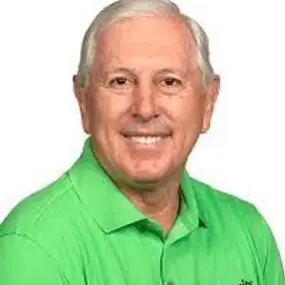
When it comes to the toughest competitors and most analytical course managers ever to play, Hale Irwin is near the top of the list.
Irwin’s distinction was excelling when the conditions were toughest, and his three victories in the U.S. Open attest to a sharp mind, a solid game and an iron will. It was never more apparent than at the 1974 U.S. Open, when Irwin persevered to win the so-called “Massacre at Winged Foot” with a score of seven-over-par 287. In perhaps the most difficult conditions a U.S. Open has ever been played under, Irwin shot rounds of 73-70-71-73 to win by two strokes.
Five years later at Inverness, on another punishing U.S. Open layout, Irwin shot even par to win by two. The scenario was quite different in 1990 at Medinah Country Club. Irwin was 45 and had not won on the PGA TOUR in five years. He received a special exemption to get into the championship. Lurking, but never in the thick of it until the final nine holes, Irwin made a 50-foot birdie putt on the final green that tied Mike Donald. The next day he fell behind but drew even when Donald bogeyed the 18th. Then, in the first sudden-death finish ever in the U.S. Open, Irwin birdied the 19th hole to win. Irwin became the oldest winner of the championship.
“When I got onto the tour, I relished the harder courses because I just felt I was going to try harder.”
From 1971 to 1994, Irwin won 20 events on the PGA TOUR, on such difficult courses as Harbour Town – where his first, second and, at age 48, final PGA TOUR victories came – Butler National, Muirfield Village, Rivier… Read More